Framing the topic: the idea that God created the universe in seven days
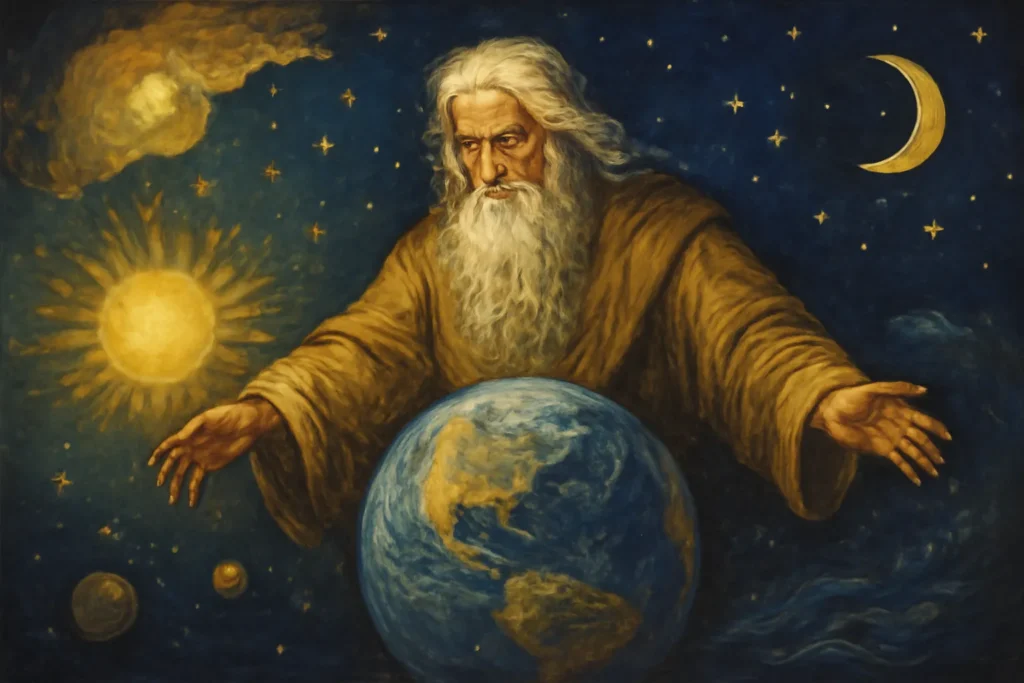
Across generations, many people have engaged with the claim that God created the universe in seven days, a statement that sits at the heart of particular biblical narratives and has shaped beliefs, cultures, and debates about science, history, and the purpose of life. In popular usage, this phrase is often shorthand for the creation week described in the opening chapters of Genesis. Yet the question of how to read “the seven days of creation” invites a wide range of interpretations, questions about what counts as evidence, and reflections on how sacred texts relate to natural knowledge. Some readers interpret the phrase as a literal, moment-by-moment sequence of events; others see it as a symbolic framework that communicates theological truths rather than a technical timetable. Either way, the claim has functioned as a hinge in religious communities and in conversations about cosmology and human origins.
This article surveys the idea about God created the universe in seven days and its variants, exploring the biblical account, various interpretive approaches, how different faith communities understand the creation narrative, and how science speaks to origins. The aim is not to settle questions with a single verdict but to illuminate the range of beliefs, the kinds of evidence that people appeal to, and the ways in which faith and reason interact in this perennial topic. To reflect the diversity of language around the topic, you will encounter variations such as God created the cosmos in seven days, the seven-day creation, or creation in a week—all of which point back to a shared cultural memory while being used in different theological and literary contexts.
Genesis and the seven-day account in its literary and historical context
The most influential source for the phrase the seven-day creation is the opening chapter of the Hebrew Bible, the book of Genesis. In this account, the cosmos comes into being through divine command and order, culminating in a day of rest. The narrative presents a sequence that many readers label as a week-long process, beginning with the creation of light and darkness and ending with the sanctification of the seventh day. The wording and structure invite readers to notice patterns: paired elements, a progression from the formless to the formed, and a cadence built around rest on the final day.
The structure of the Genesis account
The Genesis creation narrative is often described as operating in two main halves, with a distinctive rhythm that helps readers grasp its theological message. The sequence is frequently summarized as a series of six purposeful acts of creation followed by a seventh day of divine rest. In many traditions, this structure frames how the days are understood: some take them as literal 24-hour days, others as symbolic periods that reflect a completed week of divine work.
Day 1: light appears, separating day from night.
Day 2: the sky and the waters are divided, making a space for life to inhabit.
Day 3: dry land emerges, seas are gathered, and vegetation begins to appear.
Day 4: luminaries—the sun, moon, and stars—are set in the sky to mark time.
Day 5: marine life and birds are formed for the skies and seas.
Day 6: land animals arise, and humanity is created in a special, image-bearing way.
Day 7: God rests, blessing and hallowing this day as a pattern for human life and worship.
Readers who study the text often notice that the day-by-day sequence layers meaning: order and structure mirror divine sovereignty, completeness, and intention. Some interpreters emphasize the logical progression from formlessness to form, others stress the moral or liturgical dimension of Sabbath-rest. The phrase the seven-day creation thus acts as a shorthand for a narrative with multiple layers of meaning—cosmological, moral, and spiritual.
Days of creation and the issue of timeframes
A key question in interpretation concerns whether each day should be read as a literal 24-hour period or as a longer epoch. This has given rise to several schools of thought, including young Earth creationism, which tends to read each day as a 24-hour period; old Earth creationism, which allows for vast timescales; and day-age interpretations, which equate each day with a long geological era. A related approach, framework interpretation, treats the days as literary devices designed to convey truth about God, creation, and Sabbath rather than to specify a chronological timetable. Across these readings, the core idea that God created the universe remains central, but the implication for the pace and mechanism of creation differs.
Interpretive approaches across traditions: literal, symbolic, and integrative readings
Across religious traditions and scholarly communities, there is a spectrum of approaches to the opening chapters of Genesis. Each approach seeks to respect the text's authority and meaning while engaging with broader questions about science, history, and human existence.
Literal readings and their emphases
In some communities, the emphasis is on a straightforward, historical event: a week-long, supernatural act by a single divine actor that creates a settled cosmos out of nothing. This creation ex nihilo worldview highlights the sovereignty of God, the goodness of a created order, and the special status of human beings. Proponents of this approach often argue that the plain sense of the text should guide interpretation, with the days understood as 24-hour periods. Critics of a strictly literal reading respond that the evidence from geology, astronomy, and biology requires a more nuanced stance about time, mechanism, and purpose.
Symbolic and literary readings
Other readers emphasize the narrative as a literary document that uses genre, imagery, and cadence to teach about God, creation, and human destiny. In this view, the specific duration of each day matters less than the theological messages embedded in the text: God's creative will, the orderliness of creation, and the sanctity of rest. The idea that the creation week encodes intentional design can be harmonized with scientific explanations for natural phenomena by reading the days as symbolic markers of a powerful and purposeful act.
In contemporary discussions, many people advocate a synthesis in which scientific explanations of the cosmos and life coexist with religious belief in a divine creator. The theistic evolution model, sometimes called evolvable creation, holds that evolutionary processes are the method by which God brings about living diversity, with creation understood as ongoing and purposeful. In this view, the narrative of seven-day creation can be read as describing a theological truth—God as author and sustainer of the universe—rather than a literal, mechanistic account of the process by which every organism came to be. Even with this stance, faithful readers often maintain that the text communicates trust in a purposeful cosmos and a moral order that undergirds human dignity and responsibility.
Beliefs across communities: how different faith traditions engage with the creation narrative
The language of a week-long act of creation appears in many faith communities, but its interpretation varies based on doctrinal commitments, tradition, and engagement with science. The following overview highlights some prevailing tendencies in Judaism, Christianity, and Islam, noting where beliefs converge and where they diverge.
In Judaism, the core idea that God created the universe is affirmed, but the interpretation of the days of creation is diverse. Some rabbis and scholars read the six days as a literal week, while others stress midrashic and philosophical readings that interpret the days as steps in a longer process or as symbolic representations of divine mastery. The Sabbath—rooted in the seventh day—remains central in Jewish worship and ethics, emphasizing rest, holiness, and the relationship between humans and the Creator. In Jewish thought, the creation story often functions as a foundation for the moral order and human stewardship rather than a strict natural history.
Christian denominations: breadth of interpretation
Christian communities range from those who hold tightly to a literal six-day creation to those who stress the symbolic or theological import of the story. For some, the account is a foundational narrative about God’s authority and goodness; for others, it is a prelude to broader doctrinal concerns about sin, salvation, and human purpose. Some traditions emphasize the rest on the seventh day as a pattern for human life and for the Sabbath observance in Christian practice. The conversation among Christians about the creation narrative often intersects with debates about science, anthropology, and the meaning of human nature.
Islamic perspectives: six days of creation in the Qur’an and sayings
In Islam, the creation of the universe is mentioned in the Qur’an as having occurred over six days, with God as the primary creator and sustainer of all things. While there is no direct equivalent to a seven-day Genesis account in the Qur’anic text, many Muslims recognize a structured period of creation that emphasizes God’s sovereignty, wisdom, and governance of the cosmos. Some Islamic scholars interpret the six-day framework metaphorically rather than chronologically, inviting reflection on the order and symmetry of creation rather than a literal timetable. As with other faiths, interpretations vary and are shaped by juristic, theological, and philosophical considerations.
Scientific perspectives on the origin and development of the cosmos and life
Science approaches the question of origins through observation, experiment, and evidence gathered from diverse fields such as astronomy, cosmology, geology, and biology. While science does not address metaphysical questions about purpose in the same way that theology does, it offers a robust framework for understanding how the universe and life came to be over billions of years. The key takeaway for many readers is not necessarily a conflict between faith and science, but a spectrum of ways to think about origins that can be compatible, though not always identical in method or emphasis.
Cosmology and the origin of the universe
Current cosmology traces the origin of the universe to a hot, dense state approximately 13.8 billion years ago, followed by expansion and cooling that led to the formation of galaxies, stars, and planets. The Big Bang theory, as a scientific model, does not specify purpose or intention, but it provides a coherent description of how matter and energy organized themselves over cosmic time. For many readers, the Big Bang is seen as the physical history of creation in a secular sense, while religious accounts describe the origin of the universe in a different register—one that addresses meaning, intention, and the relationship between the Creator and the created order.
Geology, biology, and the age of the earth
Geological and paleontological evidence indicates that Earth is about 4.5 billion years old, with life appearing at least 3.5 to 4 billion years ago. The fossil record reveals a long sequence of biological change, including the emergence of complex ecosystems, mass extinctions, and the diversification of species. This vast timeline raises questions for readers who adopt a literal, naive chronology of creation, though many others find ways to integrate these findings with their religious beliefs by reading the sacred account as conveying theological and moral truths rather than a precise chronology of natural history.
Origins as a dialogue between faith and reason
Those who seek harmony between science and faith often describe a dialogue rather than a dominance of one over the other. In this framework, the phrase god created the universe in 7 days may be understood as a theological assertion about the source of order and meaning, while scientific inquiry explores the mechanisms by which order emerged over vast temporal scales. Some researchers advocate for models such as theistic evolution, which preserves belief in a divine cause or purpose while acknowledging the scientific account of natural history.
Evidence, faith, and reasons people hold to a creation narrative
When people speak about God created the universe in seven days, they are often appealing to a combination of textual authority, historical memory, metaphysical beliefs, and personal experience. It is important to distinguish between different kinds of evidence:
Textual and linguistic evidence from ancient scriptures and their translations
Historical and cultural context that explains how communities received and preserved the story
Philosophical arguments about a first cause, purpose, and order in the cosmos
Personal experiences that people interpret as encounters with the divine or with sacred meaning
The ethical implications of creation narratives, such as stewardship and responsibility toward the natural world
For many believers, scriptural accounts are not merely a chronology but a statement about divine action, cosmic order, and the inherent value of creation. The claim remains a touchstone for questions about human purpose, moral law, and humanity’s relationship with the Creator. Critics, on the other hand, may emphasize contradictions with empirical findings or interpretive challenges, inviting careful hermeneutics and ongoing dialogue between disciplines.
Argument types often referenced in discussions
Some common lines of reasoning include:
Scriptural authority: the belief that sacred texts are divinely inspired and form a trustworthy guide for understanding origins and reality.
Theological coherence: the idea that creation ex nihilo and the Sabbath pattern provide a coherent framework for God’s attributes and human purpose.
Philosophical teleology: the sense that the order and beauty of the cosmos point to intentional design or guidance.
Historical memory: the claim that ancient communities preserved a foundational narrative that shapes identity and ethics across generations.
When science and belief meet in contemporary discussions
In modern discourse, many people seek a productive relationship between scientific discovery and religious belief. Rather than framing science and faith as adversaries, some scholars and theologians argue for models that respect the integrity of both domains. For example, a framework that understands the creation narrative as a theological statement about meaning, not a literal technical manual, can open space for scientifically informed understandings of cosmology and life. In other contexts, proponents of young Earth creationism and similar approaches advocate for biblical inerrancy and a literal reading of the six days of creation, sometimes arguing for a recent origin of the universe. The spectrum of viewpoints illustrates how people attempt to uphold integrity of belief while engaging with empirical data.
Common questions, misunderstandings, and thoughtful responses
The topic of who created the universe and how often has generated a wide array of questions. Several recurring themes emerge in conversations about the creation narrative, and thoughtful responses can help clarify common points of confusion.
Why six days or seven days?
Classic readings often align the frame with a six-day act of creation plus a day of rest. Others point to the seven-day structure as a liturgical pattern, emphasizing rest as a defining feature of creation and life. Some interpret the days as symbolic, representing order, completeness, and the intention behind creation. The debate is less about a numerical tally and more about what the days are meant to convey about God, the cosmos, and human beings.
How does this topic relate to science?
Science describes natural history using testable theories and observations. Faith traditions emphasize meaning, purpose, and the character of God. The two can intersect in several ways. Some readers adopt the theistic-evolution or day-age models, which attempt to preserve religious convictions while acknowledging scientific explanations for the age of the universe and life’s development. Others maintain a stricter separation, arguing that scientific inquiry concerns natural causes while religious inquiry concerns meaning and moral truth.
Why do people disagree about interpretation?
Disagreement arises from differences in how communities interpret ancient texts, how one understands metaphor and symbol, and what counts as authoritative evidence. Distinct linguistic traditions, historical contexts, and theological commitments shape how a given community reads the creation week. The diversity of perspectives reflects both fidelity to tradition and ongoing engagement with new information and questions.
Beliefs about creation have influenced culture and ethics in manifold ways. The idea that creation was an intentional act by a divine being can foster a sense of responsibility toward the natural world, a call to stewardship, and a sense of belonging to a larger story about purpose. For many people, the Sabbath or a weekly day of rest—rooted in the seventh day of the creation narrative—remains a meaningful practice that shapes work, family life, and worship. Others find motivation in the sense that the universe has meaning beyond mere material explanation, which informs moral decisions, social ethics, and concerns for justice and care for others.
Ethical implications of belief about origins
The belief in a week-long act of creation can imply a duty to treat nature as a creation with intrinsic value, not merely as a resource to be exploited. It can contribute to ethical frameworks that emphasize stewardship, responsibility toward future generations, and humility about human limits in understanding the full scope of the cosmos. Conversely, critiques may argue that certain readings have been used to justify resistance to scientific inquiry or to promote particular political or social agendas. A careful approach seeks to honor the sacred dimensions of life while remaining open to knowledge derived from observation and reason.
For many people, the narrative of creation in seven days functions as a central touchstone in personal faith and communal identity. It shapes liturgy, prayers, and sacred calendars; it informs how communities teach children about origins, responsibility, and wonder. Even when communities diverge in interpretation, the shared reference to a purposeful Creator can provide a common ground for dialogue, mutual respect, and collaborative engagement with science, education, and public life.
Historical and contemporary resources for further study
If you are interested in exploring this topic in more depth, a mix of ancient sources, scholarly works, and contemporary discussions can be valuable. Readers often benefit from engaging with:
Primary biblical texts, especially Genesis 1–2, in multiple translations and commentaries to see how language and nuance affect interpretation.
Classical and modern Jewish midrash and rabbinic writings that illuminate how generations have read creation stories.
Patristic and medieval Christian writings that discuss doctrine, Sabbath theology, and the relationship between creation and redemption.
Dialogue about science and faith, including works on theistic evolution, day-age theories, and the framework hypothesis.
Cross-cultural perspectives from Islamic, Hindu, Buddhist, and other traditions that offer different windows into questions of origin and the purpose of the cosmos.
For readers who want a practical starting point, consider a study that examines both the textual features of Genesis and the scientific explanations for cosmology and geology. Look for sources that acknowledge multiple readings, present arguments with clarity, and distinguish between what is asserted as fact and what is interpreted as meaning. In any approach, the conversation about God created the universe in seven days remains a living one—an invitation to thoughtful reflection, respectful dialogue, and growth in understanding.
A closing reflection: balancing reverence, reason, and response
The claim that god created the universe in 7 days sits at the intersection of sacred memory, philosophical inquiry, and scientific exploration. The breadth of interpretations—ranging from literal to metaphorical to theistic- evolutionary—demonstrates how a single narrative can be reimagined across cultures, centuries, and disciplines. The value of examining these perspectives lies not in forcing one answer on all readers, but in expanding the landscape of questions we ask: What does creation reveal about the nature of God? How should humans live in light of this understanding? How can faith commitments coexist with open inquiry about the natural world?
Whether one accepts a week-long creation as a historical chronology or as a theological framework for understanding divine sovereignty, the discussion encourages humility before the fullness of reality. The universe, in its vastness and intricacy, invites awe, inquiry, and responsibility. For many, this invitation is precisely what makes the exploration of origins meaningful: a continual invitation to learn, to wonder, and to live with care for creation and for one another.
In sum, the phrase the seven-day creation serves as a gateway into deeper questions about how humans connect with the cosmos, how communities preserve memory and meaning, and how science and faith can speak to one another in constructive ways. By examining the biblical account, the range of interpretive approaches, and the broader cultural and intellectual context, readers can cultivate a more nuanced appreciation for this enduring topic—one that respects tradition while remaining open to discovery and dialogue.









Leave a Reply