Death and Life in the Tongue: How Words Shape Reality
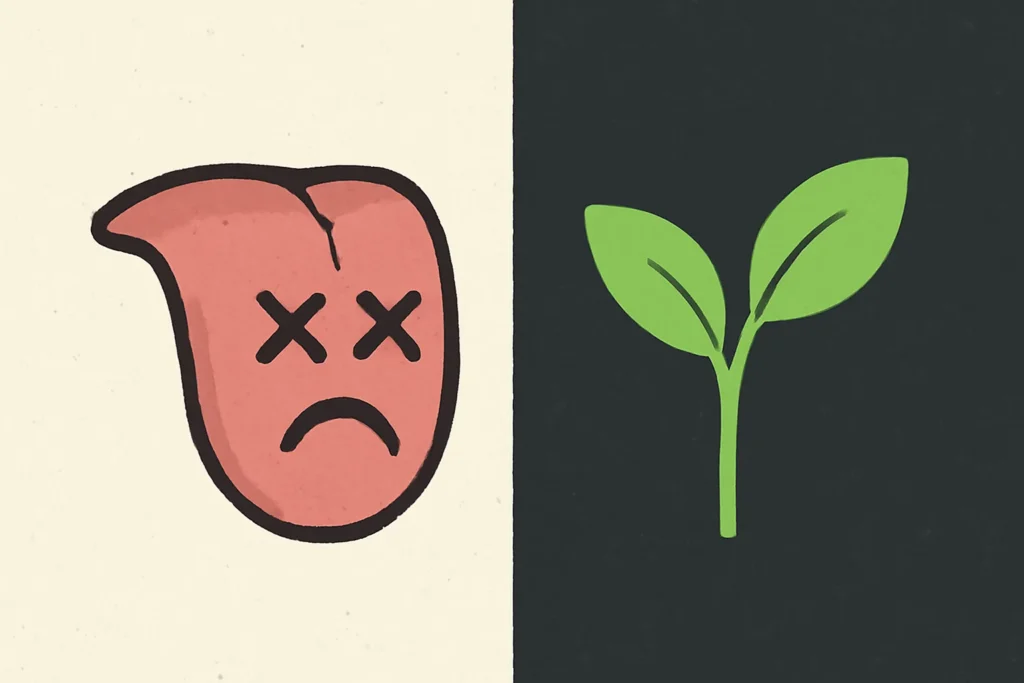
Language is not a neutral conduit for meaning; it is a living ecosystem where ideas take root, sprout, or wither. The tongue can breathe vitality into a person’s aspirations or whisper doom into someone’s confidence. When we speak, we are not merely transmitting information; we are enacting realities. This article surveys how words wield power over life and death in social life, personal identity, and collective memory. It asks how we might cultivate a vocabulary that tends toward growth, dignity, and resilience, even in difficult circumstances.
The Tongue as an Instrument of Naming and Claiming
Naming is a foundational act. To name something is to confer significance, to assign purpose, to invite interpretation. Names become frameworks through which experience is stored and retrieved. In a sense, to utter a word is to mark a boundary and to invite a future where that boundary matters. In this way death and life in the tongue emerge from the daily acts of naming and describing.
How naming creates reality
When we label a person as “troublemaker” or “genius”, we trigger expectations in ourselves and others. These expectations shape choices, opportunities, and treatment. A student labeled as “unmotivated” may internalize that script and perform accordingly, while a student named “high-potential” may rise to the challenge. In clinical settings, diagnostic labels carry weight beyond medical facts; they influence insurance, access to care, and the patient’s self-concept. The power of naming is not benign; it can become a self-fulfilling prophecy if care is not taken to balance clarity with humanity.
Labels can unlock resources or close doors, depending on context.
Descriptive words carry evaluative weight that colors perception.
Ambiguity can protect dignity when terms carry stigma.
Reframing a situation can shift both emotion and action.
Thus the language of assessment matters. In schools, workplaces, hospitals, and courts, the vocabulary used around people and behaviors often becomes scaffold for future behavior. The act of naming is a political act as well as a personal one, shaping power dynamics and moral perception.
Verbal Ecology: How Speech Threads Live Into Environments
Every setting has its own verbal ecology—the pattern of tone, vocabulary, and pace that people use in that space. A classroom, a office, a family dinner, or a courtroom becomes a field where words cultivate certain kinds of outcomes. The tone of conversation—whether patient or punitive, hopeful or anxious—can alter emotional weather and cognitive load, ultimately affecting decisions and relationships.
In healthy environments, language tends toward clarity, empathy, and accountability. In hostile or sensational climates, words become shields or daggers, creating cycles of defensiveness and mistrust. Consider how a city’s public discourse around a crisis can either mobilize solidarity or inflame fear. The narrative arc provided by journalism, social media, and official statements often serves as a collective breath: quick, shallow breaths can hyperventilate a community; measured, compassionate communication can steady it.
Instances of verbal ecology in everyday life
In schools, teachers who emphasize growth language—focusing on progress and strategies rather than fixed ability—tend to foster resilience.
In workplaces, leaders who model clear, respectful communication reduce miscommunication and build trust.
In families, routine usage of positive reframing during conflict can transform cycles of blame into opportunities for connection.
In media, careful wording about risk and responsibility can prevent panic while encouraging prudent actions.
Language, then, is not merely descriptive; it is performative. By choosing terms that invite cooperation, accuracy, and care, communities can craft life-promoting narratives even in the face of difficulty. Conversely, sensational, dehumanizing, or fatalistic language can erode agency and solidarity, enabling harm to flourish unnoticed.
The Double-Edged Sword: When Words Heal and When They Harm
Words have a dual capacity: they can heal, or they can wound. That tension is visible in intimate conversations, public discourse, and institutional rhetoric. The same word can carry a different charge depending on who says it, to whom, and in what moment. This is the core paradox of speech as life and death—the same sentence can be a lifeline or a liability, a cure or a curse.
The healing power of affirmations and compassionate speech
Affirmations and compassionate language activate neural pathways associated with reward, motivation, and well-being. When we say to someone, “you are capable,” we invite them to act in ways that align with capability. When we speak to ourselves with gentleness—self-compassion, self-talk that names struggles while honoring effort—we support persistence, reduce anxiety, and foster growth. This is not merely sentiment; it is a practice grounded in cognitive-behavioral insights and social neuroscience.
The risks of negative language and labeling
Negative language can become a kind of social gravity that pulls people toward the outcomes implied by the words themselves. Phrases like “you always fail” or “this is hopeless” can narrow attention, reduce cognitive flexibility, and intensify stress responses. In the long arc, persistent corrosive language can erode self-esteem, undermine collaboration, and contribute to chronic illness via sustained psychological strain. Even so, it is possible to acknowledge difficulty without surrendering to despair—by reframing, seeking support, and choosing more precise, less fatalistic language.
Among adults and children alike, a culture of nonjudgmental inquiry and curiosity about origin can reduce the damage of harsh speech. If someone slips into a negative pattern, the response matters: a quick correction, a clarifying question, and an invitation to explore personal meaning can avert cycles of shame and retaliation.
Cultural and Historical Dimensions: Language, Death, and Life Across Traditions
Language is deeply embedded in cultural beliefs about life, death, and the afterlife. Many traditions treat speech as a sacred act, where words must be weighed with care, because to speak carelessly is to risk harm to the fragile fabric of community. Across cultures, there are customary forms of taboo speech, blessing and cursing, and ritual silence that shield people from harm or invite protection. The historical record shows how language can preserve memory, sanctify loss, or provoke change.
Linguistic relativity and reframing reality
The idea that language shapes thought—often summarized as the Sapir-Whorf hypothesis—offers a framework for understanding how different linguistic ecosystems encourage particular patterns of perception and behavior. In languages that rely on politeness hierarchies, social harmony may be prioritized, influencing how conflicts are voiced and resolved. In languages with color terms distributed differently along categories of light or time, people may notice distinctions more keenly or less so. The way a culture talks about death, mourning, and resilience can redefine what counts as acceptable discourse surrounding loss and how communities mobilize to support the living.
Taboo, reverence, and the ethics of naming
Many cultures maintain a taboo against pronouncing certain names or speaking the names of the dead aloud in particular contexts. This restraint is not merely superstition; it reflects a moral stance about the power of speech to affect the sacred and the fragile. Other traditions elevate speech as a conduit of blessing, prayer, or ancestral memory. These divergent practices illuminate how words may carry both life and death across time, shaping what communities dare to say, and how they listen to what remains unsaid.
Words in Public Life: Politics, Media, and Community Narrative
The public sphere aggregates millions of individual utterances into a shared story. In this arena, linguistic choices become policy determinants and social catalysts. Reframing a public problem, naming a candidate, or describing a crisis can change the emotional climate and the pace at which people respond. The language of leadership—clarity, accountability, and empathy—can mobilize solidarity and legitimate action. Conversely, inflammatory rhetoric, sensationalism, and simplifications can polarize communities, deepen mistrust, and obscure accountability.
Rhetoric that sustains life and rhetoric that drains energy
Consider the way political discourse might employ hopeful resilience versus alarmist catastrophizing. A message that validates fear but offers constructive paths can empower action without surrendering truth. A message that demonizes opponents can erode the possibility of collaboration. Media literacy, critical listening, and deliberate speech practices help communities navigate the pressures of attention economies while preserving dignity and nuance.
In public health, for example, careful wording about risk communication respects uncertainty while guiding behavior. In law and governance, precise terminology reduces ambiguity in rights and responsibilities. In social movements, inclusive language can broaden participation, while exclusive rhetoric can reinforce marginalization. The ethical burden of speech rests on the awareness that words travel far beyond their original context and influence outcomes in unseen ways.
From Personal Speech to Personal Transformation: Practical Pathways
If language shapes reality, then everyday habits of speech become levers for change. The following practices can help cultivate a language of life that honors dignity, fosters connection, and supports resilience in the face of adversity.
Mindful speaking and listening
Pause before speaking to assess intent and potential impact.
Choose words that describe reality accurately without adding unnecessary blame.
Listen actively to understand the speaker’s concerns and values.
Mindful listening includes reflecting back what you hear and asking clarifying questions. This reduces misinterpretation, which can escalate conflict. Mindful speaking involves avoiding absolutist judgments and recognizing the humanity in others, even when you disagree.
Notice negative self-talk and name the feeling it produces.
Reframe statements with evidence and compassion: "I can’t do this" becomes "I can learn to do this with practice."
Reinforce progress with concrete, observable language: "Today I completed three tasks" rather than "I’m a failure."
End with a reminder of intrinsic worth: "I am worthy of care and growth."
Self-talk is not about denying difficulty; it is about sustaining agency. The inner speech we employ can either corrode or reinforce resilience, shaping decisions and persistence long before external circumstances change.
Communicating with care in conflict
Start with what you can acknowledge about the other person’s experience.
Frame disagreements as collaborative problem-solving rather than existential battles.
Avoid labels that freeze behavior into identity: instead, describe the behavior, its effects, and possible remedies.
In conflict, language can defuse tension or ignite it. The art of dialogue lies in moving toward mutual understanding, even when values diverge. When we choose language that invites participation—rather than language that enforces a verdict—we keep doors open for healing and growth.
Toward a Language of Life: Healing, Dignity, and Mutual Regard
What would it look like to design a vocabulary consciously attuned to life? It would be a language that honors the full range of human experience—struggle, fear, and grief included—while prioritizing clarity, empathy, and responsibility. Such a language would recognize that words shape reality and therefore intentionally cultivate environments where people can thrive.
In caregiving, education, and community organizing, this means embracing humane communication as a core practice. It means acknowledging losses while naming possibilities, listening to hurt while offering practical support, and repairing breaches in trust with consistent, honest speech. It means resisting shortcuts that substitute sensational rhetoric for nuanced understanding, and it means lifting voices that have historically been silenced so that diverse experiences inform the shared story.
Acknowledge the emotional landscape before offering solutions.
Be specific about needs and outcomes rather than abstract judgments about character.
Offer language that empowers action: identify options, resources, and steps forward.
Celebrate progress, no matter how small, to reinforce a sense of agency.
Crucially, a community of care requires not only individual discipline but collective norms. Schools, workplaces, and civic institutions can foster these norms by modeling respectful discourse, providing feedback loops for language use, and creating rituals that honor both truth-telling and compassion.
Bringing It All Together: The Ongoing Practice of Life-Giving Speech
Ultimately, the question is not whether words can hurt or heal in the abstract, but how we choose to speak in concrete moments—as parents, teachers, colleagues, friends, and citizens. The power of life-affirming language lies not in a single magic phrase, but in a sustained habit of attention, care, and responsibility. Words become worlds when we live them with intention.
Across cultures and generations, many traditions offer a philosophy of speech that treats language as a steward of life. In some communities, elders model speech that blesses and protects, choosing words that invite harmony and accountability. In others, poets and teachers cultivate a canon of phrases that acknowledge pain while guiding readers toward resilience. In still others, everyday conversations are ritualized to preserve memory, to comfort the bereaved, and to encourage the young. The throughline is clear: words matter, and the way we choose them makes a real difference in the world we inhabit.
Final Reflection: Choosing a Language That Supports Life
In a world where information travels fast and voices compete for attention, the deliberate use of language becomes an act of ethical apprenticeship. We learn to name without reducing, to describe without diminishing, and to speak with a consciousness that honors both the stakes and the people involved. When we cultivate speech that names reality honestly, while simultaneously offering paths forward with compassion, we participate in a form of repair—of relationships, communities, and the dignity of every person we encounter.
Let us imagine a practice of careful citizenship through language: acknowledging fear without surrendering to it, naming harm without escalating it, and choosing words that invite healing and cooperation. The tongue can carry deathly silence when used to censor and exclude, or it can carry living sound when used to nurture curiosity, foster trust, and empower action. The choice—made in each conversation, each post, each classroom discussion—is a daily act of authorship: we author the living world we inhabit with every utterance we make.









Leave a Reply