Fruit of the Spirit Explained: A Clear Guide to Its Meaning
Fruit of the Spirit Explained: A Clear Guide to Its Meaning
The Fruit of the Spirit is a foundational concept in Christian ethics and spiritual formation. This article offers a clear guide to its meaning, its components, and how these nine virtues can grow in a person’s life through life in the Spirit. Rather than viewing them as a checklist of good deeds, we will explore how these qualities emerge as a sign of inner transformation and relational fidelity to God, and how they show up in daily living.
When people hear the phrase Fruit of the Spirit, they often imagine a neat list of moral attributes. In the biblical text, however, the phrase carries a richer sense. It is not simply a catalogue of individual traits that someone might accumulate through effort; it is a set of virtues that naturally blossoms within a life led by the Holy Spirit. The image of “fruit” implies growth, maturity, and a visible outworking of inner life. It speaks of a holistic transformation rather than isolated acts of kindness. The apostle Paul writes that this fruit is produced by the Spirit, not produced by human willpower alone. This distinction matters for how believers understand personal growth, community life, and the source of real change.
The Nine Qualities of the Spirit’s Fruit
Love
Love sits at the center of the whole fruit cluster. In biblical terms, it is often described as agape—a self-giving, other-centered love that seeks the good of others even at personal cost. When love is genuine, it does not merely feel warm toward people who are kind to us; it moves toward enemies, heals broken relationships, and serves without counting the cost. In practical terms, love looks like listening with humility, prioritizing another person’s well-being, and choosing reconciliation over stubbornness. It is the motive behind acts of service, forgiveness, and generosity.
Joy
Joy is a confident and resilient gladness that survives hardships. It is not a temporary feeling tied to circumstances but a deep, abiding sense of gladness rooted in God’s promises and faithfulness. Joy can coexist with sorrow, and it often expresses itself as gratitude even in difficult seasons. It invites others to trust that life has meaning beyond mere circumstance, and it reorients priorities toward what matters most—God, people, and purposes that outlast temporary trouble.
Peace
Peace involves inner calm and harmonious relationships with others. It begins with a peace with God through trust and surrender, and it extends to peace with people around us. This virtue challenges us to pursue reconciliation, to practice patience under pressure, and to refuse pugnacious or vengeful responses. In daily terms, peace shows up as less reactivity, steadiness in the face of conflict, and a willingness to pursue unity even when it costs comfort or status.
Patience
Patience (sometimes rendered as longsuffering) is about endurance under trials, delays, or injustice without losing love. It is not passive resignation but a steady, hopeful response that trusts God’s timing and works toward good outcomes in the long run. Practically, patience helps individuals listen longer, resist snap judgments, and give others space to grow, including children, coworkers, and peers who test boundaries.
Kindness
Kindness expresses favor toward others with warmth and practical deeds. It goes beyond nice words to include tangible acts of care, such as helping someone in need, advocating for the vulnerable, or offering encouragement in difficult moments. Kindness is contagious: it creates a ripple effect that softens hearts and may open doors for deeper conversation about hope, faith, and community.
Goodness
Goodness reflects moral integrity in action. It includes honesty, justice, and a commitment to what is right, even when it is costly or unpopular. This virtue aligns closely with righteousness as a stance before God and a posture toward neighbors. Goodness shines through ethical choices, transparent motives, and a willingness to do what is right for the vulnerable and marginalized.
Faithfulness is steady reliability in one’s commitments, both to God and to people. It encompasses trust, steadfastness, and a proven track record of keeping promises, attending to duties, and remaining loyal in the face of trials. In relationships, faithfulness builds trust and fosters secure communities where people can grow with confidence and mutual accountability.
Gentleness
Gentleness is strength under control. It involves humility, teachability, and a non-coercive posture in speech and action. Gentleness does not mean weakness; it means choosing restraint, respectful speech, and a welcoming demeanor that invites conversation rather than defensiveness. It often shows up in how we handle conflict, correction, and interpersonal boundaries.
Self-control
Self-control governs desires, impulses, and behavior in service of the greater good. It enables disciplined living, healthier boundaries, and careful stewardship of time, talents, and resources. In practice, self-control helps a person avoid destructive patterns—whether related to anger, greed, or indulgence—and instead align choices with long-term flourishing and the welfare of others.
Why the Nine Qualities Matter: Theological and Practical Context
Understanding the Fruit of the Spirit involves both a theological frame and practical implications for life. The biblical idea is not that a person earns these qualities through a program of self-improvement. Rather, they are the natural outgrowth of life lived in alignment with the Holy Spirit. The Spirit’s work creates a new orientation toward God and neighbor, transforming desires and actions over time. This transformation is often gradual and cumulative; it is visible in daily patterns of behavior as well as in dramatic moments of character growth.
Historical and Theological Context
Turned toward the first-century church, the concept sits within Paul’s broader argument about life under the Spirit versus life under the flesh. Paul contrasts “works of the flesh” with “fruit of the Spirit,” signaling a shift from a rule-based ethic to a Spirit-enabled moral formation. The list itself is not an arbitrary set of ideal traits; it reflects a life that embodies love as the source and court of all virtue. The historical setting—addressing both Jewish and Gentile believers—helps readers see the fruit as a universal standard of humane, God-honoring living, applicable in diverse cultural contexts.
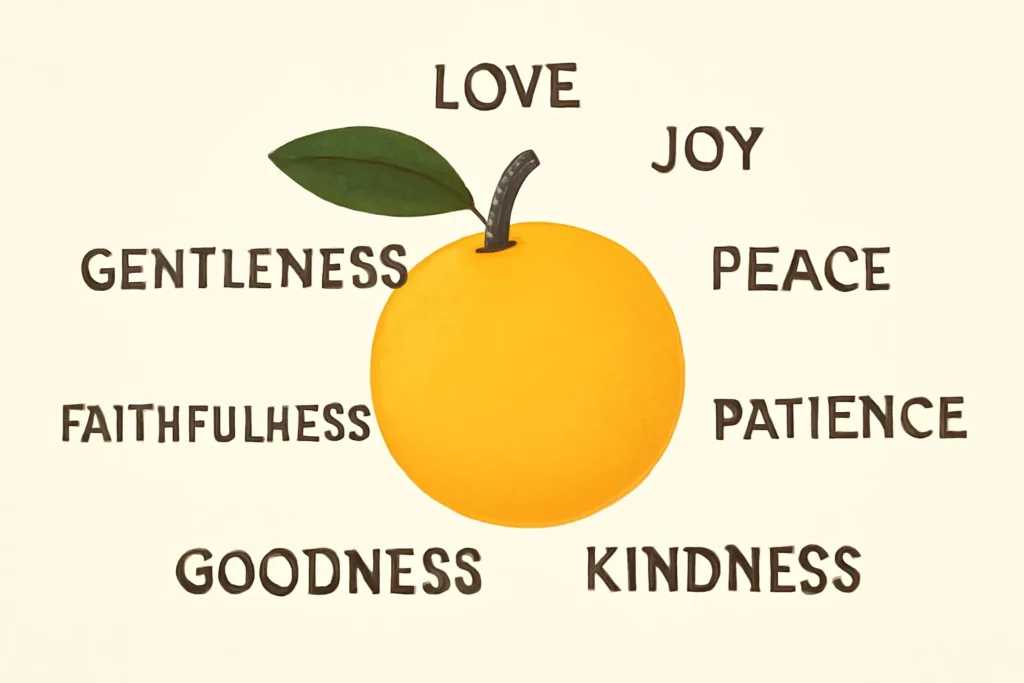
The Visual metaphor: Growth, Not Perfection
The image of fruit growing on a tree implies organic development. It is not about instantaneous perfection, but about a mature, stable presence that yields visible fruit over time. This is an invitation to patient growth: small, faithful steps practiced consistently can lead to meaningful transformation. The metaphor also invites the community to look for fruit in one another’s lives, not to judge others harshly, but to encourage and nurture growth through mentorship, accountability, and shared disciplines of faith.
How the Fruit Grows: Spiritual Formation and Practice
Growing the Fruit of the Spirit involves practices that align daily life with God’s heart. Spiritual formation is less about checking boxes and more about allowing the Spirit to shape desires, decisions, and deeds. Here are practical pathways that have helped many believers cultivate these virtues.
Surrender and trust: Recognize areas of control you are clinging to and invite God into those spaces. Trust that His guidance leads to life and freedom.
Scripture engagement: Meditate on passages that reveal God’s character and standards. Let the stories, commandments, and promises form your inner life.
Prayer and contemplation: Regular dialogue with God, including confession, gratitude, and intercession, centers your heart on God’s purposes.
Community and accountability: Learn and practice in a community that encourages honest speech, mutual care, and corrective exhortation.
Humility and service: Put others first, especially the vulnerable, and seek to meet real needs with practical acts of kindness.
Missional living: Live with an awareness of God’s mission in the world, letting love propel acts of mercy and justice.
Self-reflection and repentance: Regularly examine your motives and seek forgiveness when you fall short, learning to start anew with renewed resolve.
When the Fruit of the Spirit takes root, it shows up in tangible ways across different spheres of life. Consider these illustrative scenarios that demonstrate how each virtue can play out in daily contexts.
Family: A parent exercises patience in a difficult morning routine, responds with gentleness to a child’s mistake, and models self-control in budgeting and time management.
Workplace: A colleague demonstrates kindness by supporting a coworker under pressure, shows faithfulness by meeting deadlines, and embodies goodness by advocating for fair treatment of teammates.
Church and Community: Members pursue peace and patience during disagreements, practice gentleness in pastoral care, and extend love to outsiders or seekers.
Relationships: In friendships, joy and love create trust, while self-control helps manage conflicts and maintain healthy boundaries.
Personal growth: A person facing temptation embraces self-control, seeks counsel, and chooses restraint that honors others and God.
Common Misunderstandings and Clarifications
Several misconceptions can obscure the meaning and practice of the Fruit of the Spirit. Here are some clarifications that help align understanding with biblical teaching.
It is not only “nice” behavior: The fruit describes a transformation of character that comes from belonging to God through the Spirit, not merely performing acts of kindness to look good.
It is not a moral checklist: Rather than a to-do list, the fruit arises from a surrendered life and is evidence of the Spirit’s work in a person’s heart.
It does not guarantee an absence of trials: The presence of the fruit does not eliminate suffering; it offers inner resilience, hope, and steadfastness in trials.
It is not uniform across all believers: People mature at different rates and in different facets. The Spirit can cultivate diverse expressions of the same core character.
Gifts vs. fruit: Spiritual gifts enable certain functions in ministry; the fruit describes the character that undergirds those gifts. Both are gifts of the Spirit, but they serve different purposes in God’s design for the church.
Fruit of the Spirit vs. Gifts: How They Work Together
The Bible distinguishes between gifts and fruit, yet they work in harmony. Gifts are varied abilities given for the common good (teaching, healing, leadership, administration, etc.), while the fruit is the moral and spiritual quality that should accompany the use of those gifts. A person with a powerful gift but lacking love and gentleness might cause harm even as they perform well. Conversely, a person with quiet, steady fruit can steward gifts humbly and effectively when love governs their actions. In this sense, the Fruit of the Spirit provides the ethical climate in which gifts are exercised and relationships are nourished.
Historical and Cultural Perspectives: How the Fruit Has Been Read
Across church history, theologians have emphasized that the fruit is not merely aspirational but transformative. Different traditions have highlighted various aspects—monastic communities emphasizing patience and self-control, reformers stressing faithfulness and love in public witness, or pastoral theologians focusing on gentleness and peace in conflict resolution. Cultural context matters: some cultures value restraint and gentleness more overtly, while others highlight bold action and justice. Yet the core claim remains: a Spirit-led life will display these nine virtues in a coherent and compelling way, inviting others to experience God’s life and hope through you.
Practical Guidance for Personal Growth
If you want to cultivate the Fruit of the Spirit in your life, here are practical steps that many find helpful. The goal is not to perform perfectly but to grow more consistently in alignment with God’s heart.
Prayerful reflection: Begin with a simple prayer for the Spirit to reveal areas where growth is needed and to empower steady change.
Scriptural meditation: Choose a verse or passage that speaks to a specific fruit, reflect on how it appeared in Jesus’ life, and consider ways to practice it today.
Accountability partners: Engage a trusted friend or mentor who can speak honestly about patterns they observe and provide encouragement.
Small, repeatable actions: Practice one concrete step per week related to a specific fruit (e.g., performing one act of kindness daily, or pausing before speaking in anger).
Community service and hospitality: Practice welcome and service in your church or neighborhood to growth in love, kindness, and gentleness.
Confession and forgiveness: Regularly acknowledge wrongs, seek forgiveness, and extend forgiveness to others, which sustains peace and patience.
Life rhythms: Build routines that reduce stress and create space for reflection, worship, and healthy living—habits that support self-control and peace.
Yes, with divine help and persistent practice. The promise of the Fruit of the Spirit is not that people will be perfect immediately, but that the Spirit will produce growth. Individuals may progress at different paces, yet the trajectory is hopeful for anyone who remains open to God’s transforming work.
How is this different from personality or temperament?
The fruit describes character shaped by divine life as evidenced in action. It goes beyond natural temperament by reflecting intentional alignment with God’s purposes. Someone may be naturally cheerful or serious, but the Fruit of the Spirit adds a purposeful, other-centered dimension that transcends personality alone.
What about people who are not Christians?
From a theological perspective, these virtues can resonate with universal moral intuitions. However, the full belief that these attributes come from the Holy Spirit and reflect God’s transforming work is reserved for those who trust in Christ. In practice, people from diverse backgrounds can recognize and pursue the same virtues as they pursue personal growth and ethical living.
Can someone fake the fruit?
Surface-level behavior can imitate the fruit for a time. Yet genuine fruit tends to reveal itself over the long term through consistency, resilience in hardship, and a motive rooted in love for God and neighbor. Community accountability and honest self-reflection are essential to ensuring that one’s life reflects true transformation rather than mere performance.
Applying the Fruit in Ministry and Leadership
For leaders and those serving in ministry or organizational roles, the Fruit of the Spirit offers a standard for character that safeguards trust and sustains influence. Leaders who cultivate love, gentleness, and patience, alongside faithfulness and self-control, foster healthier teams and more durable missions. In leadership training, the emphasis often rests on modeling these virtues under pressure, handling feedback gracefully, and prioritizing care for the vulnerable. The fruit then becomes not only a personal virtue but a public witness to God’s activity in a community.
Transformational Narratives: Stories of Growth
Across communities, many believers share narratives of change that align with the Fruit of the Spirit. These stories often highlight the following patterns:
A dramatic moment of revelation about a wrong attitude, followed by repentance and accountability.
A gradual shift in how relationships are handled—conflicts resolved with gentleness rather than escalation.
Consistent acts of kindness that build trust and open doors for deeper spiritual conversations.
Long-term perseverance in the face of trials, displaying peace and patience that inspire others.
Measuring Growth: How to Assess the Fruit in Your Life
Measuring spiritual growth can be nuanced. Some practical ways to assess progress include:
Reflecting on how you respond in stressful or provoking situations, noting whether your reactions align with love, patience, and gentleness.
Asking trusted friends for feedback on changes they notice in your conduct and attitude over time.
Observing the quality of your relationships: do you see deeper trust, fewer resentments, and more healing where there was conflict?
Evaluating how you use your time and resources: are resources directed toward the welfare of others, not merely personal comfort?
Noting how consistently you pursue reconciliation, forgiveness, and acts of service, even when it costs you personally.
Conclusion: Embracing a Spirit-Inspired Life
While we will not label any section as an introduction or conclusion, the journey through Fruit of the Spirit explained is ultimately a call to daily dependence on God. It invites believers to cultivate a life that is both deeply personal and profoundly relational. The nine virtues function together as a coherent portrayal of a life shaped by divine love and wisdom. In this sense, the Fruit of the Spirit is not a distant ideal but a lived reality that can transform families, churches, communities, and even broader society as people embody love, joy, peace, patience, kindness, goodness, faithfulness, gentleness, and self-control in humble, unpretentious ways. By pursuing these aims with honesty, humility, and perseverance, a person can experience genuine spiritual growth—an ever-deepening conformity to the image of Christ and a witness to the redeeming work of God in the world.











Leave a Reply