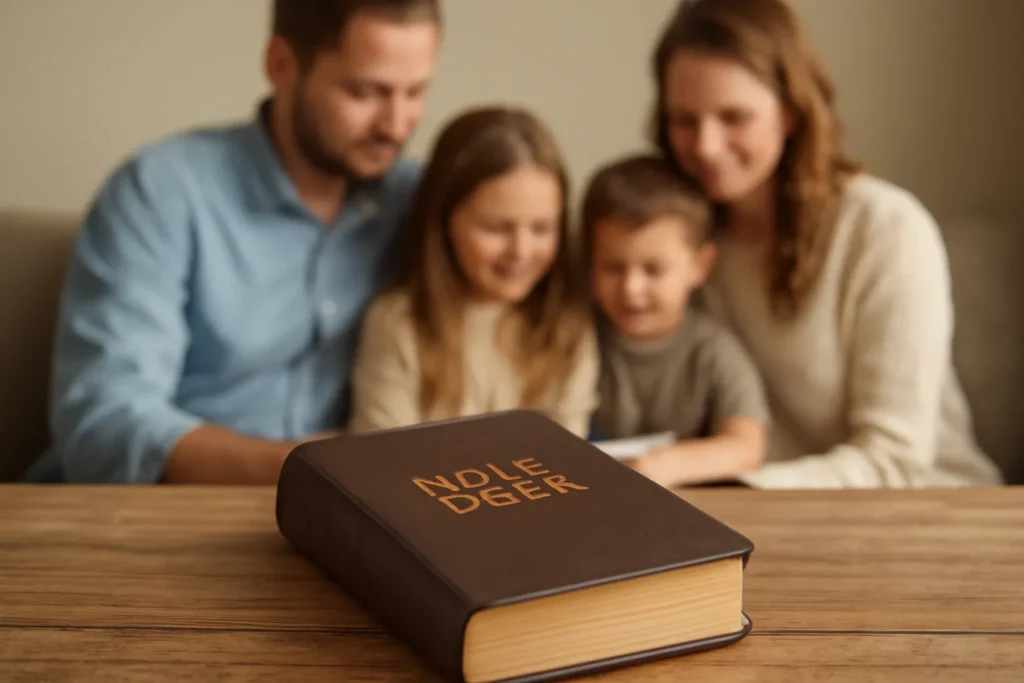
A family Bible is more than a compact book of sacred text. It is a communal artifact that can anchor lifetimes of faith, memory, and learning. For many households, the home Bible becomes a repository for cherished inscriptions, family milestones, and a steady companion through both ordinary days and times of crisis. Whether you are starting a small collection, expanding a long-standing household Bible tradition, or seeking a durable, portable edition for travel and study, choosing the right edition and using it with intention can transform how generations understand their past, present, and future.
In this article, you will find practical guidance on how to choose a suitable instrument for your family, how to use it in daily life or in special occasions, and how to preserve this valuable resource for the long term. The discussion will refer to a range of expressions—family Bible, family scriptures collection, domestic Bible, ancestral Bible—to broaden the sense of what a family Bible can be, while keeping a clear focus on the core purposes: spiritual nourishment, family history, and shared identity.
Choosing a family Bible: what to look for
Understand your goals for the family Bible
Before you begin shopping, take stock of what you want the family Bible edition to do. Do you want a text that is easy to read for all ages, or a study Bible with notes that illuminate historical contexts and theological themes? Is your priority family history recording and genealogical marginalia, or is it more about devotional use and daily readings? Some households prioritize a large-print edition for aging eyes, while others seek a compact portable family Bible for travel.
Purpose: devotional use, study, record-keeping, or a combination.
Audience: readers of diverse ages, including children and seniors.
Format: single-volume Bible, devotional edition, or a multi-volume family record set.
Types of family Bibles and their advantages
The market offers several distinct families of biblical volumes that can serve as a family scripture collection in different ways. Here are common categories and what they tend to deliver:
Full-featured study Bible: This type includes introductions for each book, cross-references, maps, and study notes. It is ideal for families that value context, historical background, and occasional in-depth study sessions.
Text-focused family Bible: Emphasizes the biblical text with generous margins for notes, testimonials, or family messages. Great for those who want space for genealogical entries or devotionals alongside the text.
Family record edition: A Bible specifically designed with blank pages, genealogical charts, and spaces for inscriptions, dates, and memories. It is a practical choice for constructing a tangible family archive within the Bible itself.
Devotional or daily reader: Includes short devotionals, prayers, or prompts for daily use. It supports consistent household routines and fosters shared spiritual practices.
Leather-bound or heirloom edition: Built for longevity and tactile pleasure. A high-quality binding with durable materials can become a treasured family heirloom.
Key features to consider in a family Bible
When evaluating candidates for a family Bible collection, pay attention to several practical features that affect daily use and long-term preservation:
Translation and readability: Decide on a translation that resonates with your family’s tradition, whether it is a traditional version (such as the King James Version) or a contemporary translation (like the New International Version or English Standard Version). Consider how the language will be understood by younger readers and by adults who study with a strong emphasis on accuracy and readability.
Text size and margins: Large print can be a lifesaver for older readers, while generous margins are valuable for annotations and family records.
Indices and cross-references: Useful for family study sessions and for tracing biblical themes across books, which can help in connecting family stories to the scriptures.
Ribbon markers or bookmarks: Facilitate quick access during daily reading or family devotion times.
Durable binding: A strong binding, preferably with a protective dust jacket or a genuine leather cover, contributes to longevity and makes the edition suitable for years of use and travel.
Quality of paper: Acid-free paper reduces aging and yellowing, preserving readability and inscriptions over time.
Margins for notes: Ample margins enable family members to inscribe dates, genealogical notes, or brief reflections without obscuring the main text.
Additional content: Maps, concordances, timelines, and appendices can enrich family discussions and help place events in historical or genealogical context.
Formats and purchase considerations
Choosing the right format affects how the domestic Bible sits in your home, how often it is opened, and how easily it travels. Here are practical format considerations:
Single-volume editions offer convenience and portability, combining text, marginalia spaces, and features into one cover.
Two-volume or multi-volume sets may separate the text from the family records, allowing specialized sections to be updated independently (for example, a separate family history binder).
Digital options: E-books and apps let you carry the scriptures on a device, offer searchability, and enable collaborative annotations. They are a modern complement to a physical Bible rather than a complete replacement for many families.
Library or home-use options: If you want to test a particular edition before purchase, you can often borrow a similar edition from a library or use a local bookstore’s sample copies to evaluate readability and features.
Where to buy and how to evaluate a purchase
Family Bible shopping involves a blend of online research, physical inspection, and consideration of long-term value. Methods to evaluate options:
Read customer reviews focusing on durability, legibility, and how well the margins hold up to notes over time.
Inspect physical copies for binding quality, page stiffness, and the feel of the cover. A well-made leather binding tends to age gracefully with proper care.
Compare pricing across retailers. A slightly higher initial cost can yield better long-term value if the binding and paper are more resilient.
Ask about warranty or guarantees on binding and materials, especially for heirloom editions that are intended to be passed down for generations.
Making a thoughtful choice for your family
Ultimately, the best family Bible edition is the one that your family will actually use. It should invite conversation, support spiritual practices, and serve as a reliable repository for family history. If you have multiple generations living together, you may consider a two-edition approach: a family record Bible for inscriptions and genealogies, paired with a separate study Bible for in-depth reading and study sessions.
Using a family Bible: how to make it a daily or weekly practice
Starting points for households
How you begin using a new family scripture collection depends on your rhythm. Here are practical starting points to help you establish a sustainable routine:
Daily devotion time: A short reading, one verse or a brief passage, followed by a moment of reflection or a simple prayer. Use the margins to jot a personal note or a family memory related to the reading.
Weekly worship or study night: Gather for a longer session that includes discussion, questions, and a shared meal. A study Bible with notes or a concordance can guide the conversation.
Family history moments: Assign each family member a section of the Bible that governs a memory or milestone—births, adoptions, migrations, or migrations of faith—and record them in the margins or in a dedicated family record section.
Designing family rituals around the household Bible
Creating rituals makes the home Bible an anchor in daily life. Consider the following routines:
Rotation of readers: Each week, a different family member leads the reading. This fosters ownership and encourages younger readers to participate.
Verse of the week: Choose a single verse to memorize or reflect on together. Record the memory date and any insights in the margins or a shared journal.
Prayer journaling: Pair a short reading with a simple prayer request. Use the margins to track answered prayers over time.
Guest entries: Invite visiting relatives to write a brief note or a blessing in the blank margins or a family record booklet included with the Bible.
Using translations and study aids
Different translations bring varying nuances to text. A thoughtful family Bible collection can accommodate multiple approaches:
Primary text in a version your family understands well—for daily reading and personal devotion.
Supplementary notes or a companion guide to provide context for difficult passages, historical background, and cultural references.
Cross-reference tools to connect themes across books. In a family study setting, these tools become conversation starters that extend learning beyond a single verse.
Documenting family history in the Bible
The ancestral Bible concept often includes a quiet digital or physical process of recording lineage, dates, and stories directly in the margins or in dedicated pages. Here are practical ideas to incorporate genealogical records sensitively and effectively:
Reserve a dedicated section or a separate insert page for family lineage, including names, birth dates, and significant life events.
Record personal stories next to relevant passages. For example, a note about a loved one’s baptism or a wedding anniversary can anchor a verse to a memory.
Include brief historical notes about family migrations or community ties to places mentioned in scripture, helping younger generations see connections between scripture and their own roots.
Preserving the readability and integrity of the text during use
Active use of a domestic Bible means keeping the text legible and the pages intact. Practical tips:
Avoid writing with ink that bleeds through. Use pencil or a fine-tipped erasable pen on margins designed for annotations when possible.
Keep high-contrast paper and print in a layout that maintains readability, especially for aging eyes. If you have a large-print Bible, you can still invite family members with normal vision to follow along by pointing to the same verses.
Store the Bible in a location with stable temperature and humidity to prevent warping or gloss separation.
Preserving a family Bible: care for longevity and memory
Why preservation matters
A family scripture collection is more than a book; it is a vessel for memories, faith, and tradition. If not cared for, the physical book can deteriorate, and with it, the memories and records it holds. Proper preservation helps ensure that future generations can read the text clearly and discover their own stories within the pages.
Physical care and handling best practices
To keep the family Bible edition in good condition, follow these handling and storage guidelines:
Clean hands: Always wash or dry hands before handling, especially if there are oils or dirt that could transfer to pages.
Supportive handling: When opening the Bible, support the spine and lay it flat if possible. Avoid forcing pages beyond their natural arc to prevent tearing.
Dust control: Store the Bible in a clean, dust-free environment. Use a cloth cover or a protective case to reduce handling wear.
Humidity and temperature: Ideal storage is cool, dry, and away from direct sunlight. Rapid changes in humidity and heat can cause paper to warp or ink to fade.
Light exposure avoidance: Prolonged exposure to sunlight or bright artificial light can cause fading and paper degradation. If displayed, use UV-filtering glass or place it in a shaded location.
Binding care: A leather binding benefits from occasional conditioning with specialist products suitable for leather. Avoid petroleum-based products, which can leave residues and attract dirt.
Storage environments and housing options
When choosing a home for a family Bible, consider both the immediate space and the long-term protection it offers:
Bookshelf placement: Place the Bible upright or flat on a stable shelf rather than tucked away in a crowded cabinet where it can rub against other objects.
Protective enclosures: For heirloom editions, consider a climate-controlled display box or an archival-grade sleeve to minimize environmental exposure.
Rotation and access: Establish a routine for displaying or removing the Bible so it remains in good condition through daily handling.
Repairing and conserving
Sometimes, even with careful handling, a family bible edition may require professional care. When that happens, consider the following:
Assess the damage: Identify whether issues are with binding, torn pages, ink fading, or page discoloration. A professional conservator can recommend appropriate actions.
Conservation vs. restoration: Conservation aims to stabilize and preserve original materials, while restoration may aim to return the object to a prior state. Discuss options with a qualified conservator.
Documentation: Keep records of any repairs, including dates, kinds of materials used, and the identity of the professional who performed the work. This creates a history of care for future owners.
Digitization and archiving: creating a modern backup for a traditional treasure
Digitizing a family scripture collection can greatly extend accessibility and safety. Consider these steps:
High-quality scans: Use a high-resolution scanner to capture pages clearly and evenly. Ensure that delicate illustrations or marginalia are preserved with faithful reproduction.
Metadata and indexing: Create a digital index that ties page numbers, dates, and inscriptions to family members and events. This makes it easier to search for memories later.
Storage and backup: Maintain multiple digital copies in secure locations, including a cloud-based backup and an offline drive. Regularly verify integrity and accessibility.
Accessibility for future generations: Consider a shared, read-only repository where family members can access the digital copy, add notes, or contribute new entries as stories unfold.
Preserving a family Bible across generations: practical strategies
Establish a stewardship plan
Think of your home Bible as a living artifact that will outlast you. Create a stewardship plan that includes:
Roles and responsibilities: Assign caretakers or “curators” for the Bible to ensure ongoing care, proper handling, and timely updates to inscriptions.
Record-keeping protocols: Decide where and how to record new family memories and historical milestones, and who has the authority to add or edit entries in the margins or in an accompanying journal.
Update schedule: If your family chooses a multi-edition approach (for example, a primary anniversary edition plus a supplemental record edition), set a schedule for updating or renewing margins and registers when needed.
Creating a family archive that complements the Bible
While the Bible itself can bear witness to family history, many households build complementary archives that preserve broader documentation:
Vital records: Copies of birth, marriage, and death certificates, and family genealogies, safely stored alongside, but separate from, the biblical text, to avoid copyright and privacy concerns.
Photographs and memorabilia: File photographs, letters, and keepsakes in a structured, labeled system that aligns with the family’s scripture study timeline.
Family history journal: Maintain a bound journal that documents the stories behind the inscriptions, the contexts of family events, and reflections tied to scripture passages.
Ethical and cultural considerations
As you record family history within or alongside a family testament collection, be mindful of privacy, consent, and sensitivity. Older relatives may want certain memories kept private or shared only within a trusted circle. Encourage open discussion about what should be written, who should read it, and how to handle fragile memories with care and dignity.
Common mistakes and how to avoid them
Choosing a Bible that won’t be used
One of the most common missteps is selecting an edition that sits on a shelf rather than becoming a living tool. To avoid this, involve the whole family in the selection process and test how it feels during a short trial reading or devotion.
Do not assume you will remember everything you want to add later. Choose an edition with generous margins or plan to accompany the family Bible with a separate notebook or a digital journaling solution that can be appended with future memories.
Misplacing inscriptions and family records
Without a clear system, margins can accumulate scattered notes that become hard to navigate. Use a consistent method for labeling entries by date and author, and consider a dedicated record-keeping appendix that stays with the Bible or a companion binder.
Failing to care for the physical object
A neglected Bible tends to deteriorate faster. Regular cleaning, proper storage, and gentle handling go a long way toward preserving readability and meaning for future generations.
Case studies: imagined but instructive scenarios
Scenario 1: A multi-generational household and a single-volume family Bible
A family of four generations inherits a single-volume, leather-bound Bible that has been in the family for decades. The parents choose a family record edition that includes margins for notes and a separate insert for genealogical charts. They establish a weekly routine where every grandchild contributes a short memory connected to a passage they read. They digitize key marginalia and keep a gentle cleanup schedule to prevent the leather from drying out. Over time, the family builds a small archive that preserves both scripture and stories in a single volume, while the margins grow with new memories as the generations pass on.
Scenario 2: A global family connected through a digital and physical combination
A family with members spread across continents uses a modern study Bible and a digital archive to connect. They keep a high-quality physical family scripture collection on a shelf in the main home and maintain a shared digital repository of scanned pages, family-history notes, and voice-recorded reflections. The approach balances the tactile, spiritual experience of the physical Bible with the accessibility of a digital archive that travels with members wherever they go.
Scenario 3: An aging parent preserving a legacy
An elder member of the family uses a large-print, durable edition for daily devotions and creates a legacy appendix documenting family histories, baptisms, and milestones. The child archivist volunteers to oversee preservation, including periodic re-binding assessments and a digitization project to ensure the memory is not lost to time. In this scenario, the ancestral Bible becomes a bridge from one generation to the next, reinforcing faith while preserving history.
Resources and further reading
Translations and versions: A guide to popular Bible translations and their nuances, helping families choose a text that aligns with their values and reading level.
Conservation and preservation: Articles and organizations that specialize in book conservation, leather care, and archival best practices for religious texts.
Family history and genealogy: Practical resources for organizing and preserving genealogical data that can be integrated with a Bible’s margins and inserts.
Digital archiving: Tools and best practices for creating reliable backups of scanned pages, inscriptions, and digital journals linked to the family Bible.
Devotional practices: Guides to structuring family devotion time, selecting reading plans, and encouraging intergenerational participation in scripture study.
Conclusion: shaping a living tradition with a family Bible
A family Bible is not merely a book; it is a living practice that can bind generations through faith, memory, and shared learning. When selected with care, used with intention, and preserved with diligence, this timeless instrument becomes a repository of family history, a vehicle for spiritual growth, and a source of identity for children and grandparents alike. By considering the various forms—heon family Bible, domestic Bible, ancestral Bible, or family scripture collection—and by balancing physical care with digital backup and collaborative storytelling, you can build a durable, meaningful legacy that will endure for many chapters to come.










Leave a Reply