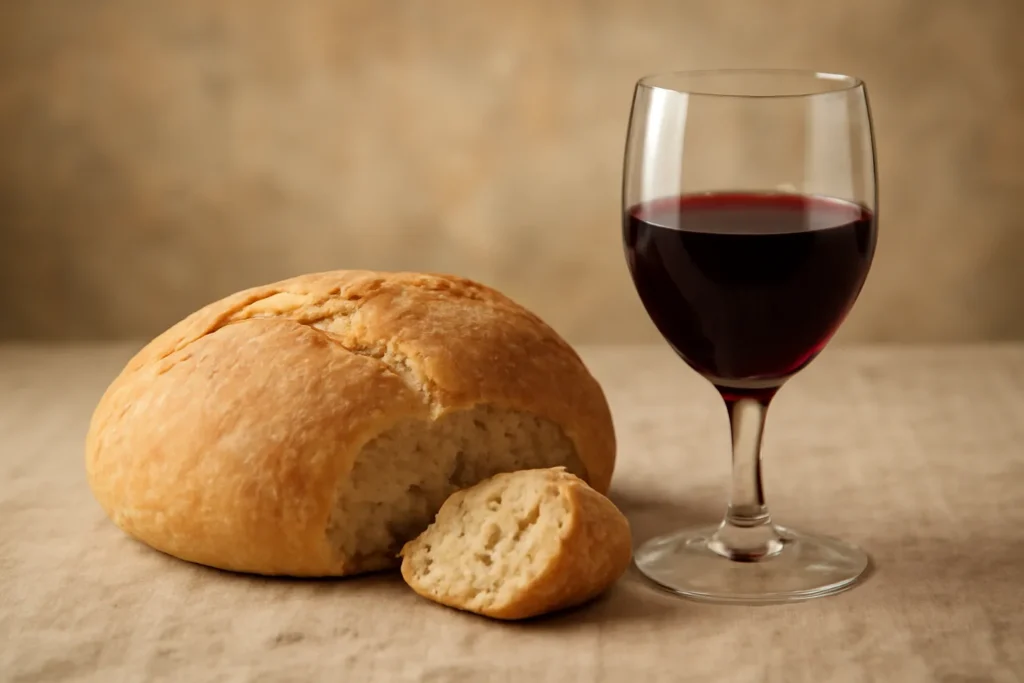
The phrase Bread, Wine, Communion evokes a set of practices that have shaped Christian worship and community for two millennia. This article explores what Bread, Wine, and Communion signify, how they function in liturgy and theology, and why communities differ in their understanding and practice of this sacred table. While the vocabulary can seem simple—bread and wine and a shared meal—the meanings span creation, covenant, sacrifice, memory, and hope. In this article, we will trace the biblical roots, the historical development, and the contemporary debates around Bread as a sign of life, Wine as a sign of blessing and sacrifice, and Communion as a shared life in Christ. We will use variations of the phrases Bread, Wine, and Communion to broaden semantic depth and help readers recognize the many ways these terms appear in Scripture, creeds, liturgies, and everyday faith practice.
The Bread: From Earth to Sacrament
In many Christian traditions, Bread represents the basic sustenance of life. It is one of the oldest symbols in religious ritual: a staple food that unites people at table and in worship. The bread used in the Lord’s Supper, also called the Eucharist or Holy Communion, is more than a food item; it stands in for a deeper reality. As Jesus shared bread with his disciples at the Last Supper, he invoked a new meaning: “This is my body, given for you” (Luke 22:19–20). The early church carried that symbolic act forward, insisting that the bread was not merely a reminder but a sign of participation in Christ’s life.
The type of bread matters in some traditions. In the Roman Catholic and Eastern Orthodox churches, the bread is often unleavened or specially prepared to symbolize purity and the haste of deliverance. In other settings—especially within various Protestant communities—the bread may be unleavened, leavened, or even abstracted into a simple wafer or cracker, depending on theological emphasis and historical custom. The bread of life motif also echoes in John 6, where Jesus calls himself the bread from heaven. For many readers, the bread links the physical act of eating with the spiritual reality of nourishment—both for the body and for the soul.
Beyond its use in the sacred meal, the Bread motif in Christian thought often carries the idea of hospitality, community, and sharing. Hospitality is a primal form of fellowship, and bread is a universal symbol of hospitality in many cultures. In the context of Communion, breaking bread together can symbolize a shared life within the body of Christ, a literal and social embodiment of unity. Some theologians stress that the bread symbolizes not only Jesus’ body but also the church as the body of Christ—the one loaf shared by many participants.
Unleavened Bread, Leaven, and Symbolic Meanings
Unleavened bread recalls the haste of the Exodus and the purity associated with God’s people in their journey toward the Promised Land, a theme especially prominent in the Passover tradition and in certain liturgical calendars.
Leaven can symbolize corruption and sin in some biblical images, though it also appears as a symbol of growth and life in others. Some traditions emphasize unleavened bread to maintain a link with the Jewish Passover meal and a sense of austere holiness.
In other contexts, bread may be interpreted as a sign of universal human hunger and God’s invitation to share in the abundance of grace that sustains life itself.
The Wine: Sign of Life, Covenant, and Sacrifice
Wine has long stood as a potent symbol in Communion and in the wider biblical narrative. At the Last Supper, Jesus blesses the cup and declares, “This cup is the new covenant in my blood, which is poured out for you” (Luke 22:20). The wine in that moment becomes a sign of the new relationship between God and humanity, a sign of covenant, grace, and redemption. Wine’s color, scent, and vitality have made it a natural emblem for blessing, joy, and sacrifice.
Theologically, wine has been interpreted in multiple ways. In some traditions, it is understood as a real sign of Christ’s presence in a sacramental sense. In others, it is primarily a powerful memorial meal that commemorates Jesus’ death and resurrection. For many Christians, wine also evokes the blood of Christ, shed for many for the forgiveness of sins. In practice, the symbolic meaning of Wine ranges from a sacramental sign of the new covenant to a remembrance of the cost of salvation, to a symbol of communal joy and solidarity in the Spirit.
There are variations in how Wine is used in different contexts. Some traditions use grape juice as a non-alcoholic alternative to wine for health, ethical, or denominational reasons. Others maintain the use of wine for its historical and theological associations with sacrifice and covenant. The choice of beverage often becomes a pastoral question as communities seek to honor their beliefs while welcoming participants who may have concerns about alcohol.
Wine and Covenant: The Blood Image
The association of Wine with blood in the biblical accounts is both symbolic and communicative. The phrase “blood of the covenant” evokes a binding, enduring promise that God makes with God’s people. In the Old Testament, blood is a sign of covenant ratification and forgiveness. In the New Testament, the blood of Christ becomes the sign that secures the new covenant, a covenant that invites believers into intimate relationship with God and with each other. For many readers, drinking from the cup of blessing is a way of publicly acknowledging dependence on the grace of Christ and opening oneself to the ongoing work of the Spirit in community.
The Communion Rite: Celebrating Together
The term Communion itself captures the central blessing of the practice: fellowship with God and with one another through a shared ritual meal. In a broad sense, Communion is about participating in the life, death, and resurrection of Jesus. In more technical terms, it is a liturgical act that enacts the presence of Christ among his people and deepens the bond within the church body. Through the rite, believers publicly declare their faith, repent of their sins, and receive grace that strengthens them for their daily walk.
Across Christian traditions, the Communion rite takes shape in slightly different forms and with varying frequency. In some settings, it is celebrated weekly; in others, monthly or quarterly. The structure typically includes a preparation or confession, the words of institution (often analogized by Jesus’ words at the Last Supper), the distribution of bread and wine or their substitutes, a communal blessing, and a closing prayer or blessing. For many communities, the act of approaching the table together embodies the church’s unity, a visible sign that diverse people are knit together in a common faith and mission.
Institution, Memorial, or Meal? A Spectrum of Meanings
Institutional interpretations emphasize Jesus’ command to “do this in remembrance of me” and the continued use of a sacred rite that has been handed down through apostolic teaching.
Memorial interpretations stress the act as a commemorative remembrance of Jesus’ atoning death, with emphasis on faith and gratitude rather than on any literal transformation of the elements.
Meal interpretations highlight the continuity of the kingdom feast, the inclusion of the poor, and the expectation of feasting with God in the age to come, often linking Communion to the hope of cosmic renewal and social justice.
Historical and Theological Foundations
The practice of sharing bread and wine in companionship with a sacred meaning has roots that stretch back into the Bible and the earliest Christian communities. The Last Supper narratives in the Gospels (Matthew 26, Mark 14, Luke 22) and Paul’s instruction (1 Corinthians 11) anchor the ritual in the authority of Jesus and the community’s recollection of his passion, death, and resurrection. The early church saw the Eucharist as part of a fuller worship that included baptism, preaching, singing, and communal prayer. Over centuries, debates about the nature of the presence of Christ in the sacrament—how Christ is really present in the elements—led to doctrinal formulations that would shape Catholic, Orthodox, and Protestant theologies.
In the Catholic and Orthodox traditions, the doctrine of Real Presence is central: Christ is truly present in the elements in a manner that is beyond mere symbolism. In the Catholic tradition, the technical term transubstantiation has been used (especially in the Western Church) to describe a change of the substance of bread and wine into the Body and Blood of Christ, with appearances of bread and wine remaining. In the Orthodox world, while not using the same term, the understanding of the real and enduring presence of Christ in the Eucharist remains foundational and is often described in terms of the Mystery (the Holy Mystery) that cannot be fully explained by human reason.
In the Protestant tradition, there is a spectrum of understanding. Some held to a more symbolic or memorial interpretation, while others affirmed a form of presence that is spiritual rather than a change of substance. Lutherans introduced the concept of the sacramental union, sometimes described as Christ’s presence “in, with, and under” the bread and wine. Reformed and Presbyterian theologians emphasized the spiritual presence of Christ in the gathered community and the Word, and covenantal understandings often linked the rite to God’s promises to his people. The Anglican and Methodist traditions offer a middle path that often honors the mystery of Christ’s presence while balancing the authority of Scripture, the sacraments, and the life of the church.
Major Doctrines and Divergent Traditions
The way Christians understand Bread, Wine, and Communion is deeply intertwined with larger doctrinal commitments about grace, the church, and the person of Christ. Here is a concise guide to several major streams.
Roman Catholic Perspective: Transubstantiation and Sacramental Grace
In Catholic theology, the Eucharist is a sacrament through which bread and wine become the actual Body and Blood of Christ for the communicants. The term transubstantiation describes a change in the substance of the elements, while the appearances (the “accidents”) of bread and wine remain. The Mass is the principal means by which the faithful participate in this mystery, benefiting from the graces conferred through the sacrament and the real presence of Christ. The Mass also includes the priestly mediation and the communal prayer of the Church, which sustains the faithful in the journey of faith.
Eastern Orthodox Perspective: Real Presence and Mystery
The Orthodox Church holds to a robust sense of Real Presence in the Eucharist, but typically without a single defined philosophical term like transubstantiation. The Divine Liturgy presents the Eucharist as a mystery in which Christ nourishes the faithful. Bread and wine are believed to be transformed in a way that is consistent with the fullness of the mystery of the incarnation and the ongoing life of the Church. Communion is not only a memorial but a union with Christ and, by extension, with the entire body of believers, transfiguring the entire person and community.
Lutheran Perspective: Sacramental Union
Lutherans are known for the doctrine of sacramental union, the belief that Christ’s real presence is truly present “in, with, and under” the elements of bread and wine. Unlike a purely symbolic interpretation, Lutheran theology emphasizes Christ’s presence while maintaining that the physical properties of the elements do not change. The practice communicates grace to the believer, strengthening faith and unity with the Body of Christ. The Lord’s Supper is a means of grace that must be approached with faith and reverence, and it should rightly reflect repentance, thanksgiving, and love for neighbor.
Reformed and Presbyterian Perspective: Spiritual Presence and Covenant Theology
In Reformed and Presbyterian circles, the emphasis often falls on the covenant and the spiritual presence of Christ in the assembly. The rites are a visible sign of an invisible reality: the communion of the faithful with Christ, and with one another, within the context of the covenant community. The emphasis on Scripture, preaching, and the right administration of the sacrament shapes how bread and wine are interpreted—more as signs that are efficacious through faith and the Spirit’s work, rather than through any physical transformation.
Anglican and Methodist Perspectives: Broad Unity and Varied Emphases
The Anglican Tradition often embraces a wide spectrum—from high-church, sacramental approaches that strongly affirm the real presence to more low-church, memorialist interpretations. The Book of Common Prayer and Anglican formularies emphasize the nourishment of the faithful through a rightly ordered liturgy that centers Scriptural reading and the thanksgiving for salvation in Christ. The Methodist tradition, shaped by John and Charles Wesley, tends to emphasize the *means of grace*, including Word, Prayer, Baptism, and the Holy Communion as a channel for grace, with a focus on personal faith, social holiness, and the universal call to holiness.
Baptist and Evangelical Perspectives: Memorial Tradition and Community Discipline
In many Baptist and other evangelical communities, the Lord’s Supper is often understood primarily as a memorial—an act of remembrance that looks back to Christ’s atoning work and forward to the hope of his return. While the symbolism is critical, these communities typically emphasize believer’s confession and self-examination before partaking, with a strong sense of voluntary participation that excludes infant baptism contexts in some traditions. The focus is on the<_strong>grace received through faith and the call to love and serve the neighbor as a fruit of that grace.
Symbolic and Practical Dimensions
The Bread and Wine in Communion are not only theological symbols; they carry practical implications for life in the church. The way a community understands the elements shapes its liturgy, pastoral care, and ethics. A symbolic understanding may lead to a more frequent or more flexible practice, while a belief in real presence can influence the degree of reverence given to the elements, the role of the priest or minister, and the sense of mystery surrounding the moment.
The practicalities of the rite—who may participate, how often, and with what sacred objects—reflect both theological commitments and local pastoral realities. Some churches allow anyone who professes faith in Christ to participate; others require baptism or membership in the church. Some communities use wine exclusively; others use grape juice as a concession for health, safety, or inclusivity. Food safety, dietary restrictions, and the desire to welcome children or new believers all shape how the rite is experienced.
Table Fellowship, Ethics, and Community Life
The act of sharing bread and wine together often influences more than worship; it can ripple into social ethics and community life. The table becomes a location for practicing hospitality, generosity, reconciliation, and mutual care. Some traditions emphasize that Communion is a foretaste of the eschatological feast—the feast of the Kingdom when divisions are healed and all things are made new. This vision calls believers to engage in acts of mercy, to feed the hungry, to pursue justice, and to cultivate unity in the Body of Christ.
The social ethic attached to Communion can vary. Some communities view the meal as a call to solidarity with the poor and marginalized, echoing the scripture’s insistence that the church be a witness to the kingdom of God in tangible ways. Others stress the personal, interior dimension—how fellowship with Christ transforms individual hearts and life patterns. Either way, the Bread and Wine table is not merely a ritual; it is a training ground for love, forgiveness, and shared mission.
Textual and Liturgical Foundations
The primary biblical foundations for the rite include the accounts of the Last Supper and Paul’s instructions to the church at Corinth. In Matthew 26:26–28, Mark 14:22–24, Luke 22:19–20, and 1 Corinthians 11:23–26, Jesus breaks bread and shares the cup with his disciples, appointing the rite as a continual practice for the church. Paul’s guidance emphasizes discernment, unity, and self-examination, urging communities to participate in a way that honors Christ and does not fracture the body.
The liturgical practice has evolved into a rich set of rites in different traditions. Catholic and Orthodox liturgies often present the Eucharist as the central action of worship, surrounded by a liturgical calendar, incense, icons, and chant. Protestant liturgies may emphasize preaching and congregational participation, with the Table set as an act of worship that invites all believers to gather around Christ. Anglican liturgies may blend classic prayers, Scripture readings, the Great Thanksgiving, and the distribution of elements in a way that seeks to hold together continuity with the early church and the realities of modern life.
In contemporary ecumenical discussions, the shared appreciation for Bread, Wine, and Communion often centers on the common desire to honor Christ and to foster unity among diverse Christian communities. Yet differences remain: questions about the precise mechanism of Christ’s presence in the elements, about the role of clergy in the administration of the sacrament, and about the reception of participants who belong to different church traditions. Some ecumenical agreements affirm that the Lord’s Supper is a meaningful sign of unity while recognizing the legitimate diversity of interpretation. Others emphasize the need for mutual respect and hospitality in shared communion when a church encounters believers from other traditions who share faith in Christ.
In recent decades, debates about bread and wine have also engaged with social questions: inclusion of remarried persons or same-sex couples in the life of the church, civil rights and justice, and how to practice Communion in times of global crisis or pandemic. Some communities have experimented with streaming or remote participation, while others maintain strict in-person reception. These conversations reflect how the ancient symbols adapt to modern life while continuing to speak to fundamental questions of identity, belonging, and faith.
Frequently Asked Questions About Bread, Wine, and Communion
Why is bread used in Communion? Bread signifies life, hospitality, and the body of Christ. It is a tangible sign that connects the physical world with spiritual realities.
Why wine or grape juice? Wine has long symbolized blessing, joy, and the covenant; grape juice is used in some contexts to emphasize accessibility, health, or to avoid alcohol. The important thing is the sign’s meaning and its reception by the communicants.
What does “Real Presence” mean? Real Presence means that Christ is truly present in the sacrament in a way beyond mere memory or symbol. How that presence is understood varies among traditions.
What is the difference between a sacrament and a memorial? A sacrament is an outward sign instituted by Christ that conveys grace, whereas a memorial primarily commemorates Christ’s saving deeds. Many traditions blend elements of both understandings.
How often should Communion be observed? Practices vary: weekly, monthly, quarterly, or at special occasions. The frequency often reflects theological emphasis, pastoral realities, and church tradition.
Crafting Meaning for Today: How to Read Bread, Wine, and Communion
For contemporary readers and communities, the meanings of Bread, Wine, and Communion can be interpreted in ways that speak with relevance to daily life. A robust understanding recognizes both the ancient roots and the present-day implications:
Bread as a symbol of life’s daily nourishment and the divine invitation to share in God’s provision for all people.
Wine as a symbol of joy, abundance, and the costly grace poured out for the world, inviting believers into a life of gratitude and service.
Communion as a communal practice that binds believers to Christ and to one another, forming a visible sign of the church’s mission in the world.
In practice, communities can foster a deeper appreciation for these signs by fostering hospitality, inclusivity, and reverence at the table. This includes careful catechesis for newcomers, clear explanations of the symbolism, and a shared sense of the table as a space of both grace and accountability. By approaching the rite with humility and curiosity, Christians can grow in understanding while remaining faithful to their own tradition.
Conclusion: What Bread and Wine and Communion Mean Today
The simple words Bread, Wine, and Communion carry a wealth of meaning that has evolved across generations. They are not only relics of ancient practice but living symbols that continue to shape Christian identity, worship, and ethical imagination. Across traditions—Catholic, Orthodox, Protestant, Anglican, and beyond—these signs invite believers into a deeper participation in the story of Jesus, the ongoing life of the church, and the hope of God’s renewal of all things.
In an era of diverse beliefs and global connectedness, the challenge and opportunity lie in honoring the integrity of one’s own tradition while seeking to understand others with charity. The Bread that sustains us, the Wine that testifies to the covenant, and the Communion that knit us together in love can become powerful instruments for reconciliation, justice, and mercy. When communities gather at the table, they do more than remember a historical event; they enact a present reality—a sign that God has not abandoned the world but is inviting all people into life in the risen Christ.








Leave a Reply