Catholic Protestant Difference: A Clear Guide to Beliefs, Practices, and History
Catholic Protestant Difference: A Clear Guide to Beliefs, Practices, and History
Catholic Protestant Difference: A Clear Guide to Beliefs, Practices, and History explores the core distinctions, similarities, and evolving conversations between two major streams of Western Christianity. This article uses careful, balanced language to explain how Catholics and Protestants understand God, salvation, worship, authority, and community life. While the term “Catholic-Protestant difference” points to a broad divide, the real picture is richer: it includes diverse traditions, historical events, and ongoing dialogue that continue to shape churches, families, and neighborhoods around the world.
The Big Picture: Understanding the Catholic-Protestant Difference
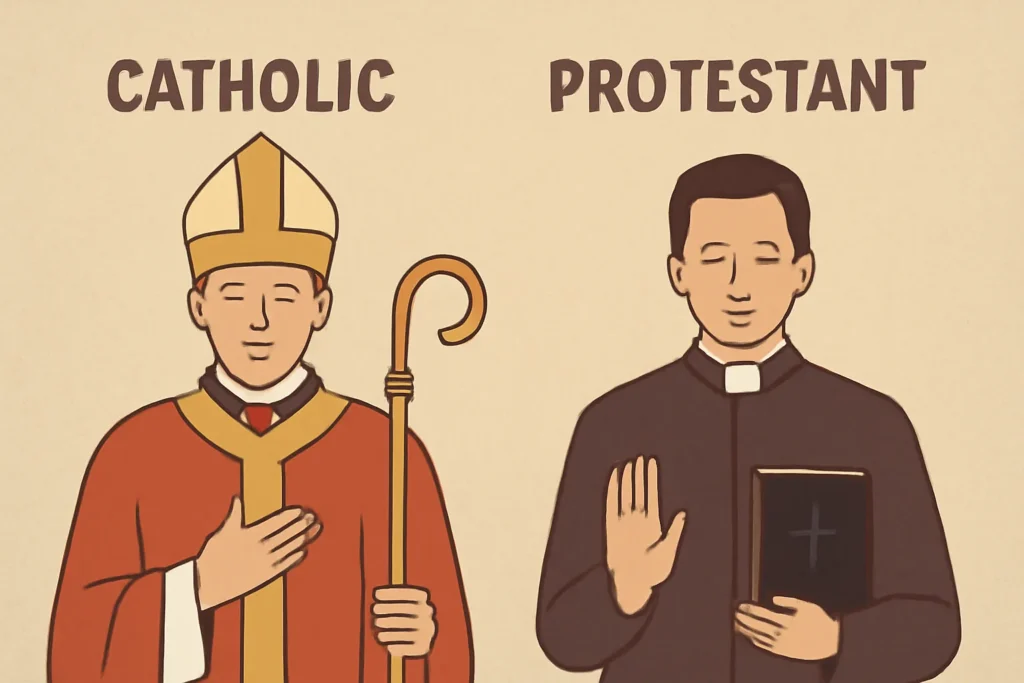
To grasp the catholic protestant difference, it helps to distinguish what many theologians call the two dominant streams of Western Christianity. In broad terms, Catholicism emphasizes a combination of Scripture and Tradition, the episcopal structure, and seven sacraments as means of grace. Protestantism, born out of the Reformation, often centers on Sola Scriptura (Scripture alone) as the rule of faith and a simpler sacramental life, with variations across denominations. But the story does not end with a single slogan. The history, beliefs, and practices of Catholic and Protestant churches reflect layers of theology, culture, and history that have interacted for centuries.
In this guide, you will encounter a number of variations on the theme of catholic protestant difference, including how different groups approach authority, salvation, worship, the role of the church, and the life of faith in everyday practice. The article also respects the breadth within each tradition—recognizing that not all Catholics or all Protestants share every belief or practice in identical ways.
Historical Roots: How the Catholic-Protestant Difference Emerged
Historically, the most decisive moments shaping this distinction were theological debates, political conflicts, and reforms that altered the organization of churches and the understanding of faith. Three major chapters mark the broad arc: the Great Schism between East and West, the Protestant Reformation in the 16th century, and the Catholic Counter-Reformation that followed. Although the Great Schism began long before the Reformation, it helps illuminate how disputes about authority and church life evolved over time.
Pre-Reformation Background: The Great Schism and the Medieval Church
Long before the reforming movements, the Western Church taught that the apostolic succession and the bishopric of Rome carried significant authority. The Catholic Church held that Tradition—the living transmission of the gospel through the Church Fathers, creeds, liturgical practices, and authoritative magisterial teaching—stood alongside Scripture as a source of divine revelation. For many centuries, Catholics understood that sacraments were not just symbolic acts but channels of grace administered by a clergy authorized by apostolic succession.
The Reformation and Its Key Figures
The catholic protestant difference especially intensified during the 1500s when reformers such as Martin Luther, John Calvin, and others questioned what they saw as abuses and distortions within the Catholic Church and proposed changes in doctrine and practice. The triggers included concerns about , the sale of church offices, and questions about how people are justified before God. The movement quickly diversified into various strands—Lutheran, Reformed, Anglican, Anabaptist, and later many other Protestant families—each interpreting Scripture differently and organizing worship and governance in distinct ways.
The Counter-Reformation and Catholic Renewal
In response to the Reformation, the Catholic Church launched what is commonly called the Counter-Reformation or the Catholic Reformation. Key actions included the Council of Trent (1545–1563), which clarified Catholic teaching on justification, the sacraments, the authority of Tradition, the role of the Church, and the veneration of Mary and the saints. The period also saw reforms in education, the revival of the priesthood, and renewed catechesis. The long-term effect of this era was a clarifying of Catholic doctrine and a reorganization of Church life that helped Catholics maintain a distinct identity in many parts of Europe and the world.
Thus, the broad arc from early church unity, through schismatic ruptures, into a redefined Catholic-Protestant landscape, provides the historical backdrop for the distinctives we discuss below.
Core Doctrinal Differences: Authority, Salvation, Scripture, and Tradition
One of the central questions in the catholic protestant difference concerns the source and scope of authority. Catholics emphasize a twofold source of authority: Scripture and Tradition, interpreted and guarded by the apostolic succession of bishops under the Pope. Protestants, by contrast, often emphasize Sola Scriptura, arguing that Scripture-alone should be the final authority for faith and practice, with traditions judged by their conformity to Scripture. Beyond authority, these branches diverge on the nature of salvation, the role of faith and works, and how grace is received.
Authority: Scripture, Tradition, and Magisterial Teaching
Catholic perspective: The Bible is sacred and inspired, but Tradition and Magisterial teaching (the official teaching authority of the Church) are also authoritative. The Pope and bishops interpret Scripture in light of Tradition, under the guidance of the Holy Spirit.
Protestant perspective: The Bible is the primary and ultimate authority for faith and practice. Some denominations accept the authority of creeds or confessions, but most reject a single institutional magisterium and rely on individual or congregational discernment guided by Scripture.
Justification and Salvation: Faith, Works, and Grace
The question of how humans are made right with God is a hallmark of the catholic protestant difference. Catholics teach that justification is a process involving both faith and works as part of the Holy Spirit's ongoing transformation of a believer. Protestants, seeking to recover the doctrine of Sola Fide, insist that justification is by faith alone in Christ, and that good works follow from faith as a fruit of salvation rather than as a necessary ingredient to obtain it. The exact balance of faith and works has varied over time and across denominations within Protestantism, but the central debate remains a focal point of the differences between Catholic and Protestant theology.
The Role of the Church: The Visible Church and the Ecclesial Structure
The Catholic Church sees itself as the one, holy, catholic (universal), and apostolic Church established by Christ, with a hierarchical structure and a visible continuity of leadership from the apostles through the bishops and the Pope. Protestants emphasize the priesthood of all believers in some forms, and many emphasize the church as a gathered community of faith rather than a single visible institution. This divergence manifests in governance, the authority of bishops or elders, and the means by which believers discern truth.
Sacraments and Theologies of Grace
The topic of sacraments stands as a core discriminator between Catholicism and Protestant traditions. Catholics teach that the seven sacraments are real, efficacious channels of grace. Protestants generally recognize two primary sacraments—{baptism and the Lord's Supper}—as instituted by Christ. Some Protestant groups practice only symbolic or commemorative understanding of the Lord's Supper, while others teach a real presence in various ways. The belief about how these rites operate is a central piece of the broader catholic protestant difference.
Sacraments and Liturgy: How Worship Happens
Worship practices and how believers experience grace through ritual are among the most visible differences in the Catholic-Protestant divide. The way the Eucharist is treated, the form of worship, and the structure of the service reflect longstanding theological decisions and local customs. The following contrasts outline the main lines of difference in sacraments and liturgy.
Catholic Sacraments: A Seven-Act Pathway of Grace
Baptism: Typically infant baptism, initiating the person into the faith community and initiating grace.
Eucharist (Mass): The central act of worship, understood as the real presence of Christ in the bread and wine through the doctrine of transubstantiation in many, though not all, Catholic communities.
Confirmation: Usually administered by a bishop, strengthening the grace received at baptism and equipping for service.
Penance (Reconciliation): Confession of sins to a priest and receiving absolution as part of ongoing conversion.
Anointing of the Sick: Spiritual and often physical healing for the seriously ill or elderly, administered by a priest.
Holy Orders: The ordination of bishops, priests, and deacons, enabling sacramental ministry and governance.
Matrimony: The lifelong covenant between spouses, with the Church recognizing and blessing the union.
Protestant Sacraments and Worship: Diversity Within Unity
Baptism: Often practiced in infancy or adulthood, depending on the denomination, with water baptism as a sign of faith and entry into the covenant community.
Lord's Supper / Communion: Observed as a remembrance of Christ’s sacrifice; interpretations vary from symbolic memorials to a real presence in some denominations (e.g., in some Anglican and Lutheran communities).
Less emphasis on rites as channels of grace: In many Protestant traditions, grace is received through faith in Christ, not through a sacral mechanism mediated by an ordained priest in the same way as Catholic sacraments.
Ordination and ministry: Many Protestant groups emphasize the priesthood of all believers, with church governance often led by elders, pastors, or assemblies rather than a centralized priestly hierarchy.
Liturgy and Worship Styles
In Catholic worship, the liturgy is highly structured, with a strong sacramental emphasis, formal prayers, liturgical seasons such as Advent and Lent, and movements like the Latin Rite and various Eastern Catholic rites. Protestant worship ranges from highly liturgical services modeled after Anglican or Lutheran traditions to contemporary worship with modern music and a less formal structure. The differences in liturgy reflect divergent theological emphases—especially the Catholic emphasis on sacramental grace and tradition versus the Protestant emphasis on the authority of Scripture and the primacy of preaching and the sermon.
Clergy, Church Government, and Community Life
The way church leaders are appointed, and the way congregations organize themselves, illustrates another layer of the catholic protestant difference. The Catholic Church maintains a hierarchical episcopal structure with the Pope at the top, followed by cardinals, bishops, priests, and deacons. The apostolic succession is considered essential to the sacramental life and the authority to teach and govern.
Many Protestant churches operate with varied governance structures. Some are congregational, with independent local churches governing themselves and selecting pastors; others are presbyterian, with governance by elders; others are episcopal in structure, similar to Catholic and Anglican models but with different theological emphases. Clergy sexuality varies as well: Catholic priests are typically celibate, with exceptions in some orphaned or special cases; Protestant pastors can be married in many denominations, though there are exceptions in some traditions. These governance and clerical differences contribute to the broader dialogue about how faith communities practice discernment, accountability, and pastoral care.
Mary, the Saints, and Intercessory Practice
A long-standing and emotionally significant facet of the catholic protestant difference concerns the veneration of Mary and the saints, as well as the practice of asking for their intercession. Catholics honor Mary as the mother of Jesus and attribute to her a special role in salvation history, while venerating other saints as models of faith and intercessors who can pray on behalf of the living. Protestants typically reject prayers to saints and view Mary in a significantly different, more reserved way, focusing prayer and devotion directly to God through Jesus Christ. The rejection or modification of intercessory prayer to saints is one of the clearest doctrinal and devotional divides between Catholicism and many Protestant traditions.
What this means in practice
Catholic practice: Veneration of Mary and the saints, celebration of feast days, and the inclusion of prayers asking for intercession in liturgy and devotion.
Protestant practice: Direct prayer to God, emphasis on Christ as the sole mediator, and a more restrained approach to honoring Mary and the saints.
Scripture and Tradition: How Believers Read the Bible
The relationship between Scripture and Tradition is central to the catholic protestant difference. Catholics teach that the Bible is inspired by God and authoritative, but its interpretation relies on and is safeguarded by the Church’s Tradition and teaching authority. Protestants generally claim that Scripture alone (Sola Scriptura) is the supreme and final authority for faith and practice, though many denominations also rely on historical creeds and confessional documents to guide doctrine and practice.
Contexts of interpretation
Catholic context: The Church provides interpretation through the Magisterium (pope and bishops) in light of Tradition and the living faith of the Church across generations. This approach emphasizes continuity, doctrinal development, and the use of official catechesis and liturgy to teach Scripture.
Protestant context: Local congregations, pastors, and theologians interpret Scripture with reference to the plain meaning of the text, historic creeds, and denominational confessions. The diversity of interpretation is a hallmark of Protestantism and is often seen as a strength in approaching Scripture directly.
Worship Practices Across Time and Place
The daily faith life of believers in either tradition is shaped by worship practices. Catholics tend to gather in churches with a liturgical rhythm tied to the liturgical year, the sacraments, and a specific sequence of prayers and responses. Protestants, on the other hand, often tailor worship to a denomination’s historical memory and contemporary culture, producing a spectrum from formal liturgia to casual, praise-led services. Still, many communities—Catholic and Protestant alike—practice music, preaching, prayer, and scriptural reading as core elements of weekly worship.
Liturgical year and calendar
Catholic: Advent, Christmas, Lent, Holy Week, Easter, and various saints’ days shape the worship life and preaching calendar.
Protestant: The calendar varies by denomination. Some emphasize the same seasons (Advent, Lent, Easter) but with different emphases or less formal liturgical structure; others focus more on sermon series and topical study rather than a fixed liturgical calendar.
Ethics, Morality, and Social Teaching
Both Catholic and Protestant traditions address ethics, morality, and social issues, but they often approach questions with different theological resources and historical experiences. The catholic protestant difference in moral theology can be seen in how each tradition understands human nature, grace, and the role of the Church in guiding conscience. Catholic moral teaching emphasizes natural law, the formation of conscience in a Christian context, and the guidance of the Magisterium. Protestant ethics emphasize personal faith, accountability to Scripture, and the witness of congregational life in discerning moral questions.
Key moral topics often discussed
Sanctity of life and human dignity
Social justice and charity
Marriage and family ethics
Religious liberty and the role of faith in public life
Ecology and stewardship of creation
In discussing these issues, it is important to recognize that there is also significant variation within each tradition. Different Catholic theologians and Protestant denominations may place emphasis on different aspects of ethics, leading to a broad spectrum of viewpoints even within a single tradition.
Historical Figures and Movements: The People Behind the Difference
The catholic protestant difference is not only about ideas; it is also about people who lived, taught, debated, and led communities through complex times. Examining some of these figures helps explain why beliefs and practices diverged, and how they have continued to evolve.
Martin Luther, John Calvin, and the Reformers
Martin Luther’s act of posting the 95 Theses is often cited as the spark that ignited the Protestant Reformation. Luther’s insistence on justification by faith, the authority of Scripture, and the rejection of certain church practices catalyzed reformers across Europe. John Calvin’s subsequent developments in Geneva helped shape Reformed theology, with a strong emphasis on predestination, sovereignty of God, and a structured church government. Their ideas produced a plural landscape of Protestant expressions, each with their own creeds, confessions, and forms of church life.
Anglicanism, Baptists, Methodists, and Other Protestant Families
With time, reform movements diversified into Anglicanism, Lutheranism, Reformed traditions, Anabaptist groups, and later the Baptist, Methodist, Pentecostal, and countless other streams. Each family of Protestantism developed distinctive theological emphases and organizational styles. The Church of England (Anglicanism) represents a bridge tradition with elements of Catholic liturgy and Reformed theology, contributing to the ongoing dialogue about how Catholic-Protestant differences can be navigated in a plural Christian context.
On the Catholic side, the Counter-Reformation included reforms in religious education, monastic life, and lay catechesis as well as reaffirmation of Catholic doctrine. The Council of Trent clarified many aspects of Catholic teaching that had been contested by reformers, including view of baptism, justification, and the authority of Tradition. In the centuries since, Catholicism has continued to articulate its beliefs through councils, papal encyclicals, and the ongoing work of bishops and theologians around the world.
Modern Developments: Ecumenism and Dialogue
In the modern era, a number of Catholic-Protestant dialogues have sought to identify common ground, resolve misunderstandings, and pursue greater Christian unity. The modern ecumenical movement recognizes the value of shared worship, joint service, and collaborative mission, while acknowledging continuing differences. Important milestones include official dialogues, agreements on matters such as justification, and collaborative social and humanitarian work. These efforts illustrate a shift from competition to conversation in many communities, a notable evolution in the larger history of the catholic protestant difference.
Key themes in ecumenical dialogue
Justification and the role of faith and grace
Eucharist / Lord’s Supper and the meaning of real presence
Apostolic succession and church governance
Apostolicity and shared mission in the world
Common Ground: Points of Agreement and Shared Faith
Even amid profound differences, Catholics and Protestants share a remarkable common ground rooted in the life, death, and resurrection of Jesus Christ. Both traditions affirm the Trinity, the Incarnation, the significance of Christ’s redemptive work, the importance of prayer, and the call to share God’s love with the world. Many Christians from both sides participate in service, charity, and acts of mercy—demonstrating a shared mission that transcends historical disputes. The catholic protestant difference thus includes not only disagreement but also deep convergence on the core gospel message and the call to discipleship.
Areas of shared faith and practice
Baptism as an entry into the Christian community
Prayer and reading of Scripture as central spiritual disciplines
Love for neighbor and service to the vulnerable
Mission and evangelism as vital aspects of Christian life
Ethical commitments to dignity, justice, and peace
Common Misunderstandings and How to Address Them
Because the catholic protestant difference has been debated for centuries, it is common for misperceptions to arise. Some of the most frequent misunderstandings include ideas about who is “saved by works” or “saved by faith only,” about the nature of the sacraments, or about the authority of the Pope. In reality, each tradition can express a wide spectrum of beliefs on these topics, and many theologians have worked to articulate nuanced positions that resist simple categorization. When discussing these topics, it helps to distinguish between official doctrinal statements, regional practices, and personal beliefs within each tradition.
Clarifying common assumptions
Assumption: Catholics deny the authority of Scripture. Reality: Catholics affirm Scripture as sacred and inspired, while also affirming Tradition and the teaching authority of the Church as means of preserving the correct interpretation of Scripture.
Assumption: Protestants reject sacraments altogether. Reality: Most Protestants practice baptism and the Lord’s Supper; they typically view these rites as ordinances given by Christ rather than as channels of grace in the Catholic sense.
Assumption: All Protestants are fundamentally the same. Reality: Protestantism is a family of many denominations with substantial differences in governance, worship, and theology.
Conclusion: Navigating the Catholic-Protestant Difference with Clarity
The catholic protestant difference is not simply a historical artifact or a dust-covered debate. It shapes how communities worship, how individuals understand salvation and grace, how churches are governed, and how Christians relate to one another in a plural world. Understanding these differences helps foster respectful dialogue, mutual learning, and shared witness in the world. While Catholics and Protestants may disagree on some points, they also share a common faith in a Triune God, a common devotion to Christ, and a shared calling to love and serve others. This guide has aimed to outline the major contours of belief, practice, and history so readers can gain a clearer and more nuanced view of the Catholic-Protestant divide and its ongoing development in the 21st century.
Glossary of Key Terms
To reinforce understanding of the catholic protestant difference, here is a concise glossary of terms often used in discussions about Catholicism and Protestantism. Bold terms appear throughout this article to emphasize their importance in the dialogue.
Tradition: The living transmission of the gospel through the Church's teachings, practices, and worship, considered alongside Scripture in Catholic theology.
Sola Scriptura: The belief that Scripture alone is the ultimate authority for faith and practice in many Protestant traditions.
Apostolic succession: The unbroken transmission of spiritual authority from the apostles through successive popes, bishops, and clergy.
Justification: God’s act of declaring a sinner righteous; perspectives differ on how faith, works, and grace relate to salvation.
Transubstantiation: The Catholic teaching that the bread and wine become the actual Body and Blood of Christ in the Eucharist.
Real presence: A doctrine held by some Protestants and Catholics about Christ’s presence in the Lord’s Supper, interpreted differently across traditions.
Magisterium: The teaching authority of the Catholic Church, exercised by the Pope and bishops in communion with him.
Whether you are exploring the Catholic-Protestant difference for scholarly study, personal curiosity, or interfaith dialogue, this guide provides a structured overview of beliefs, practices, and historical development. The conversation continues to evolve as churches engage in ecumenical dialogue and seek common ground while remaining faithful to their own identities. The journey through Catholic-Protestant difference can be a doorway to greater understanding, respect, and shared mission in a diverse world.





Leave a Reply