The Catholic crucifix is more than a decorative object. It is a compact shorthand for a central set of beliefs about the Passion of Christ, the meaning of sacrifice, and the call to imitate Christ's self-giving love. In Catholic life, a crucifix can serve as a focal point for prayer, a catechetical tool to teach the Mystery of the Passion, and a reminder of the duty to mercy in everyday action. Across homes, churches, schools, and chapels, the crucifix appears in many forms—each designed to nourish devotion and reflection in a specific context.
This article explores the meaning behind the crucifix, traces its historical development, and provides practical guidance on how to choose the right crucifix for different settings and stages of life. We will use a broad range of terms to reflect the richness of Catholic devotion, including crucifix, cruciform image, corpus on the cross, Jesus on the cross, and the cross with the corpus, all referring to the same sacramental symbol in different ways.
What is a Catholic crucifix?
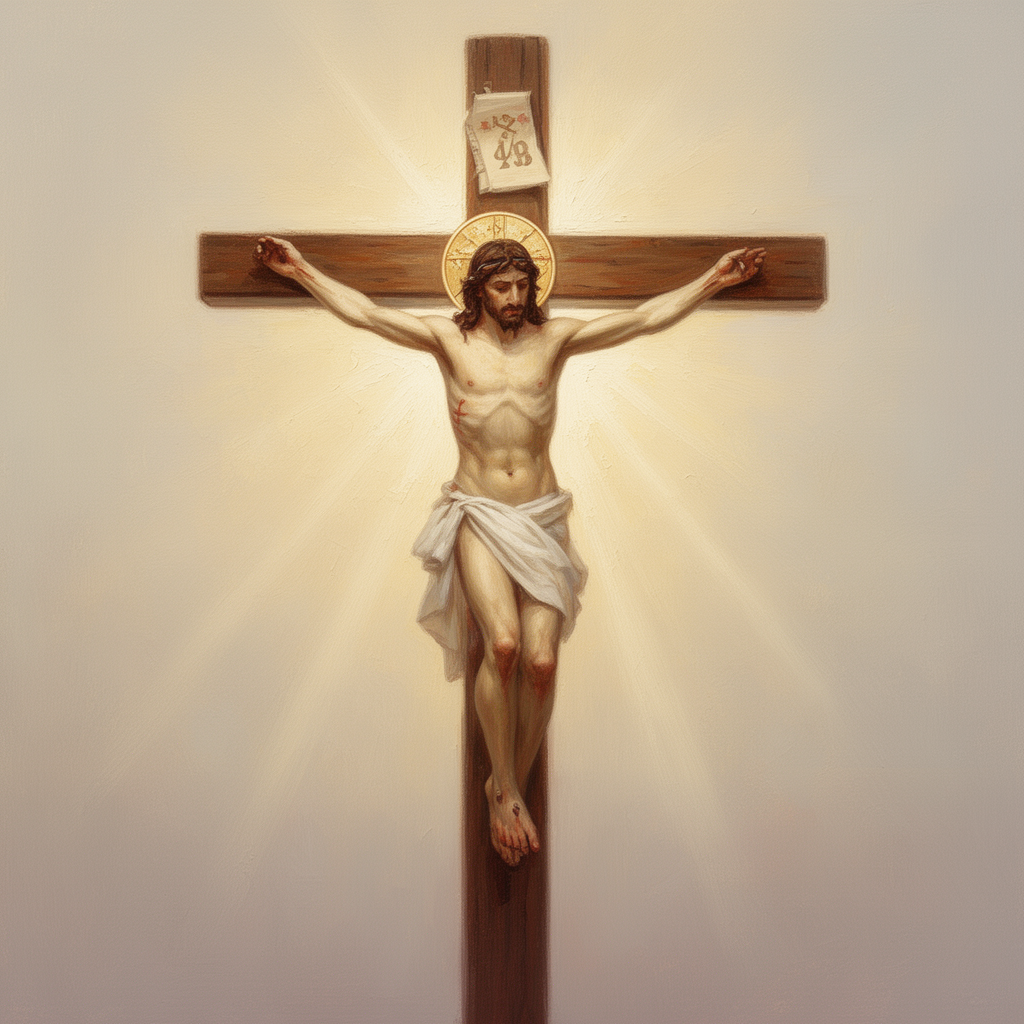
At its core, a crucifix is a cross that includes the figure of Jesus Christ, the Corpus. In Catholic tradition, this distinguishes the crucifix from a plain cross, which merely represents the instrument of the crucifixion without depicting the Suffering Christ. The presence of the corpus invites the faithful to contemplate the Mystery of the Incarnation and Redemption, inviting a personal encounter with Christ’s love and sacrifice.
Variations of the crucifix exist to suit different liturgical, devotional, or aesthetic needs. Some depict the Savior in a somber, stark style; others are richly adorned with gold, silver, or carved motifs. Some are designed to be graced by a processional staff or carried in a ceremonial procession; others are sized for a quiet moment of prayer on a bedside table or an altar at home.
The crucial distinction remains: a crucifix presents the person of Christ crucified in a way that invites contemplation of the suffering, love, and salvific action of Jesus. This is why Catholic devotion emphasizes both the humanity of Christ and the hope of resurrection that follows from the Passion.
Meaning and spiritual significance
The crucifix is a compact summary of the Gospel: Jesus freely gives his life out of love, conquers sin and death, and invites the faithful into a sharing of his life through grace. For Catholics, the crucifix is not a relic of antiquity alone; it is a living aid, a teacher of prayer and a device for meditation on the Passion.
Contemplation of the Passion: A crucifix invites a slow, steady gaze upon Christ's wounds, his crown of thorns, and his expressions of endurance and mercy. It supports practices like the Rosary, particularly the Sorrowful Mysteries, and the Way of the Cross (the Stations of the Cross).
Imitation of charity: The image points toward Christ's call to love without counting the cost, which is at the heart of Christian virtue. The crucifix challenges believers to act with compassion toward enemies, neighbors, and the vulnerable.
Liturgical memory: In liturgy and devotion, the crucifix anchors the faithful in the saving events of Jesus’ life. Whether on an altar, in a chapel, or in a private prayer corner, the crucifix keeps the historical memory of the Passion present.
Remembrance of sin and mercy: The crucifix places the human condition before the mercy of God. It reminds the viewer that redemption was accomplished through suffering—an invitation to repentance and gratitude.
In Catholic theology, the contemplation of the crucifix also leads to a deeper appreciation of the Paschal Mystery—Christ’s Passion, Death, Resurrection, and Ascension—and to a sense of responsibility to participate in that mystery through prayer, service, and a life lived in accordance with the Gospel.
Historical development of the crucifix
The history of the crucifix is long and variegated. Early Christians often spoke of Jesus’ crucifixion in terms of a cross, but the depiction of Christ on the cross did not appear in a uniform or universal way during the earliest centuries. Over time, the crucifix became a central visual symbol in Western Christian art and devotion. Its evolution reflects shifts in liturgical practice, theological emphasis, and artistic style.
Early symbols and the cross in early Christian art
In the first centuries of Christianity, the cross was used as a symbol more than as a representational image of Christ in a literal sense. The denomination of the cross as a focal point for devotion developed gradually. Some early art used simple crosses or pebbled motifs; others used monograms or Christ figures in scenes that hinted at the Passion without the full corporeal depiction we often see later.
The emergence of the crucifix in Western art
By the Middle Ages, particularly in Western Europe, the crucifix with a detailed representation of Jesus began to appear more frequently in churches and chapels. This shift mirrored a broader movement in Catholic spirituality toward the devotion to the Passion and a desire to make the suffering of Christ tangible for the faithful. The corpus on the cross—often in a naturalistic or idealized form—became a powerful aid for meditation and prayer.
From medieval to Baroque and beyond
During the late medieval and Renaissance periods, crucifixes grew in both scale and ornamentation. In the Baroque era, crucifixes could be grand and theatrical, incorporating muscular anatomical details, dynamic composition, and dramatic lighting. In more austere Catholic contexts, crucifixes remained simple, focusing on the solemnity of Christ’s sacrifice. Across centuries, differences in regional taste, monastic tradition, and liturgical use led to a rich diversity of crucifix forms—yet all retained the central aim: to aid prayerful contemplation of the Passion.
In modern times, crucifixes are produced in countless materials and sizes. Some are traditional wood carvings; others are metalwork, resin, stone, or mixed media. Some are designed for private devotion, some for churches and chapels, and others for processional or ceremonial use. Contemporary artists may incorporate abstract or minimalist aesthetics, but the underlying intention remains the same: to evoke the mystery of Christ crucified and to invite the faithful into prayerful encounter.
Different styles and types of crucifixes
The Catholic crucifix appears in many styles and configurations, each suited to a particular environment or purpose. Understanding the main types helps a buyer or devotee choose the one best aligned with their intention and space.
Wall crucifix
The wall crucifix is one of the most common forms in homes and churches. It is designed to be mounted on a wall, often at eye level, so that it can be easily seen during prayer. Wall crucifixes range from simple, unadorned wooden forms to elaborate, gilded creations. They are practical for everyday prayer, family chapels, and classroom settings.
Tabletop or devotional crucifix
A tabletop crucifix or devotional crucifix is sized for personal prayer spaces or small altars. These are typically freestanding and may be paired with an icon, a candle, or a small arrangement of flowers. They are ideal for bedrooms, study corners, or desks and serve as a discreet daily reminder of one’s faith.
Processional crucifix
The processional crucifix is carried in liturgical processions, such as the Easter Vigil, Corpus Christi, or parish pilgrimages. This crucifix is often mounted on a staff to be held aloft and carried with dignity. Processional forms may be lighter in weight for ease of carrying and can feature protective covers or ornate detailing to reflect their ceremonial role.
Cross with corpus vs. plain cross
A fundamental distinction is between the crucifix (cross with corpus) and the plain cross. The plain cross emphasizes the crucifixion event in a general sense and is more common in some Lutheran or Anglican contexts, while the crucifix emphasizes the living person of Christ and is central to Catholic devotion. Within Catholic practice, the crucifix is often preferred for personal prayer, altars, and Catholic churches.
Iconographic variations
Within the broad category of crucifixes, you’ll encounter variations such as:
Realistic corpus with lifelike anatomy and wounds
Iconic corpus with more symbolic or stylized features
Crucified Christ with dynamic posture showing Christ’s tension and movement
Mosaic or inlaid crucifixes for church settings
Minimalist crucifix focused on the silhouette or outline of Christ
Materials, craftsmanship, and symbolism
The material and craftsmanship of a crucifix convey different messages and serve different devotional environments. Common materials include wood, metal (bronze, brass, or silver), stone, resin, and occasionally precious metals for high-end liturgical pieces. Each material has a distinctive character, weight, and durability, which influences where the crucifix is best displayed.
Wooden crucifixes often carry a warm, traditional feel and are well-suited for home chapels or parish altars. The wood grain can be left natural or finished in tones ranging from pale to dark. Metal crucifixes—such as bronze or polished brass—offer a sense of permanence and classic elegance, making them common in churches and formal settings. Resin crucifixes provide versatility in design and color, making them accessible for schools and family prayer spaces. In some sacred art contexts, materials may be combined: a bronze corpus on a wooden cross, or a stone cross with a carved figure of Jesus.
The corpus itself—the representation of Jesus—can be integrated into the cross in different ways. Some crucifixes show a full, naturalistic figure attached to the cross, while others depict Jesus in relief or in a stylized form. The manner of depiction—calm and serene, or marked by visible suffering—reflects different devotional emphases. A crucifix with a lifelike corpus aims to evoke empathy for Christ’s suffering, whereas a more idealized corpus may highlight the mystery of redemption and the victory of love.
Selecting a crucifix—whether for the home, a chapel, or a church altar—depends on several practical and spiritual considerations. The right crucifix should be a faithful pastor for prayer, a fitting sign for the space, and a meaningful object for the person or community that uses it.
Consider the setting
Think about where the crucifix will be placed and how visible it should be. A home prayer corner might benefit from a smaller, intimate crucifix with soft tones, whereas a church altar requires a larger, durable crucifix with high visibility. A processional crucifix needs to be balanced for carrying in procession and should be comfortable to hold.
Size and scale
The size should be proportionate to the space and to the user. Large crucifixes work well in churches or entryways, while medium to small crucifixes suit family chapels and personal devotional spaces. A general rule is that the crucifix should be easily visible to the person praying, not so large as to be overpowering in a modest room, but prominent enough to draw focus in a liturgical setting.
Style and symbolism
Consider the mood you want to foster. If you prefer a contemplative atmosphere, you might choose a subdued, minimalist crucifix. If you would like to evoke the drama of the Passion, a more dramatic, detailed corpus can be powerful. For schools or catechetical spaces, a crucifix with clear, legible details can be especially instructive for children and catechumens.
Material and durability
Materials influence both aesthetics and maintenance. A durable metal crucifix may be ideal for a high-traffic church setting, while a wooden crucifix can impart warmth to a home shrine. Consider also the climate and cleaning needs; some woods and finishes are better suited to dry interiors, while alloys may tolerate humidity more climate-controlled spaces.
Placement and liturgical context
For churches, the crucifix is typically placed high on an altar wall or in a prominent niche as a visual focus during Mass. In homes, crucifixes are often placed in prayer corners, above altars, or near altars used for daily prayers. In processions, a crucifix is mounted on a staff with a protective cover, and it may be decorated for feast days or solemnities.
Historical and cultural considerations
Some traditional communities favor specific iconographic styles—Eastern Catholic, Latin Rite solemnities, or particular regional artistic traditions. Acknowledge local customs and the spiritual memory of the community when choosing a crucifix for a parish or family. The symbolism remains universal, but the artistic expression can be deeply rooted in local heritage.
Choosing for different uses: home, church, or gift
The purpose of the crucifix will guide the best choice. Below are practical guidelines for common scenarios.
For the home or personal prayer
Choose a size that fits the available space without overwhelming it.
Prefer a crucifix with a corpus that evokes reverent contemplation, not sensationalism.
Material should be durable and easy to care for; wood or metal in a warm finish is often a good balance.
Consider a side-lit or softly lit location to create a contemplative atmosphere during prayer times.
For a church or chapel altar
Durability and scale are primary concerns; select materials that withstand the environment and ceremonial use.
A crucifix with a strong, faithful iconography is important for liturgical accuracy and catechetical teaching.
Alignment with the liturgical color and the overall architectural style of the space is beneficial for unity.
Consider accessibility for the faithful to view details during religious education or catechism sessions.
As a gift or commemorative item
Choose a crucifix that reflects the recipient’s place in the faith journey—children, newly confirmed, or lifelong Catholics may appreciate different forms.
Blessing a crucifix before giving it as a sacramental gift can add spiritual meaning and grace for the recipient.
Personalization, such as engraving or a symbolic motif (e.g., a patron saint’s emblem), can deepen significance.
Prayer, devotion, and practical use of the crucifix
The Catholic crucifix is not merely an object of beauty; it is a productive aid for prayer. Devotional practices often center around the Passion narratives and the Hope of the Resurrection. The crucifix can accompany many spiritual disciplines.
Daily prayer corner: A small crucifix set near a candle and a Bible can anchor morning or evening prayer.
Rosary and meditations: The crucifix sets the tone for the recitation of the Rosary and can serve as a focal point during meditative pauses on the Passion.
Way of the Cross: A crucifix can be a practical element in a personal or parish Stations of the Cross layout, guiding reflection at each station.
Novena and special intentions: A crucifix can accompany intentions, acts of sacrifice, or acts of mercy, linking contemporary prayer to the Passion.
For families, a crucifix on the wall or a family altar can help pass on a tradition of prayer. For catechists and teachers, a well-chosen crucifix can serve as a tactile teaching tool, helping students connect doctrinal statements about the Passion with a tangible image.
Care and maintenance of a crucifix
A crucifix, like any sacred object, deserves respectful care. Proper maintenance preserves its beauty and ensures it continues to fulfill its devotional function for many years.
Cleaning: Dust regularly with a soft cloth. For wooden crucifixes, avoid harsh chemicals that could damage the finish. Metal crucifixes may be wiped with a dry or lightly damp cloth, followed by thorough drying to prevent tarnish.
Lighting and placement: Keep crucifixes away from direct sunlight to prevent fading of finishes or cracking of wood. In damp environments, ensure proper humidity control to avoid warping or corrosion.
Blessing and consecration: In many Catholic homes, crucifixes are blessed by a priest during liturgical seasons (e.g., Easter or the blessing of holy objects). Consider arranging a blessing if the crucifix is new or if it has been moved to a different place in the home.
Repair and restoration: If a crucifix becomes damaged, seek qualified restoration rather than attempting a DIY repair, as improper techniques can damage the image or its symbolism.
Theology and interpretation: a deeper look at the meaning
The crucifix is deeply theological. It embodies the central Christian claim about salvation: that God’s love is made visible in the person of Jesus Christ who freely embraces the cross. The depiction of the Passion on the crucifix is not merely a historical event; it is a present reality that invites the faithful into a living participation in Christ's life.
There are several theological threads often emphasized in Catholic teaching surrounding the crucifix:
Redemption through suffering: The crucifix presents the reality that Christ’s suffering has redemptive significance, opening humanity to grace and reconciliation with God.
Love poured out: The image communicates the unlimited scope of divine love in giving life for others, including the most vulnerable.
Victorious love: The crucifix points beyond crucifixion to the Resurrection, inviting believers to place their hope in Christ's victory over sin and death.
Discipleship and imitation: The crucifix challenges Christians to imitate Christ’s self-giving love in daily life—through mercy, justice, and solidarity with the suffering.
Cultural context and ecumenical note
While the crucifix is a hallmark of Catholic devotion, it also resonates with broader Christian spirituality and art. In the Catholic Church, the crucifix is used in liturgy, catechesis, and private devotion, but similar symbols appear in other Christian traditions with varying emphasis. An important point for readers is that the crucifix’s purpose transcends aesthetic taste: to remind believers of the mystery of Christ’s love and to invite them into a life of prayer and service.
In some contexts, Catholics may encounter Eastern Catholic crucifixes and cross-symbols that reflect different stylistic conventions while preserving the core meaning. The common thread is the conviction that the passion of Christ remains the center of salvation history and a model of virtue for all Christians.
Practical guidance: how to evaluate and acquire a crucifix
If you are in the process of acquiring a crucifix for a church, school, parish, or home, here are practical steps to consider before purchase or commission.
Clarify purpose: Is the crucifix for private devotion, a parish altar, a classroom, or a procession?
Assess space: Measure the intended wall height or display area to select an appropriate size.
Set a budget: Prices vary with material, craftsmanship, and size. Decide how much you are willing to invest.
Review iconography: Ensure the depiction aligns with Catholic teaching on the Passion and is respectful in tone.
Consider accessibility: Choose an option that is visible to all members of the community, including children and people with limited mobility.
Plan for blessing: Determine whether the crucifix will be blessed by a priest and how that blessing will be integrated into your parish or home practice.
Conclusion: living with a crucifix in daily life
A Catholic crucifix is more than a sign; it is a practical invitation into prayer and a reminder of the core beliefs of the faith. From its early roots to its contemporary forms, the crucifix remains a steadfast companion in moments of quiet reflection, communal worship, and shared catechesis. By understanding its meaning, its history, and the practical criteria for choosing the right one, believers and communities can select a crucifix that does not merely adorn a space but actively supports a life oriented toward Christ.
Whether you are seeking a humble home crucifix for personal devotions, an ornate Church crucifix for a solemn liturgy, or a portable piece for travel or study, the right choice will help foster a deeper encounter with the Passion, a stronger sense of mercy toward others, and a more vivid hope in the Resurrection. May your choice be blessed and may your prayer be guided by the example of Christ crucified and risen.









Leave a Reply