Bible Quotes: The Lord Is My Shepherd – Comfort, Faith, and Guidance
The opening line of Psalm 23 is one of the most enduring expressions of trust in
Scripture. The Lord is my shepherd invites readers into a relationship
with God that combines intimate care, steadfast protection, and gracious provision. This article explores
the breadth and depth of that single, resonant phrase by examining the full Psalm, its imagery of a shepherd’s care, and the ways
believers have drawn comfort, strengthened faith, and received guidance from it across generations.
The Psalm 23 Text in the King James Version
The Lord is my shepherd; I shall not want. He maketh me to lie down in green pastures: he leadeth me
beside the still waters. He restoreth my soul: he leadeth me in the paths of righteousness for his name's
sake. Yea, though I walk through the valley of the shadow of death, I will fear no evil: for thou art with
me; thy rod and thy staff they comfort me. Thou preparest a table before me in the presence of mine enemies:
thou anointest my head with oil; my cup runneth over. Surely goodness and mercy shall follow me all the days of
my life: and I will dwell in the house of the Lord forever.
This rendering from the King James Version (KJV) is a touchstone for many readers—not only for its cadence and memorability,
but for the way it threads together provision, visitation, discipline, protection, and blessing into one compact confession.
While other translations vary in word choice, the core message remains: a divine shepherd cares for God’s
people with intimate knowledge of their needs, guiding them toward sustenance, rest, moral direction, safety in danger,
and abundant blessing.
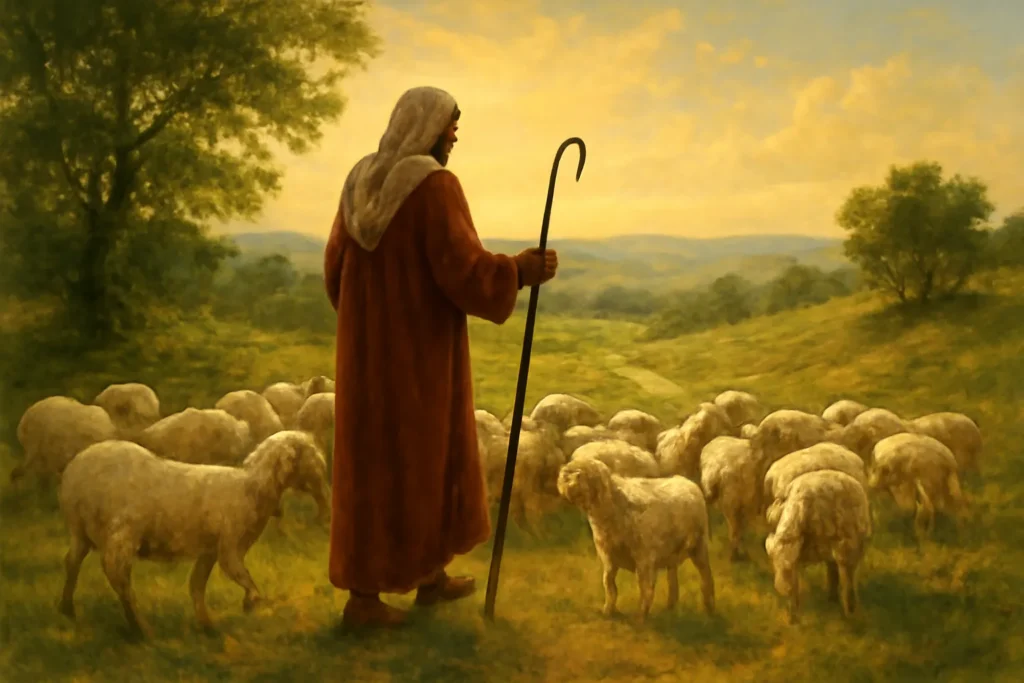
When we read The Lord is my shepherd, we lean into a picture of intimate care. The shepherd understands the sheep,
notices their desires, and responds to their vulnerabilities. In a world marked by uncertainty, this image offers a tangible
sense of comfort—not a vague reassurance, but a specific, relational assurance that God attends to real needs.
Provision — “I shall not want” signals that God does not overlook the essentials of life. The shepherd provides food,
shelter, safety, and daily bread. In times of scarcity, these words become a reminder that God’s care is not limited by human shortage.
Rest — “He maketh me to lie down in green pastures” implies a rhythm of rest that restores body and soul.
Rest is not laziness; it is a deliberate gift that re-centers the heart and clarifies purpose.
Peace — “beside the still waters” evokes quiet, healing waters that restore the inner life and invite refreshment.
The shepherd–sheep relationship in Psalm 23 is not distant or transactional; it is relational and intimate.
The shepherd knows the sheep by name, calls them to trustworthy paths, and sustains them through the day’s routine as
well as its moments of crisis. This is why many readers return to these lines in times of disappointment, fear, or fatigue.
The journey described in Psalm 23 is not a single moment of clarity but a lifelong path. The phrase paths of righteousness
refers to the moral and spiritual course by which a believer follows God’s character and will. The shepherd’s leadership is not arbitrary;
it is for the sake of God’s name and glory, yet it also serves the deepest human longing for meaning, purpose, and integrity.
In this sense, the Psalm becomes a map for faith:
Resting in God’s care before acting on human initiative.
Listening for guidance as the shepherd’s voice directs toward green pastures and still waters.
Walking in righteousness as a response to grace, rather than as a means of earning approval.
Following through trials with confidence, because the shepherd’s presence transforms fear into courage.
Across centuries, believers have used Psalm 23 to anchor prayers of trust. In worship, the phrase The Lord is my shepherd
becomes a declaration of allegiance: God is not merely a distant sovereign but a personal caretaker who enters into the texture of daily life.
The personal possessive—“my”—makes the Psalm a confession rather than a general statement, inviting readers to make the line their own.
The Psalm cycles through several striking images: pasture and waters, restoration and guidance, danger and protection, hospitality and abundance,
presence and blessing. Each image opens a doorway to a larger truth about God’s guidance, and each invites a practical response
in prayer and living.
The call to lie down in green pastures and to drink from still waters suggests more than physical rest. It implies
a spiritual cadence—times when the heart is quiet enough to hear God’s voice, to discern next steps, and to receive renewal for
the mind and will. In a world of haste, stillness becomes an act of trust.
Paths of righteousness: direction for living
The line “he leadeth me in the paths of righteousness for his name’s sake” points toward ethical living as a response to grace. The shepherd
sets the direction, and the sheep follow not out of fear but out of gratitude and trust. This is not merely moral law; it is
relational alignment with the One who cares for us.
Through the valley of the shadow of death: courage in danger
“Yea, though I walk through the valley of the shadow of death” is one of the most evocative phrases in Scripture. It acknowledges
that life includes fearsome spaces, moments of loss, and the presence of danger. Yet the Psalm shifts the posture from fear to faith: I will fear no evil, because the shepherd accompanies the sheep. The rod and staff become instruments of comfort—not
weapons of punishment, but tools of guidance and protection.
The table, the oil, and the cup: abundance amid threats
The image of a prepared table in the presence of enemies flips expectations: even in hostile territory, God’s provision is visible and intimate.
Anointing with oil and the overflowing cup symbolize honor, hospitality, and spiritual abundance. This is the sign that even in adversity,
God's generosity remains abundant, and His blessing is a tangible part of daily life.
Goodness, mercy, and dwelling: the arc of blessing
The closing line—“Surely goodness and mercy shall follow me all the days of my life: and I will dwell in the house of the Lord forever”—points
toward a future hope while sustaining present trust. The blessing is not episodic; it is ongoing, persevering, and rooted in a lifelong
relationship with the Creator who cares for the soul.
The core assertion—God as shepherd who carefully tends His own—appears in many translations and paraphrases. While wording changes,
the semantic breadth remains rich. Here are some ways readers have encountered the shepherd image beyond the exact KJV wording:
The Lord is my shepherd; I shall not want — a direct, compact expression of trust and provision found in classic English renderings.
He makes me lie down in green pastures and guides me beside still waters — emphasizing deliberate action and gentle leadership.
He refreshes my soul — a paraphrase that captures the inward renewal that follows divine care.
He leads me in paths of righteousness for his name’s sake — highlighting motive and purpose in moral direction.
Even when I walk through the darkest valleys — a commonly quoted variation that preserves the sense of danger while reaffirming trust.
In addition to the direct King James rendering, readers encounter this imagery in alt translations, liturgical language, and
poetic adaptations. Some modern paraphrases rephrase to emphasize relational trust: God as “my guide,” “my protector,” and
“my provider” who travels with us through life’s landscapes. The essential idea—God as a personal shepherd who tends to
the needs of the flock—remains constant, even as the surrounding wording shifts across traditions and generations.
For many believers, Psalm 23 functions as a practical resource for daily prayer. Its images translate well into contemplative
practice, guided meditation, and intercession for others. Here are practical ways to engage the Psalm in personal devotion and group worship:
Begin with a quiet breath: invite the shepherd’s presence into the space of prayer, acknowledging vulnerability and need.
Repeat the key lines: recite “The Lord is my shepherd” and the opening verses to center the mind and heart on God’s care.
Personalize the imagery: imagine God as your own shepherd in today’s life—providing for your family, guiding your decisions, and comforting your anxieties.
Journal reflections: note where you need rest, guidance, or protection, and record how God’s promises speak to those needs.
Pray through each image: reflect on green pastures, still waters, paths of righteousness, valleys, tables of blessing, and the ongoing mercy and goodness as a practice of gratitude.
In worship settings, Psalm 23 can be used responsively. A leader might read a line, and the assembly responds with a verse or a prayer.
The rhythm of the psalm—progressing from provision to protection to blessing—lends itself to a structured devotional or a spontaneous
moment of praise in difficult seasons.
The universality of Psalm 23 lies in its relevance to comfort, faith, and guidance across
life circumstances. In times of personal loss, illness, or uncertainty, these lines offer a language for grappling with fear while
acknowledging God’s presence. In times of opportunity and growth, the Psalm invites grateful dependence that honors God’s goodness.
Consider how the three pillars—comfort, faith, and guidance—operate together in real life:
Comfort emerges when fear is calmed by the sense that God is near, not distant.
Faith grows as moments of uncertainty become occasions to trust the shepherd’s good intentions and steadfast care.
Guidance is the practical outworking of trust: decisions aligned with compassion, justice, and truth that reflect the shepherd’s character.
Across centuries, the Psalm has been a companion during crises and a beacon in praise. Its verses have comforted refugees, soothed the
anxious, and inspired poets, musicians, and pastors to articulate God’s care in fresh ways. The timelessness of the shepherd imagery
ensures that its message remains accessible to children, scholars, and people in all stages of life.
The Lord is my shepherd, a declaration of intimate relationship with God. The shepherd’s care begins with provision—an assurance
that we do not face life’s needs alone. The image of lying down in green pastures and being led beside still waters
speaks to a rhythm of rest that sustains the soul for the day ahead.
Verse 3: Restoration and direction
God restores my soul and then guides along the paths of righteousness for God’s name’s sake. This is a spiritual
restoration that makes possible a life oriented toward virtue, truth, and compassion—an alignment with the God who is faithful.
Verse 4: Courage in danger
Even in the darkest places, the shepherd’s presence dispels fear: “I will fear no evil,” because the Lord is with the sheep.
The rod and staff symbolize protection and guidance, turning fear into faith as the journey continues through testing.
Verse 5–6: Provision amid threats and lasting blessing
The image of a table set in the presence of enemies speaks to God’s astonishing provision even in hostile circumstances. Anointing with oil and
the cup that overflows communicate abundance, generosity, and honor. The final benediction—“Surely goodness and mercy shall follow me
all the days of my life: and I will dwell in the house of the Lord forever”—closes the psalm with hope that life in God’s presence is
both present and eternal.
The language of Psalm 23 invites believers to examine how comfort, faith, and guidance shape daily living. The metaphor
of a shepherd is not only a description of God’s care; it is an invitation to respond with trust, gratitude, and faithful action in all
aspects of life.
Comfort in hardship: when pain or loss presses in, recall that God tends to the fragile and the frightened with tenderness.
Faith in daily life: trust becomes a practice of choosing God’s way over despair, inviting a posture of hope even when the road is long.
Guidance in decision-making: seek the shepherd’s voice in scripture, prayer, community, and conscience, allowing the path of righteousness to shape choices.
Biblical authors often connect shepherd imagery with other strands of revelation. For example, Jesus is described in John 10 as the good shepherd,
who knows his sheep by name and lays down his life for them. This New Testament echo deepens the portrait of
leadership as sacrifice, intimate knowledge, and protective love. The writer of Hebrews speaks of the Lord as the great shepherd,
who leads the church through times of difficulty toward spiritual completion. Taken together, these strands illuminate a theology of care
that is not distant or abstract but deeply rooted in relationship.
Whether you are preparing a sermon, a classroom lesson, or a family devotional, Psalm 23 offers a robust framework for teaching about
God’s character and His dealings with humanity. Here are some practical ideas for using this passage in teaching and ministry:
For sermons: use the psalm as a structure for a faith journey, moving from God’s provision to His protection and blessing.
For Bible study: assign verses to pairs or small groups to explore the metaphor of shepherd and sheep, and to compare Old Testament
imagery with New Testament fulfillment.
For families: create a nightly ritual of reading a portion of the psalm, asking each family member how they sense God’s care in their day.
For personal growth: memorize the verses that speak most directly to current needs and reflect on how God’s promises shape responses to fear, scarcity, or injustice.
Understanding Psalm 23 also invites attention to its historical context. In ancient Near Eastern life, the shepherd’s responsibilities
included feeding, guiding, protecting from predators, and leading flocks to water and pasture. The pastoral setting would have been familiar
to the original audience, making the metaphors tangible. The language of “green pastures” and “still waters” would evoke not only physical nourishment
but the emotional and spiritual nourishment that follows trustworthy leadership. While the exact cultural setting may differ across eras, the
underlying truth remains accessible: God’s care meets us in concrete ways, in ordinary moments, and in extraordinary trials.
Throughout history, Psalm 23 has appeared not only in prose but in poetry, hymnody, and liturgical chant. The pastoral imagery has inspired
countless musical settings and visual arts. In churches, families, and communities that hold the Bible in high esteem, the refrain
of a shepherd’s care often becomes a language of hope used in weddings, funerals, healing services, and times of transition. The line
“Surely goodness and mercy shall follow me” has echoed in choir lofts and living rooms alike as a reminder that blessing travels with the believer.
The enduring power of The Lord is my shepherd lies in its ability to be both personal and universal. It speaks to
the intimate bond between Creator and creature, while inviting every reader into a journey of comfort, faith, and guidance. The Psalm does not merely offer a philosophical idea; it points to a relationship that shapes how people
live when faced with daily responsibilities, moral decisions, personal fears, communal needs, and the ever-present realities of life’s changing seasons.
If you are seeking a single, reliable phrase to anchor prayer, a gentle reminder in difficult times, or a doorway into a broader meditation on
God’s care, Psalm 23 provides a welcoming threshold. It invites you to know God not as a distant ruler but as a personal shepherd—someone who
tends, guides, refreshes, protects, provides, and blesses. In doing so, it offers a quiet, resilient framework for navigating the complexities of life
with courage, compassion, and hope.
May the words The Lord is my shepherd continue to be a source of comfort, a wellspring for faith, and a reliable
source of guidance as you walk your own path today and tomorrow.








Leave a Reply