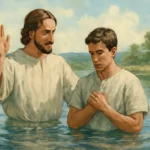
Introduction: Baptism Verses as a Guide for Readings, Messages, and Prayers
Baptism is a landmark moment in the life of a believer or a family. It marks a public declaration of faith, a symbolic washing, and a doorway into the life of Christ. Baptism verses offer a spiritual compass for ceremonies, sermons, and prayers. They help the gathered community name the significance of the moment, illuminate the meaning of the water, and remind everyone present of the long arc of God’s redemptive work. In this article, we explore a broad collection of baptism verses drawn from the Bible, with practical guidance on how to read them, how to incorporate them into readings and prayers, and how to adapt them for different ages and contexts. The verses below are presented with context, themes, and brief reflections so that readers and ministers can select readings that fit their unique ceremony.
Why Baptism Verses Matter: Theology, Prayer, and Public Witness
Baptism verses do more than quote lines of Scripture; they place the moment within a doctrinal and pastoral framework. They can emphasize:
Identity in Christ: “If anyone is in Christ, he is a new creation” (2 Corinthians 5:17). Verses like this help the congregation see the baptismal candidate as someone whose life is being reoriented toward Jesus.
Death and New Life: The imagery of dying to the old self and rising to new life through Christ is a central theme in Romans 6 and Colossians 2. Readings that highlight “buried with him by baptism” and “walk in newness of life” frame baptism as a transformative passage.
Grace and Promise: Baptism is a gift of God’s mercy, not merely a ritual. Verses that speak of regeneration, washing, and the Spirit convey the gracious basis of baptism.
Public Profession and Covenant: Baptism is a public sign of faith and allegiance to the Triune God. Passages that mention the name of the Father, Son, and Holy Spirit remind the church of the communal responsibility to nurture and sustain the new believer.
When choosing verses for a baptism ceremony, consider the audience, the age of the candidate, and the pastoral tone you want to set. A child’s baptism may emphasize the nurture of the family and the church, while an adult baptism may foreground personal decision, conversion, and mission. You can also weave in passages about God hearing prayers, guiding the steps of the faithful, and empowering believers to live out their faith in everyday life.
Foundations: Old Testament Echoes and New Testament Fulfillment
The Bible presents water imagery and the concept of baptism in ways that bridge testaments. While the explicit practice of baptism as an event is most clearly developed in the New Testament, the old covenant also points toward cleansing, renewal, and the transformation of life that baptism embodies.
Old Testament Echoes: Water, Renewal, and Covenant
The prophetic and historical books use water imagery to speak of salvation, cleansing, and the future in which God’s people are made whole. These passages help readers grasp the anticipatory backbone of baptism as a sign of God’s gracious work:
Isaiah 12:3 — “Therefore with joy shall ye draw water out of the wells of salvation.” This line invites readers to imagine baptism as a joyful encounter with the source of salvation.
Exodus language and the Red Sea crossing provide a typological backdrop for baptism: a transition from slavery to freedom, a passage through a form of waters that marks a new identity for a people newly claimed by God.
New Testament Fulfillment: Water and Spirit, Identity, and Mission
In the New Testament, baptism is tied to the life, death, and resurrection of Jesus, and to the sending of the Spirit. The following passages illuminate multiple facets of baptism—its relationship to faith, cleansing, union with Christ, and vocation to serve.
John 3:5 — “Except a man be born of water and of the Spirit, he cannot enter into the kingdom of God.” This verse anchors baptism in a twofold birth—both water and Spirit—as a prerequisite for life with God.
Romans 6:3–4 — “Know ye not that so many of us as were baptized into Jesus Christ were baptized into his death? Therefore we are buried with him by baptism into death: that like as Christ was raised up from the dead… we also should walk in newness of life.” A compact articulation of dying and rising with Christ through baptism.
Colossians 2:12 — “Buried with him in baptism, wherein also ye are risen with him through the faith of the operation of God.” This verse emphasizes the spiritual significance of water baptism as a participation in Christ’s death and resurrection.
These biblical foundations help readers and worship leaders build a reading plan that is coherent with Christian theology while remaining accessible and relevant in a modern ceremony.
Categories of Baptism Verses: Key Themes to Read and Reflect Upon
To help you choose readings that fit your ceremony, here are common themes and a sample set of verses for each. You’ll find short excerpts (to keep readings readable in a church environment) paired with brief reflections to guide the spiritual focus during the service.
Identity in Christ
Verses in this category remind us that baptism marks a new identity and belonging in Christ. They can reassure the candidate and remind the community of the freedom and responsibility that come with being in Christ.
2 Corinthians 5:17 — “If any man be in Christ, he is a new creature.” Reflection: Baptism is the outward sign of a renewed life and a new start in the Lord.
Galatians 3:27 — “For as many of you as have been baptized into Christ have put on Christ.” Reflection: The baptized person is clothed with Christ’s righteousness and identity.
Colossians 3:10 — “And have put on the new man, which is renewed in knowledge after the image of him that created him.” Reflection: Baptism initiates ongoing formation into Christ’s likeness.
Death and Resurrection
The language of dying and rising provides a powerful narrative for the ceremony. It frames baptism as participation in the gospel story and the believer’s commitment to live in renewed union with Christ.
Romans 6:4 — “We are buried with him by baptism into death: that like as Christ was raised up from the dead, even so we also should walk in newness of life.” Reflection: The water is a sign of burial and the plunge into a future guided by resurrection power.
Romans 6:3–4 (concise) — “Baptized into Jesus Christ; buried with him; raised to walk in new life.” Reflection: The sequence invites reverence for what God does in a life marked by baptism.
Colossians 2:12 — “Buried with him in baptism, and raised with him through faith.” Reflection: A life rooted in faith, not merely ritual.
Grace, Purification, and Renewal
Readings here emphasize that baptism flows from God’s mercy and results in spiritual cleansing and renewal by the Spirit.
Titus 3:5 — “Not by works of righteousness which we have done, but according to his mercy he saved us, by the washing of regeneration, and renewing of the Holy Ghost.” Reflection: Baptism is a response to grace, not a merit.
1 Peter 3:21 — “The like figure whereunto even baptism doth also now save us.” Reflection: The sign points to God’s saving work in Christ.
John 1:5 — “The light shineth in darkness; and the darkness comprehended it not.” Reflection: In baptism, a new light enters a life once hidden in darkness.
Calling, Mission, and Community
Some readings connect baptism with vocation—the call to live as witnesses of the gospel and participants in the mission of God.
Acts 2:38 — “Repent, and be baptized every one of you in the name of Jesus Christ for the remission of sins.” Reflection: Baptism accompanies conversion and the beginning of a life committed to Christ.
Matthew 28:19–20 — “Go ye therefore, and teach all nations, baptizing them in the name of the Father, and of the Son, and of the Holy Ghost.” Reflection: Baptism is tied to discipleship and mission.
1 Corinthians 12:13 — “For by one Spirit are we all baptized into one body.” Reflection: The baptism unites believers into the diverse, faithful body of Christ.
Verses for Readings: A Practical Treasury
Below is a practical treasury of baptism verses grouped by theme. Each entry includes a brief note on how to use the verse in a ceremony—whether as a responsive reading, a spoken reflection by a pastor, or a sung refrain during the water blessing.
Identity and New Life
2 Corinthians 5:17 — “If any man be in Christ, he is a new creature.” Use as an opening promise of new identity in Christ.
Galatians 3:27 — “For as many of you as have been baptized into Christ have put on Christ.” Consider pairing with a blessing that speaks of clothing in Christ’s righteousness.
Romans 6:4 — Short excerpt: “Buried with him by baptism into death.” Use as a meditation on burial and new life.
Titus 3:5 — Short excerpt: “the washing of regeneration.” Reflection: Baptism as a sign of God’s mercy and renewal.
1 Peter 3:21 — Short excerpt: “The like figure whereunto even baptism doth also now save us.” Reflection: A sign that points to a saving work beyond the water.
John 3:5 — Short excerpt: “born of water and of the Spirit.” Reflection: The inner work of the Spirit that baptism signifies.
Christ’s Death and Resurrection
Romans 6:3–4 — Short excerpt: “baptized into Jesus Christ… raised up from the dead.” Reflection: Walking in new life because Christ lives in us.
Colossians 2:12 — Short excerpt: “risen with him.” Reflection: The continuous resurrection life that follows baptism.
Public Declaration and Discipleship
Matthew 28:19–20 — Short excerpt: “baptizing them in the name of the Father, and of the Son, and of the Holy Ghost.” Reflection: The Trinitarian basis of baptism as a covenantal act.
Acts 2:38 — Short excerpt: “for the remission of sins.” Reflection: Baptism as part of repentance and faith response.
Readings for Different Baptism Contexts: Suggestions and Variations
Readings can be tailored to various contexts: infant or child baptisms, teen or adult baptisms, and even symbolic infant dedication ceremonies in churches that do not practice infant baptism. Here are some guidelines and ready-to-read options.
Infant or Child Baptism: Focus on God’s care, blessing, and family ministry
Isaiah 44:3 — “I will pour water upon him that is thirsty.” Reflection: God’s nurture through the family and the church community.
Mark 10:14 — “Suffer the little children to come unto me.” Reflection: Jesus’ welcoming posture toward children and the hope for a blessing on their lives.
Romans 15:13 — “The God of hope fill you with all joy and peace in believing.” Reflection: A blessing for parents and child as they begin the journey of faith together.
Youth and Adult Baptisms: Emphasis on decision, commitment, and mission
John 3:3 — “Except a man be born again, he cannot see the kingdom of God.” Reflection: The turning point of faith and new vision for life.
Romans 12:2 — “Be not conformed to this world: but be ye transformed by the renewing of your mind.” Reflection: Baptism as a turning toward a transformed life.
2 Corinthians 4:6 — “For God, who commanded the light to shine out of darkness, hath shined in our hearts.” Reflection: God’s light guiding a new path after baptism.
Combined or Community Readings: Family, church, and shared faith
1 Corinthians 12:13 — “For by one Spirit are we all baptized into one body.” Reflection: Baptism as a unifying moment for the church family.
Acts 16:31–34 — Short excerpt: The household faith and baptism as a witness in a personal setting. Reflection: The grace of community faith in a new believer’s life.
Prayers and Reflections: Praying Around Baptism Readings
Prayers can accompany readings, bringing the reader and the gathered congregation into an active, communal response. Below are sample prayers and reflections you can adapt to fit your ceremony.
Opening blessing: “We gather to witness a step of faith, trusting in the grace of God who calls us into a living hope through Jesus Christ.” Use Scripture about God’s mercy and the Spirit’s work to frame the opening prayer.
Prayer for the candidate: “Grant, Lord, that as water signs cleansing and new life, so your Spirit would renew this heart. May they walk in the fellowship of Christ and be guided by your truth.”
Prayer for the family and church: “May the family be anchors of faith and mercy; may the church be a harbor of nurture and accountability; and may the gospel’s power be evident in this moment.”
You can also weave in short quotations from the verses above as spoken lines by the pastor, by family members, or by the candidate themselves. For instance:
“If anyone is in Christ, he is a new creature.” — used as a confession of identity by the candidate.
“Buried with him in baptism, and raised with him through faith.” — spoken as a prayer of gratitude for new life in Christ.
Practical Guidelines for Reading Baptism Verses in Ceremony
Reading Scripture well in a baptism ceremony requires thoughtfulness about length, translation, context, and the listener’s experience. Here are some practical tips to help you prepare readings that are clear, meaningful, and pastorally fit.
Choose a readable translation. For public readings, a readable, faithful translation such as the King James Version (KJV) for classic feel or a modern translation like the English Standard Version (ESV) or New International Version (NIV) can work well. If you use a modern translation, you might include a short note about the translation choices to help the audience understand the nuance.
Keep length appropriate. For a single reading, aim for 60–150 words. If you combine two readings, balance them so the service moves smoothly and the water blessing remains the focal moment.
Provide context in an introduction. A brief sentence before a reading explains why this verse is chosen and how it relates to the baptism.
Balance Old and New Testament voices. Even though baptism is a New Testament practice, weaving in Old Testament imagery can enrich the experience and teach continuity in God’s saving work.
Practice the cadence. Read slowly, with clear emphasis on key phrases like “new life,” “buried with him,” and “raised up.” A good cadence helps the congregation listen, reflect, and respond.
Here are a few ready-to-use combinations of readings. They blend a short Old Testament echo with a New Testament fulfillment to create a cohesive, meaningful moment.
Combination A: Old Testament echo: Isaiah 12:3 — “Therefore with joy shall ye draw water out of the wells of salvation.” New Testament fulfillment: Romans 6:4 — “We are buried with him by baptism into death: that like as Christ was raised up from the dead, even so we also should walk in newness of life.” Reflection: This pairing invites the congregation to celebrate both the joyful provision of salvation and the call to live anew through the power of the risen Christ.
Combination B: Identity and life: 2 Corinthians 5:17 — “If any man be in Christ, he is a new creature.” Public witness: Matthew 28:19–20 — “Go ye therefore, and teach all nations, baptizing them in the name of the Father, and of the Son, and of the Holy Ghost.” Reflection: The new identity is lived out as a life of witness and discipleship within the community of faith.
Combination C: John 3:5 — “born of water and of the Spirit,” Acts 2:38 — “Repent, and be baptized every one of you in the name of Jesus Christ for the remission of sins.” Reflection: A form that emphasizes both cleansing and repentance as the heart of baptism’s meaning.
Variations in Wording: Adapting Verses for Different Audiences
The exact wording you choose can affect how listeners perceive the verse and how it lands in the moment. Here are some practical variations you can consider while preserving the core message.
Short excerpts: For congregational readings, use short phrases (<90 characters) drawn from longer verses to keep attention focused and prevent drift during the ceremony.
Paraphrase for children: Restate the meaning in kid-friendly language, then link back to the scriptural reference for those who wish to study more later.
Multiple speakers: Have different people read short lines from two or three verses, creating a living dialogue that reflects the communal nature of baptism.
Inclusive language: When necessary, adapt pronouns to fit the participants without changing the theological content, and tell participants that you are reading from a traditional translation for accuracy and beauty.
Final Considerations: Making Baptism Readings Memorable and Meaningful
baptism readings should be part of a larger tapestry that includes music, a brief message, prayers, and a blessing for the baptismal candidate. To make readings memorable:
Annotate your bulletin: Place the verse references next to the verses in the program so attendees can locate the texts later for personal study or family discussion.
Provide a handout: A small card with a few key verses and their themes can help families reflect on the day after the ceremony.
Encourage reflection: After a reading, invite a short moment of silence or a responsive prayer that invites the Spirit to work in the candidate’s life.
In conclusion, baptism verses serve as spiritual signposts in a ceremony. They name who God is, what God has done in Christ, and what God calls the baptized to become in the world. By selecting verses that speak to identity, grace, death and life, and vocation, you create a reading plan that is not only liturgical but pastoral—helping the congregation worship with understanding, gratitude, and hope.
If you would like, I can tailor a personalized reading plan for a specific baptism service—whether infant, teen, or adult—by suggesting a set of verses, a potential order of readings, and a brief introduction to each passage that your readers can share aloud or reflect upon in silence.