Understanding the number of Jesus’ apostles involves looking at the core group known as “the Twelve,” as well as recognizing a broader circle of followers who shared in Jesus’ mission. In the New Testament, the term apostles is used in slightly different ways. On one hand, it designates the twelve men whom Jesus explicitly chose, commissioned, and commissioned to shepherd the early Church. On the other hand, the word apostle can be applied more broadly to others who were sent on mission, including Paul later in the first century and, in some strands of early Christian writing, Barnabas and others. This article surveys the canonical lists, explains how the number is portrayed in different biblical passages, and highlights the important names, roles, and insights tied to Jesus’ apostles.
The Twelve Apostles: Names, Origins, and Roles
Historically, the Twelve is the central designate for Jesus’ closest followers who were given authority to preach, heal, and witness to the Resurrection. The canonical lists align on a core group, though the order and naming can vary slightly from Gospel to Gospel. Below we present the principal figures and sketch their backgrounds, roles, and what biblical passages reveal about each one. For clarity, this section foregrounds the group as a unified unit called the Twelve, while acknowledging distinctions among individuals.
Peter: The Leader and Spokesperson
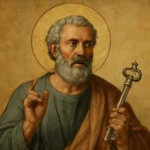
Peter (also known as Simon Peter) stands out in the Gospels as the primary spokesperson among the Twelve. He is often presented as a natural leader, the one who confesses Jesus as the Messiah (Matthew 16:16-19) and who becomes a key figure in the early church after the Resurrection. The title “the rock” attached to Peter (Matthew 16:18) signals his pivotal role in the birth of the church, his leadership during crises, and his influential presence in the Jerusalem church. Yet Peter’s path is not without failure, such as his three denials during Jesus’ Passion (Matthew 26:69-75). These episodes highlight a complex leadership that is both steadfast and human, illustrating how the apostles carried forward Jesus’ mission with humility and dependence on divine empowerment.
James and John: The Inner Circle
James and John, the sons of Zebedee, form part of the so‑called inner circle alongside Peter. Often called the Sons of Thunder (Mark 3:17), they receive special invitations to witness pivotal moments in Jesus’ ministry, such as the Transfiguration (Matthew 17:1-9) and Jesus’ agonizing prayer in Gethsemane (Mark 14:33-42). Within the narrative, James and John also request privileged positions in Jesus’ coming kingdom, prompting Jesus to redirect their ambitions toward servant leadership (Mark 10:35-45). Their proximity to Jesus and repeated appearances at key events underscore the theme that proximity to prophetic revelation often coincides with elevated responsibility in the early church.»
The Other Members: Andrew, Matthew, Thomas, Philip, Bartholomew, James (son of Alphaeus), Simon the Zealot, Judas Iscariot
The remaining members of the Twelve each bring a unique background and set of gifts. Together they form a diverse cadre who represent different corners of Judaism and different temperaments.
Andrew, Peter’s brother, who brings a witness‑bearing approach and is described as bringing others to Jesus (John 1:40-42).
Matthew, the tax collector, whose conversion story exemplifies Jesus’ call to repentant inclusion of diverse social groups (Matthew 9:9-13; 10:3).
Thomas, often remembered for doubt, yet also for a robust confession of faith when he sees the resurrected Jesus (John 20:24-29).
Philip, who requests a clear revelation of the Father and who plays a role in the early missionary impulse (John 14:8-9; Acts 8:5-8).
Bartholomew (also called Nathanael in John 1:45-51), whose initial encounter with Jesus is marked by a striking declaration of belief (John 1:47-49).
James (son of Alphaeus), about whom the biblical portraits are more concise, yet still integral to the group’s integrity.
Simon the Zealot, whose surname points to a background steeped in political or religious zeal, suggesting a spectrum of identities within the Twelve.
Judas Iscariot, the one who would betray Jesus, whose acts underscore the complexities and temptations present even among leaders; his failure leads to a crisis that the early church must resolve (Matthew 26:14-16; Luke 22:3-6).
Each of these figures is named in the canonical lists, most explicitly in Matthew 10:2-4, Mark 3:16-19, and Luke 6:12-16. The parallel accounts emphasize that the Twelve were chosen, named, and commissioned to live as a sent community, bearing witness to Jesus’ life, death, and resurrection. The repeated emphasis on their common identity—together with their individual backgrounds—helps readers appreciate the breadth and texture of Jesus’ apostolic circle.
What Happens After Betrayal: Matthias and the Restoration of the Twelve
The narrative arc of the Judas Iscariot crisis is crucial for understanding the durability of the apostolic commission. After Judas’ betrayal and the subsequent death, the early church faced the question of whether the number of apostles should remain twelve. In Acts 1:15-26, the disciples gather, propose a replacement, and then cast lots to choose Matthias to fill the vacancy. The choice of Matthias preserves the symbolic number twelve, aligning the apostolic leadership with the twelve tribes of Israel and the fullness of Jesus’ new covenant community. In this sense, Matthias is a named participant in the apostolic company, though the narrative also signals that the apostolic mission would continue to unfold with other figures who would contribute in diverse ways to the expansion of the faith.
Apostles Beyond the Original Twelve: Paul, Barnabas, and Others
In the broader early Christian movement, the term apostle is used in ways that stretch beyond the original twelve. Some of the most significant examples are the Apostle Paul and the companions who joined the mission in the first generation of the church. Paul is explicitly identified as an apostle in his own letters (for instance Romans 1:1; 1 Corinthians 1:1; Galatians 1:1), though he was not part of the Twelve in Jesus’ earthly ministry. This distinction invites careful interpretation: Paul is recognized as a foundational messenger who proclaims the gospel to Gentiles with authority, even as he did not accompany Jesus during his earthly ministry. Similarly, Barnabas is referred to as an apostle in certain New Testament passages (Acts 14:14), highlighting how early Christian communities sometimes extended the title to trusted ministers who were sent to bear witness and establish churches. These examples illustrate a broader, mission‑oriented understanding of apostolic authority that helped shape the early church’s reach beyond Palestine.
Roles and Functions: What Did the Apostles Do?
Understanding the roles of Jesus’ apostles helps explain why the same group is described with such high authority and responsibility. Across the biblical narratives, the apostles are depicted as:
Witnesses to the Resurrection: The core proclamation that anchors Christian faith rests on their testimony of Jesus’ resurrection (Acts 1:22; 1 Corinthians 15:3-8).
Messengers and Missionaries: They are sent to proclaim the gospel, heal, cast out demons, and teach new believers (Luke 9:1-6; Mark 6:7-13).
Founders and Overseers of Churches: They guide communities, appoint elders, and provide leadership in the early church’s formative years (Acts 14:23; 1 Thessalonians 1:1).
Teachers and Theologians: The apostles interpret Jesus’ sayings, explain the meaning of his death and resurrection, and shape early Christian doctrine (John 14-16; Galatians 1–2).
Miracle Workers: In the book of Acts, the apostles perform healings and other signs that confirm their message and empower communities (Acts 3:1-10; 5:12-16).
Different Textual Perspectives: Numbers, Lists, and Interpretive Nuances
The number of Jesus’ apostles appears consistently as twelve in many Gospel accounts. Yet several biblical passages introduce related numbers that offer a broader sense of Jesus’ circle of followers:
The Twelve: The group formally named and commissioned by Jesus to be witnesses and sent as leaders in the early church. This number reinforces symbolic resonance with the twelve tribes of Israel.
The Seventy or Seventy-Two: In Luke 10:1-24, Jesus commissions a larger group of “seventy (or seventy‑two) others” to go ahead of him into towns he would visit, indicating a broader outreach beyond the Twelve.
Other Disciples: The Gospels repeatedly speak of “a great multitude” of disciples who follow Jesus, learn from him, and participate in his ministry without necessarily receiving the formal title of apostle.
Paul and Barnabas as Apostles: In later sections of the New Testament, Paul and Barnabas are identified as apostles, which expands the practical sense of “apostolic” leadership beyond the original call.
These variations reflect different functions and stages in the early Christian movement. The canonical emphasis remains on the Twelve as the foundational leadership for the church, while the broader circle emphasizes how the gospel would be carried to all nations through a trained and empowered community of messengers.
Names, Roles, and Biblical Insights: A Consolidated View
For readers who want a consolidated reference, here is a compact synthesis of the most important names, their likely roles, and the major biblical insights that shape our understanding of Jesus’ apostles:
Peter – leader of the Twelve; voice of proclamation; pivotal in the early church’s formation; the role of reckoning faith and steadfast allegiance amid trials.
James (son of Zebedee) – one of the inner circle; connected to events of blessing and martyrdom; represents the immediacy of following Jesus in close companionship.
John – the Beloved Disciple in Johannine writings; deep theological reflection on love, truth, and witness; contributes to the shaping of New Testament theology about Jesus’ identity.
Andrew – Peter’s brother; early evangelistic outreach; connects people to Jesus and helps initiate new encounters with the Messiah.
Matthew – the tax collector turned evangelist; offers a bridge between Jewish life and the gospel’s universal calling, highlighted in his Gospel’s structure.
Thomas – faith that moves toward a courageous confession; his questions reveal a genuine pursuit of truth and relationship with the risen Christ.
Philip – engages Jesus for clarity about God’s presence; his interactions illustrate the pedagogy of discipleship: questions followed by revelation.
Bartholomew (Nathanael) – a figure emblematic of genuine encounter with Jesus and the transformation that accompanies faith‑based recognition.
James (son of Alphaeus) – a somewhat quieter member whose presence contributes to the diverse leadership of the Twelve.
Simon the Zealot – representative of diverse political and religious backgrounds within the apostolic circle, illustrating unity in mission despite difference.
Judas Iscariot – the one whose betrayal precipitated the Passion narrative; a reminder of the moral and spiritual dangers that can accompany leadership.
When we consider the broader circle, Paul the Apostle appears as a transformative figure who elaborates the gospel beyond its Jewish antecedents, making the message accessible to Gentiles and laying foundations for Christian theology in key letters. Barnabas, often described as an apostle in Acts, models the role of a companion who helps the movement navigate conflict and growth. These broader applications of the term apostle underscore a central theme: the mission is not confined to a single group, but expands through obedient witnesses who are sent by God to bear witness to Christ in diverse contexts.
How the Number Shapes Theological Reflection
The precise count of Jesus’ apostles matters less for some readers than the theological and spiritual implications of the apostolic mission. The twelve point to a stable, covenantal continuity with Israel and its prophetic tradition, while the larger group of disciples and later apostles demonstrate the universal scope of Jesus’ message. From a doctrinal perspective, the apostles serve as:
Founders of the Church in its earliest form, whose witness and leadership established the community of believers.
Instruments of eyewitness testimony to Jesus’ life, death, and resurrection, providing a historical foundation for Christian faith.
Models of faith and failure—the narratives show moments of loyalty and lapse, offering a sober portrait of human discipleship and divine grace.
Patterns for ministry—the apostles’ actions under the Spirit’s power give contemporary Christians a template for preaching, teaching, healing, and mission.
For modern readers, several insights emerge from the apostolic accounts that illuminate how to understand roles, obedience, and witness in the life of faith today:
Calling and Commissioning: The apostles were chosen and sent; their calling is inseparable from divine commissioning. This invites believers to discern their own calling and respond with trust in God’s enabling power.
Unity in Diversity: The Twelve reflect a broad range of backgrounds and temperaments; unity in mission is possible even amid differences—an important principle for contemporary church life.
Transparency about Failure: Peter’s denials and Judas’ betrayal remind readers that leadership involves risk and human frailty, which can be redeemed through repentance and grace.
Mission as Witness: The core apostolic task is to bear witness to Jesus’ life and resurrection, a calling that remains central to Christian preaching and evangelism today.
To address common curiosity, here are brief clarifications that capture the essential points discussed above:
How many apostles did Jesus have? The canonical twelve are referred to as “the Twelve.” After Judas Iscariot’s betrayal, Matthias is chosen to replace him, maintaining the number twelve. In a broader sense, other early Christians, such as Paul and Barnabas, are also called apostles in later writings.
Are Paul and Barnabas considered part of the original Twelve? No. Paul (Saul) joined the apostolic circle later as a distinct messenger to the Gentiles; Barnabas is described as an apostle in Acts but not one of the Twelve chosen in Jesus’ earthly ministry.
What is the significance of the number twelve? It carries symbolic resonance with Israel and the idea of a complete, covenantal witness that would extend to all nations through the church.
What about the “seventy” or “seventy‑two”? Luke 10 recounts Jesus sending a larger group in mission beyond the Twelve, highlighting the expansion of the mission through a broader circle of disciples.
Names, Roles, and Biblical Insights in Practice
When teaching or studying this topic, it is helpful to combine the names, roles, and insights into a narrative that respects both the historical text and its theological implications. The following guidance can be useful for readers, teachers, and students who want to convey a nuanced picture:
Start with the core Twelve, highlighting their diversity and the central leadership of Peter.
Explain the inner circle dynamic by discussing James and John and how proximity to Jesus shaped special moments in the Gospels.
Acknowledge the role of Matthias as the restoration of the Twelve after Judas’ betrayal, illustrating continuity and fidelity in governance.
Introduce the broader concept of apostolic authority by presenting Paul and Barnabas, clarifying what it means to be sent with authority to proclaim and establish churches.
Provide a balanced overview of the seventy as a separate but related scriptural thread that demonstrates how Jesus empowered a larger circle of workers for mission.
Conclusion: A Dynamic, Living Mission
While the literal number of Jesus’ apostles is most clearly understood as twelve, the biblical portrait presents a living tradition of calling, sending, and equipping followers to bear witness to the resurrection. The name “apostle” carries a weight of authority and responsibility that continues to inspire Christian communities today. Whether one emphasizes the canonical Twelve, the replacement of Judas with Matthias, or the broader apostolic circle that includes Paul and Barnabas, the core message remains: God’s mission to the world is carried forward by believers who are called, sent, and empowered to testify to Jesus Christ. In this sense, the question “how many apostles did Jesus have?” yields a richer answer than a simple numeral. It invites readers into a deeper exploration of calling, community, leadership, and faith—an invitation that remains as relevant now as it was in the first century.