1662 Prayer Book: History, Contents, and Significance in Anglican Liturgy
1662 Prayer Book: History, Contents, and Significance in Anglican Liturgy
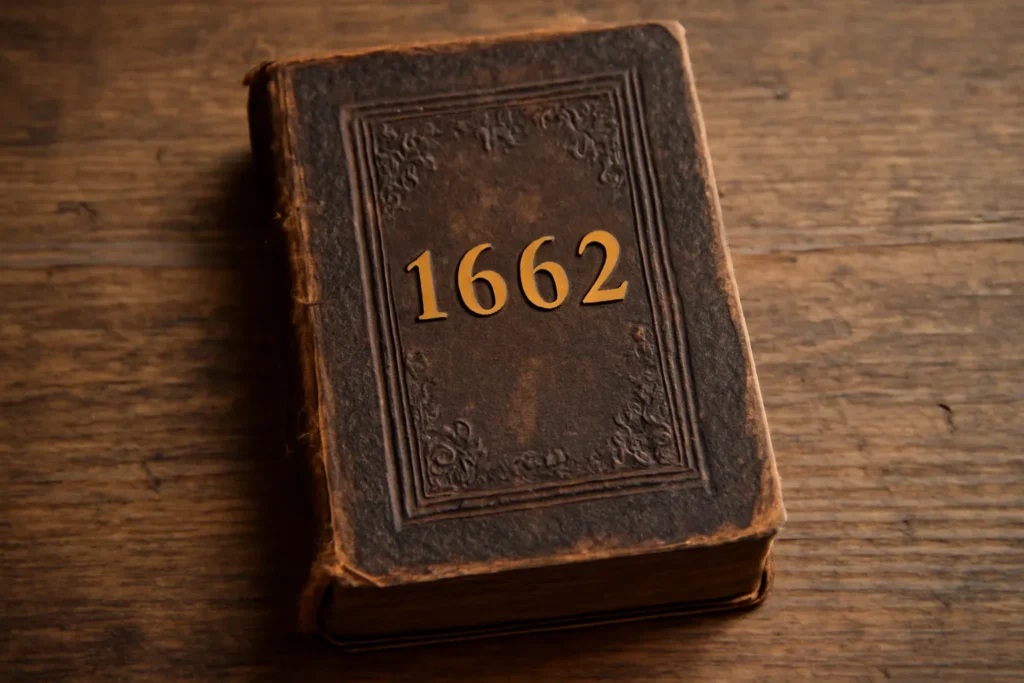
The 1662 Book of Common Prayer, often stylized as the 1662 Prayer Book, stands as a watershed in the history of Anglican worship. Issued in the wake of civil upheaval and political restoration, this edition crystallized a set of worship practices, linguistic choices, and ecclesial expectations that would shape Anglican liturgy for centuries and across oceans. In scholarly and ecclesial circles, the 1662 edition is celebrated for its enduring structure, its balance between reform and continuity, and its influence on both “public prayer” and the broader spiritual life of the Church. This article surveys the history of the 1662 prayer book, outlines its contents, and explains its significance in Anglican liturgy, including its global reach and ongoing legacy.
The dramatic arc that leads to the 1662 prayer book begins with the English Reformation and the long years of religious conflict that culminated in the English Civil War. During the reign of Elizabeth I, the Church of England had standardized a form of public worship that remained distinctive from both Roman Catholic ritual and continental Protestant forms. The Elizabethan settlement produced the Book of Common Prayer in its 1559 form, which was later revised and extended in successive decades.
After the turmoil of the 1640s and the period of the Commonwealth under Oliver Cromwell, the Church faced a suspension of episcopal governance and a purge of more ceremonial practices favored by more traditional Anglicans. When the monarchy and the episcopacy were restored in 1660 under King Charles II, there was a strong sense among the bishops and clergy that a stable, recognizable, and legally enforceable liturgy was essential to national unity and spiritual fidelity. The result was a careful, carefully authorized revival and revision process that culminated in the Act of Uniformity and the official publication of the 1662 Book of Common Prayer.
Two important features of this period are worth noting. First, the replacement of many Puritan liturgical practices by a restored order of worship reflected a desire to preserve the beauty and order of Anglican prayer as a national religious system. Second, the Act of Uniformity 1662 mandated the exclusive use of the 1662 prayer book in public worship for the Church of England, establishing a legal framework but also provoking a major ecclesial consequence: the Great Ejection in which thousands of nonconformist ministers chose to leave the Church of England rather than conform to the new statute. This political-theological act underscored how deeply intertwined liturgy was with church identity and civil life.
In this way, the 1662 edition did not merely update language or rubrics; it defined a particular ecclesiology—the understanding of worship as ordered, communal, and theologically precise—that would endure long after the Restoration. The book’s survival and spread rested on its perceived alignment with both royal authority and ecclesial discipline, as well as its capacity to articulate a coherent worship life for an English-speaking church that wished to maintain doctrinal and doctrinally coherent worship.
Contents and structure: what the 1662 prayer book contains
Although the 1662 prayer book is a compact volume by modern publishing standards, it contains a remarkably dense architecture of liturgy, instruction, and doctrine. Its components were designed to guide the daily and seasonal worship of parishes, from cradle to grave, and to structure the training of clergy and laypeople alike. The following overview highlights the major sections and the key texts within them.
Calendar and Holy Days: A liturgical calendar that marks Sundays, feast days, fasts, and varied seasons of the church year, grounding the annual rhythm of worship in historical memory and doctrinal emphasis.
Collects, Epistles, and Gospels: A curated set of prayers (collects) paired with readings from the Epistles and Gospels for each Sunday and holy day, providing theological themes for preaching and prayer.
The Daily Offices: Morning and Evening Prayer: The offices that structured daily prayer for clergy and, by extension, educated laypeople. These offices include psalms, biblical readings, canticles, prayers, and responses, all designed to shape a habitual rhythm of devotion.
The Litany and occasional prayers: A penitential sequence, with a robust and penitential character, that invites communal confession and supplication.
The Holy Communion (Eucharistic rite): The principal act of Christian worship in which the elements are consecrated and distributed, accompanied by readings, prayers, and exhortations aimed at the faithful.
Baptism and Confirmation: The rites for initiating a believer into the faith community and confirming those who have been catechized, including the baptismal service and the laying on of hands in confirmation under canonical form.
Marriage and Burial Services: Rubrics and prayers marking the milestones of life and death within parish life, emphasizing the gospel hope in each stage.
The Catechism and Doctrinal Education: A concise summary of the Christian faith, presented for instruction of the young and inquirers, often paired with the Thirty-Nine Articles for doctrinal alignment.
The Psalter in Meter and Form: The collection of psalms set for use in the offices and in worship, often sung or chanted, providing biblical poetry as a spiritual language for worship.
The Articles of Religion (Thirty-Nine Articles): A doctrinal statement of Anglican belief that anchors the book’s teaching in a precise theological framework.
The Ordinal: The service of ordination for bishops, priests, and deacons, outlining the rites, vows, and liturgical forms required for holy orders.
Many readers will notice a careful balance of prayer, doctrine, and rite in the 1662 edition, with rubrics that guide the priestly role and lay participation. The precise wording of the prayers, the placement of readings, and the arrangement of offices all reflect a desire for clarity, order, and a sense of the sacred in the everyday life of the congregation. The volume is not merely a manual; it is a theological-liturgy that seeks to shape the character and devotion of a nation’s church.
In practice, the 1662 BCP was designed to be used in local parishes by a resident minister or a visiting licensed preacher. The book’s language—drawn from and aligned with the Shakespearean era of English—provided a widely intelligible and ceremonially robust method for worship. The intense attention to rubrical instruction in the margins of the text demonstrates how the Book of Common Prayer was meant not only to be read but to be followed in performance, with precise gestures, vestments, and procedural steps that created a shared liturgical culture.
The Great Restoration and the Act of Uniformity
The 1662 Act of Uniformity stands as a pivotal moment in Anglican history and in the life of the 1662 prayer book itself. The Act required that clergy adhere to the 1662 BCP, thus enforcing conformity across the Church of England. This legislative move had a deep and lasting impact on ecclesial life, creating a visible, enforceable standard for worship and church order.
Two consequences are particularly notable. First, the Act cemented the connection between liturgical uniformity and church authority, making the book a legal instrument as well as a spiritual guide. Second, the Act contributed to the mass departure of nonconformist ministers who could not in good conscience submit to the prescribed liturgy. This event—often called the Great Ejection of 1662—shaped religious pluralism in England and clarified the boundary between the Church of England and other Protestant communities going forward.
From a broader perspective, the restoration of the monarchy and the establishment of the 1662 prayer book as the official rite signaled a moment of ecclesial healing and continuity. It allowed the Church of England to present a unified face in both domestic and imperial spaces, and it provided a stable framework for Anglican identity in a time of international expansion and colonization.
The significance of the 1662 prayer book in Anglican worship
Why does the 1662 prayer book continue to be described as foundational for Anglican liturgy? Because its architecture—its structure, its rubrics, and its theological core—became a standard by which subsequent Anglican prayer books would be measured. It introduced and consolidated some elements that later revisions would retain as central features of Anglican worship, while offering flexibility that allowed for regional and national adaptations within a coherent framework.
Key aspects of its liturgical significance include the following:
Liturgy as ordered public prayer: The daily offices, the litany, and the communion service are designed to be recited or sung in a manner that emphasizes communal participation, canonical form, and reverence for the sacramental acts.
Parish-based ecclesiology: The book presumes a parish church structure, with regular Sunday and weekday services, and it codifies rites for the major life events—baptism, marriage, and burial—within the parish context.
Clarity about doctrine: The inclusion of the Thirty-Nine Articles anchors Anglican doctrinal commitments within a defined set of beliefs, serving both catechetical and confessional purposes.
Canonical rites for ordination: The Ordinal provides the liturgical vocabulary and the essential promises that guide bishops, priests, and deacons in their ministries.
Balance between reform and continuity: The 1662 BCP preserves older sacramental forms while incorporating reforms that addressed concerns about doctrine and discipline, producing a mid-to-late Reformation synthesis that would be influential for generations.
On a broader ecumenical plane, the 1662 text shaped Anglican self-understanding as a “via media”—a middle way between Catholic ceremonial fullness and Puritan simplicity. The language of prayer, the cadence of liturgy, and the ensemble of rites collectively contributed to a distinctive Anglican spirituality that has resonated far beyond England’s shores.
Global influence and legacies: the 1662 text beyond England
The reach of the 1662 prayer book extends far beyond its English origins. As English-speaking Anglican clergy traveled, settled, and established churches in new lands, the texts and forms of the 1662 edition traveled with them. The Book of Common Prayer became central to mission life, education, and the daily practice of belief in many cultures and climates.
One of the most consequential legacies of the 1662 BCP is its decisive influence on the American Book of Common Prayer (1789). While the American edition would be revised in light of American constitutional culture, the 1789 prayer book drew heavily on the language, arrangement, and canonical logic of the 1662 edition, thus creating a shared liturgical heritage between the Church of England and the Episcopal Church in the United States. In many parts of the world, the 1662 framework anchored national churches, provided continuity with English church leadership, and offered a familiar liturgical grammar for generations of faithful.
Beyond North America, Anglican churches in Africa, Asia, the Caribbean, and Oceania inherited the 1662 project of public prayer as a standard for worship. In many places, however, local bishops and liturgical commissions adapted rubrics, added local feasts, and translated the texts into vernacular languages, while retaining the core shapes of morning and evening prayer, the communion service, and the catechetical and doctrinal elements. The global story of the 1662 prayer book is thus not a single uniform tale but a constellation of localized prayers and rites that trace their lineage to this foundational text.
Variations and life of the text: how the 1662 edition evolved and influenced other versions
It is essential to recognize that the 1662 prayer book did not exist in a single, monolithic edition that never changed. Over time, printers, bishops, and liturgical commissions produced variations in wording, pagination, capitalization, and marginal rubrics to reflect local usage, language changes, and doctrinal emphases. The "text" of the 1662 BCP thus exists in a family of editions rather than a solitary original.
Several important threads in the history of the 1662 edition include:
American revivals: The American Book of Common Prayer (1789) kept the structural skeleton and much of the language of the 1662 text, but updated prayers and order for American public life and constitutional realities. It subsequently evolved in the United States with revisions in the 19th and 20th centuries, yet its core owes much to the 1662 model.
Irish and Scottish adaptations: In the Church of Ireland and in Scotland, the 1662 text influenced local prayer books, though national churches often produced their own revisions to reflect local theological/.liturgical preferences and civil circumstances.
19th-century revivals: A number of Anglican churches revisited the book’s rubrics and language in response to trends toward revivalist worship, evangelical emphasis, or high-church ceremonial. Some editions sought to harmonize the old rubrics with contemporary sensibilities about worship and pastoral care.
Modern revisions in various provinces: The 1662 text remains a foundational resource; in many provinces, it is retained in its traditional form, while others have produced modernized or alternative prayer books that preserve the 1662’s doctrinal spine but present updated language, inclusive language in certain passages, or revised calendars and lectionaries.
Readers and church historians often refer to collections of 1662 editions, noting textual variants in the morning and evening prayer services, the wording of the Holy Communion prayers, and the order of the Litany. These variations demonstrate the living nature of liturgical texts: while the 1662 bedrock remains influential, the living church continues to interpret and adapt the rite to new contexts without severing continuity with its heritage.
Notable liturgical elements introduced or preserved by the 1662 edition
Although many elements of Anglican worship predate the 1662 edition, this text solidified several features that have remained central to Anglican identity. Below are some of the elements most often associated with the 1662 prayer book:
The structure of Morning and Evening Prayer: The two daily offices provide a disciplined framework for public prayer, incorporating scripture readings, canticles, and collects that reflect the church year and church doctrine.
The Holy Communion service (the Eucharist), including the Great Thanksgiving language and the sequence of distribution and prayer that shapes the Sunday sacramental life for generations.
The Litany as a comprehensive act of supplication, with petitions for the church, rulers, and the world, often used during times of crisis as a formal expression of communal lament and intercession.
The Catechism and doctrinal summary: The catechetical framework helps the faithful understand the basics of Christian belief, while the Twenty-Nine Articles (Thirty-Nine Articles in later practice) anchor Anglican theology in a defined set of doctrinal points.
Rites of initiation and nurture: Baptism and Confirmation provide a coherent path for entering and deepening participation in the life of the church, with rubrics guiding the responsibilities of the church and parents and godparents in the process.
Life rites: marriage and burial: The marriage rite and the burial service provide canonical forms for life’s transitions, connecting familial events with the Christian story of creation, redemption, and hope beyond death.
Pastoral rubrics: The instructions for how ministers should perform the rites—vestments, posture, readings, and prayers—help sustain a sense of reverence, order, and pastoral care across communities.
In addition to these core elements, the 1662 text preserves a language of prayer that has become iconic in English-speaking Christianity. The diction—elevated, measured, and often poetic—contributes to a liturgical texture that many worshippers find compelling, even to this day. The interplay of form and content—doctrine joined to piety—helps to explain why the 1662 prayer book is taught and cherished as a liturgical standard.
Practical usage today: how the 1662 BCP continues to be used
Even in the twenty-first century, the 1662 prayer book remains a living resource for many Anglican communities. Its presence can be felt in the following practical modes:
Liturgical reference: Clergy and lay leaders often consult the 1662 edition for its canonical forms when other texts have changed, providing continuity with historic practice during ceremonies and rites.
Educational resource: Seminaries and parishes use the 1662 BCP to teach liturgical language, the sequence of services, and the theological grounding of Anglican worship.
Aesthetic and devotional value: The poetic quality and ceremonial rhythm of the prayers continue to shape devotional life, personal prayer, and the culture of worship in communities that prize traditional forms.
Basis for ecumenical dialogue: The Book of Common Prayer, including the 1662 text, often appears in ecumenical conversations as a representative Anglican articulation of worship, doctrine, and church life.
Variants and adaptations: In many places, the 1662 form is used alongside updated modern-language texts, as liturgies are revised to reflect contemporary usage while preserving historic core prayers and the sacramental life.
For scholars and enthusiasts, the 1662 text continues to be a key primary source for understanding Anglican worship’s history and theory. Its enduring relevance is evidenced by the continued publication, study, and occasional revival of the 1662 prayer book as a canonical text within various Anglican provinces around the world.
Debates, tensions, and the ongoing conversation around the 1662 edition
Like any influential liturgical text, the 1662 edition has been the subject of debates and tensions. The conversations range from questions of ceremonial practice to doctrinal emphasis and the place of tradition in modern worship. Some of the central themes include:
High church versus low church tensions: The ceremonial richness of the 1662 rite has been celebrated by those who emphasize sacramental and episcopal authority, while others have preferred plainer worship and more congregational participation. The balance between reverence and accessibility remains a live question for many Anglican communities.
Language and inclusivity: The stylistic grandeur of the 1662 prayers is admired by many, but others seek language that is more inclusive or contemporary. In some contexts, modern-language revisions coexist with the 1662 rubrics, allowing both textual families to operate side by side.
Ecclesial identity and Protestant heritage: The 1662 Act of Uniformity’s legacy continues to be a marker of Anglican identity in public life, while other Christian traditions within the same broad family may pursue different paths of worship and governance.
Global diversity: As Anglican churches in different climates and cultures adapt to local conditions, questions arise about how strictly to preserve the 1662 text versus allowing localized adaptations to language, calendar, or rite.
These debates are not merely academic; they reveal the living tension within Anglicanism between historical continuity and pastoral adaptation. The 1662 prayer book, as a result, remains a touchstone—the text against which new liturgical experiments are measured and from which new forms of worship draw inspiration.
The language, beauty, and cultural impact of the 1662 text
One cannot speak of the 1662 edition without acknowledging its linguistic character. The English used in the prayers and rubrics sits at the crossroads of late Renaissance and early modern English. The cadence, parallelism, and archaisms give the book a solemn and ceremonial voice that many readers find lift their hearts and focus their minds. The language of the collects, the epistles, and the psalms has been celebrated for its rhetorical artistry, memory, and ability to evoke a sense of sacred time within congregational worship.
In the broader culture, the 1662 text has influenced English theology, literature, and public life. The prayers’ language—whether read aloud in a parish church or memorized by clergy during catechetical instruction—has contributed to a distinctive English-speaking spiritual idiom. It is a language that many Anglicans continue to encounter as a living heritage, even as they engage with modern translations and contemporary translations of scripture and liturgy.
Conclusion: why the 1662 prayer book matters
The 1662 prayer book is more than a historical artifact. It is a central chapter in the ongoing story of Anglican worship—an instrument through which a tradition has learned to speak with clarity about God, the church, and the world. Its history reveals how liturgy can be a hinge of identity in times of upheaval and revival. Its contents show a deliberate fusion of doctrinal precision, liturgical practice, and pastoral care. Its significance in Anglican liturgy is seen in the way it has shaped and continues to shape the worship life of Anglicans around the world, from pews in village churches to cathedrals in global cities, and from the shores of the Atlantic to far-flung mission fields.
Today, the 1662 prayer book remains a touchstone for those who seek a worship tradition that is both deeply rooted and continually living. It invites readers and worshippers to engage in a shared prayer life that spans centuries, geographies, and cultures—an English liturgical heritage that has become, through its own resilience and adaptability, a global Anglican heritage.
For anyone exploring the history of Anglican worship or studying how a national prayer book can become a model for a worldwide communion, the 1662 edition offers a rich and instructive case. It shows how a carefully crafted liturgy can endure, shape, and be reshaped by the people who use it, across generations and across oceans.








Leave a Reply