Overview of the Ten Commandments in the King James Version (KJV)
The Ten Commandments, a cornerstone of biblical ethics and religious law, stand as one of the most influential moral codes in world history. In the King James Version (KJV), these commandments are presented in a style that has shaped centuries of spiritual reflection, moral philosophy, and cultural practice. This article offers a comprehensive guide to the Ten Commandments in the KJV, sometimes referred to as the Decalogue (a term borrowed from the Greek roots that scholars use to describe this set of ten foundational directives).
The KJV phrasing—often quoted for its majestic cadence and memorable rhythm—has helped people across generations to memorize, teach, and apply these principles in daily life. Readers encounter a structure that is both simple and profound: it begins with the authority and primacy of God, then moves to obligations toward God, toward one’s family and fellow humans, and finally toward restorative justice and moral clarity. In this guide we will navigate not only the text of the commandments in the KJV but also their interpretation, historical background, and practical relevance for contemporary conscience and conduct.
Throughout this article you will find cross-references to the verses in Exodus 20 and Deuteronomy 5, where the commandments appear in slightly different contexts and with nuanced emphases. You will also see the variations in how modern readers and theologians refer to these principles—ranging from the Decalogue to the Ten Words—and you will encounter a careful exploration of how the KJV’s language shapes understanding.
Origins, Context, and Language of the KJV Ten Commandments
The King James Version, completed in 1611, is a landmark English translation of the Bible. While the original Hebrew and Greek manuscripts contain the source material for the Ten Commandments, the KJV renders those ancient words in a way that has become iconic in English-speaking faith communities. The term Decalogue comes from the Greek τέσσαρα (deka) words meaning “ten words” and is frequently used by scholars to denote this tenfold list of divine directives.
In the KJV, these commandments are conveyed with a combination of direct imperatives and moral injunctions that address worship, ethics, and social relationships. Readers should note that the commandment list appears in two related but somewhat distinct forms in the Bible: Exodus 20 and Deuteronomy 5. The Exodus version emphasizes the immediate revelation at Mount Sinai, the dramatic setting in which God speaks to the people. The Deuteronomy version, given in a farewell discourse, reflects a retrospective reminder as the people stand on the threshold of the Promised Land. Together, they present a coherent program for life under God’s authority.
This guide will also explore how the KJV’s precise wording—such as “you shall” and “thou shalt”—shapes the tone of obligation and the sense of reverence that many readers associate with the text. While the core commandments remain stable across translations, the cadence and diction of the KJV give the reader a distinctive sensory experience: a blend of sobriety, clarity, and moral gravity that invites contemplation and action.
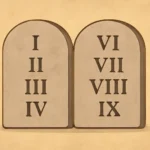
The Ten Commandments at a Glance
First Commandment: You shall have no other gods before me. This introduces the priority of loyalty to the one true God above all other deities, idols, or competing allegiances.
Second Commandment: You shall not make unto thee any graven image, or any likeness of any thing that is in heaven above. This commandment guards against idolatry in physical form and calls for worship that transcends tangible objects.
Third Commandment: You shall not take the name of the Lord thy God in vain. The focus here is on reverence in speech and a respect for the sacred title and character of God.
Fourth Commandment: Remember the sabbath day, to keep it holy. This directive grounds a rhythm of rest and worship within the weekly cycle and links human welfare to divine ordination.
Fifth Commandment: Honour thy father and thy mother. The commandment anchors familial respect and intergenerational responsibility within a broader social order.
Sixth Commandment: Thou shalt not kill. Often discussed in terms of the sanctity of life and ethical restraint in conduct toward others.
Seventh Commandment: Thou shalt not commit adultery. The commandment addresses marital fidelity, trust, and social stability within households.
Eighth Commandment: Thou shalt not steal. This principle guards private property and fair dealing in economic life.
Ninth Commandment: Thou shalt not bear false witness against thy neighbour. Truth-telling and honest testimony are emphasized as essential to communal life and justice.
Tenth Commandment: Thou shalt not covet. The prohibition targets inner impulses and discontent, encouraging satisfaction with one’s own lot and respect for others’ well-being.
This at-a-glance outline summarizes the December-to-dawn arc of the Ten Commandments in the KJV, presenting a progression from devotion to God to conduct in daily life, and finally to the cultivation of inner virtue. The list below offers more detail for each commandment, followed by a deeper, verse-by-verse examination.
The instruction “You shall have no other gods before me” places God at the center of allegiance. In the KJV, the wording emphasizes exclusive worship and ultimate supremacy. This commandment is not merely about rejecting other deities; it is about choosing a governing orientation for life. It asserts that the true God is both creator and judge, and that devotion to any lesser power is incompatible with faithfulness to the divine will.
Practical implications include prioritizing spiritual priorities in decision-making, realizing that the orientation of the heart shapes every other commandment. Some scholars discuss this commandment as a guardrail against syncretism—the mixing of religious practices—while others see it as an invitation to a personal and communal covenantal relationship with the God of the Bible.
Second Commandment (Exodus 20:4–6; Deuteronomy 5:8–10)
The prohibition against graven images with the phrase “thou shalt not make unto thee any graven image” guards against turning worship into a mere object of visual fascination. The KJV’s language emphasizes intent and devotion, signaling that worship belongs to the God who transcends material representation.
The commandment invites readers to consider how symbols, rituals, and religious artifacts may aid or distract from an authentic relationship with God. It does not mean that all images are inherently evil, but it sets a boundary for worship that protects the community from equating the divine with created things.
Third Commandment (Exodus 20:7; Deuteronomy 5:11)
“You shall not take the name of the Lord thy God in vain” calls for reverence in speech and conduct. In the KJV, names carry authority and weight; misusing God’s name is viewed as a serious breach of covenant language and communal trust.
This commandment invites believers to cultivate language that honors God in prayer, worship, and everyday conversation. It also invites reflection on how language shapes moral perception and ethical behavior within society.
The call to “remember the sabbath day, to keep it holy” establishes a recurring rhythm of rest, worship, and relational renewal. In the KJV, sabbath observance is tied to God’s act of creation and to liberation from oppression, highlighting both spiritual and social dimensions.
Across centuries, commentators have connected the sabbath with rest for all people and with a reminder that human labor has boundaries. The commandment invites modern readers to consider how Sabbath practices—time for worship, family, and reflection—could contribute to personal well-being and communal justice.
“Honour thy father and thy mother” anchors the social order in the family and recognizes the dignity of elders. The KJV renders this admonition with a sense of respectful obligation within the home and community, linking parental honor to broader societal stability.
The commandment has been discussed in relation to intergenerational responsibility, care for aging parents, and the nurturance of moral memory within a people. It is often presented as a bridge between divine command and social ethics.
“Thou shalt not kill” is a succinct statement about the sanctity of life. The KJV articulates a universal prohibition against unjust taking of life, promoting a respect for human dignity that informs ethical behavior, justice systems, and interpersonal interactions.
Interpretive discussions often explore what constitutes “killing” in different contexts (war, self-defense, accident, or judicial execution) and how communities balance mercy, justice, and responsibility within a moral framework rooted in divine authority.
“Thou shalt not commit adultery” addresses faithfulness within marriage and, more broadly, fidelity in relationships. In the KJV, this commandment is often discussed alongside the social trust and covenantal faithfulness demanded by communal life.
The commandment has been interpreted in various Christian and Jewish traditions as applying to sexual ethics, the integrity of marriage, and the protection of the vulnerable in family life. It invites a consideration of how personal conduct affects households, communities, and future generations.
“Thou shalt not steal” centers on property and the fair exchange of goods and services. The KJV frames stealing as a violation of trust that undermines social harmony and justice.
This directive invites reflection on economic justice, intent, and the rights of others. It underpins discussions about restitution, generosity, and the ethics of wealth distribution within a community guided by divine law.
“Thou shalt not bear false witness against thy neighbour” emphasizes truth-telling and integrity in legal and social contexts. In the KJV, truth is connected to justice, fair judgment, and communal trust.
The commandment has broad implications for education, journalism, testimony, and personal relationships. It challenges individuals to speak only what is true and to avoid manipulation, deception, or misrepresentation that harms others.
“Thou shalt not covet” addresses the heart’s motive rather than outward action alone. In the KJV, covetousness concerns disordered desire for what belongs to others, which can precede or fuel wrongdoing.
This commandment invites inner reform—cultivating contentment, gratitude, and trust in God’s provision. It presents an interior discipline with exterior consequences, linking inner moral life to social and relational integrity.
Practical Applications: How the KJV Ten Commandments Guide Modern Life
Although these commandments originate in an ancient law code, their themes have enduring relevance for personal conduct, community ethics, and public policy. In the KJV context, readers often explore how a set of divinely ordained principles can inform decisions in family life, workplaces, schools, and civic institutions.
Worship and devotion: The primacy of God shapes motives and meaning in daily routines, worship services, and religious communities.
Reverence and speech: The sanctity of language influences how people speak of others, present truth, and resolve conflicts.
Time and rest: Sabbath or holy-day observance offers a pattern for rest, renewal, and communal worship that can complement modern schedules.
Family and social responsibility: Honoring parents and living with fidelity fosters stable households and healthy social networks.
Life and dignity: The sanctity of life and the protection of vulnerable members of society inform public ethics and personal decisions alike.
Integrity and truth: Truth-telling, honesty in business, and fair dealing support a just and trustworthy society.
Property and stewardship: Respect for others’ property and rightful ownership undergirds ethical economics and generosity.
Desire and contentment: Cultivating a heart of gratitude reduces envy, conflict, and impulsive behavior that harms others.
In exploring the Ten Commandments in the KJV, readers should consider both the explicit prohibitions and the deeper commitments they reveal. The commandments are often taught as a cohesive system in which love of God and love of neighbor mutually reinforce obedience to the divine will.
Throughout English-language Christian literature and Jewish-Christian dialogue, different terms are used to describe the same ten directives. You may encounter the Decalogue, the Ten Commandments, the Ten Words, or simply the commandments. While the wording may vary slightly across translations and denominational traditions, the core content remains remarkably consistent.
In the KJV, the cadence and phrasing can influence how people perceive obligation and grace. Some readers highlight the imperative mood—you shall—as a direct call to action, while others stress the covenantal relationship underlying the commands. The combination of imperative structure and covenantal language in the KJV fosters a dual sense of duty and belonging that many believers find meaningful.
Common Questions about the KJV Ten Commandments
Are the Ten Commandments still legally binding for Christians today?
Many Christian traditions affirm that the moral principles of the Ten Commandments remain binding as universal ethical norms, while viewing the ceremonial and civil aspects of the Mosaic law as fulfilled or fulfilled in Christ. In the King James Version, the moral core—such as prohibitions against murder, theft, lying, and coveting—continues to be emphasized as foundational to righteous living.
Does the Sabbath commandment translate to Christians today?
Interpretations vary. Some Christian groups observe Sunday as a day of worship and rest in continuity with the Sabbath principle, while others view the Sabbath in a broader, ongoing sense of sacred time. The KJV’s language invites readers to consider the underlying principle of rest and worship rather than a strict literal day-bound requirement.
What is the relationship between the Ten Commandments and Jesus’ teachings?
In the Gospels, Jesus often affirms the moral substance of the commandments while also stressing heart-attitude and intent. The KJV captures this dynamic through phrases that invite ethical transformation beyond mere rule-keeping, aligning behavior with genuine love for God and neighbor.
How should one study the Ten Commandments in a modern context?
An approach that combines historical study with personal reflection can be fruitful. Consider examining the commandments in their original covenant context, then explore how their principles can inform contemporary issues such as social justice, family ethics, and civic responsibility, all while keeping in view the KJV’s theological frame.
Conclusion: The Enduring Power of the Ten Commandments in the King James Version
The King James Version renders the Ten Commandments not merely as a list of prohibitions but as a unified ethical vision anchored in the authority of God. The KJV’s celebrated cadence invites readers to approach the commandments with serious reflection and hopeful transformation. Across generations, people have turned to this text for guidance on moral decision-making, personal integrity, family life, and community relations.
As you continue to study the Ten Commandments King James Version, consider how their timeless themes—worship of God, honesty in speech, fidelity in relationships, respect for life and property, and heart-level contentment—can shape daily choices and long-term commitments. Whether you read them as the Decalogue, the Ten Words, or simply the commandments, the invitation remains the same: to align life with a divine standard that has sustained communities for millennia.
For educators, pastors, students, and curious readers, this guide offers a structured, semantically rich exploration of the 10 Commandments in the King James Version, with practical insights, historical context, and a path toward application in contemporary living.









Leave a Reply