Wolves in Sheep Clothing Meaning: Definition, Examples, and How to Spot Deception
Wolves in Sheep Clothing Meaning: Definition, Examples, and How to Spot Deception
In everyday life, politics, business, and even online communities, the phrase wolves in sheep's clothing captures a powerful warning: people or entities can present themselves as harmless or benevolent while harboring harmful intent or pursuing hidden goals. This article offers a thorough look at the meaning, origins, and various uses of the expression, along with a practical guide for recognizing and responding to deception. We will explore how the idea has evolved, the breadth of its semantic family, and concrete strategies to spot manipulation without becoming overly cynical. By examining historical roots, literary usage, contemporary contexts, and psychological dynamics, readers can develop a more nuanced understanding of when appearances do not match reality.
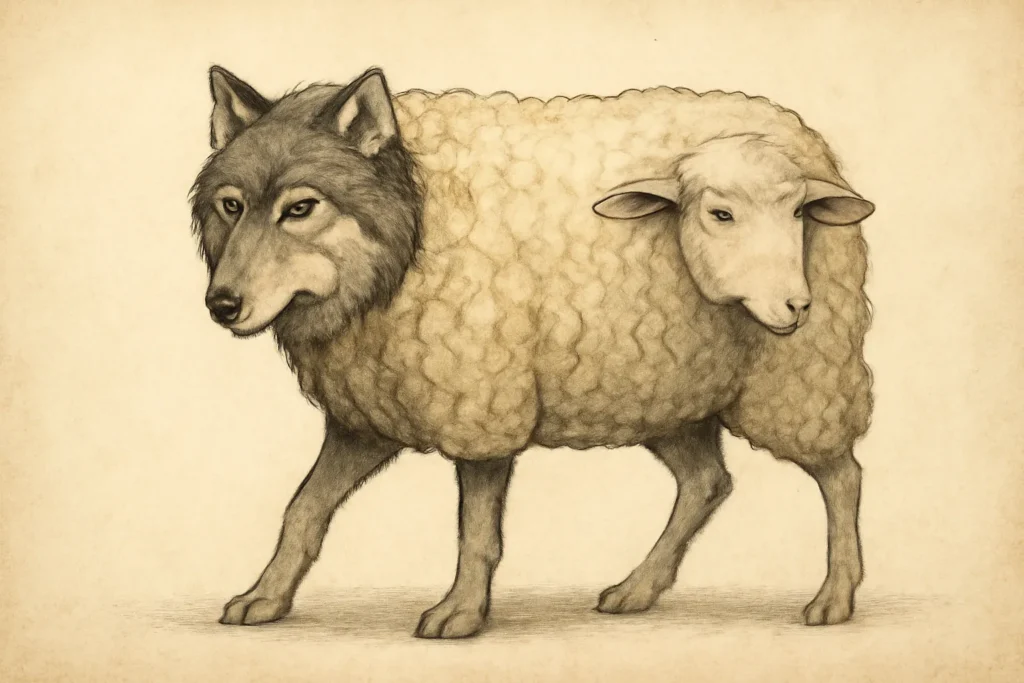
The phrase wolves in sheep's clothing is a metaphor that juxtaposes two contrasting images: a predatory animal and a peaceful, inoffensive disguise. The core meaning is that outward appearances can conceal danger, and that benevolence or kindness can be a strategic mask. In many discussions, the term is used to highlight mismatches between stated motives and actual behavior, especially when someone benefits from others while pretending to be altruistic or trustworthy.
Historically, the expression has deep roots in religious and moral storytelling. A recurring theme in ancient and medieval literature warned believers to be cautious of duplicity—of treachery that hides behind virtue. The biblical admonition to beware of “false prophets, which come to you in sheep's clothing, but inwardly they are ravening wolves” from the Gospel of Matthew provides a foundational image that later speakers and writers adapted into secular discourse. Over time, the idea of a predator wearing a harmless mask became a staple metaphor in proverbs, fables, and political rhetoric.
In modern usage, the phrase and its variants are applied beyond strictly religious contexts. People speak of duplicitous colleagues, scheming leaders, or shady actors who “look and sound legitimate” but are pursuing hidden agendas. The concept also broadens into looser formulations such as disguised aggression, false benevolence, or deceptive generosity. Recognizing this range of meanings helps in understanding how the idea travels across cultures and disciplines.
Wolf in sheep's clothing emphasizes the disguise of a predatory intent with a benign exterior.
Wolves in sheep's clothing in plural form can describe a broader pattern of deceptive behavior within a group or system.
False benevolence focuses on the appearance of kindness that masks ulterior motives.
Duplicitous disguise highlights the deliberate act of presenting a misleading persona.
Masked threat foregrounds the idea that danger is hidden beneath a veneer of normalcy.
Historical roots and literary usage
The image of deceptive disguise runs through many cultural traditions. In ancient fables, animals often embody moral lessons, and the wolf’s predatory nature makes it a natural candidate for warnings about crossing moral lines. In biblical contexts, the metaphor of danger wearing a gentle exterior served to caution communities against manipulation by those who might seem trustworthy but are dangerous in intent. The literary adoption of the idea reinforced the moral: appearance can be a form of weaponry, and discernment requires more than surface judgments.
Across early texts, the motif of disguise appears as a caution against credulity. Tales about glib talkers, scheming advisers, and feigned piety commonly used animal or personifications to teach listeners to attend to incongruities between words and actions. The concept of a dangerous being wrapped in a harmless skin became a shared cultural shorthand, enabling communities to communicate risk succinctly during times of political instability, religious reform, or social upheaval.
As literature evolved, the wolves in sheep's clothing trope gained more complex expressions. In political satires and social novels, duplicitous actors are often portrayed not as single villains but as systems that reward hollow performances. In some narratives, the disguise is temporary: a character pretends to be virtuous in order to advance a short-term objective, only to reveal the true motive when it is too late for others to react. This enduring symbolic power has kept the image in the public mind, making it a staple reference in political critique, corporate ethics debates, and discussions about social media manipulation.
Semantic breadth: variations and related phrases
In discussing deception, it is common to encounter a spectrum of expressions that share the same underlying idea as the classic idiom. This semantic breadth helps communicators tailor their message to different audiences while preserving the core warning about disguise and danger.
False friend as a linguistic warning in cross-cultural contexts, where loyalty or support may be lacking despite outward courtesy.
Disguised predator emphasizes predation under a harmless exterior, often used in safety education and workplace risk analyses.
Duplicity in plain sight captures the idea of deception that is obvious in retrospect but not evident at first glance.
Deceptive benevolence highlights acts of kindness with ulterior purposes, common in discussions about philanthropy and political promises.
Masked threat resonates in security, risk management, and cybersecurity when danger is concealed within legitimate channels or appearances.
Illusory sincerity points to a sense that someone seems earnest, only to reveal self-serving motives later.
Camouflaged ulterior motives focuses on hidden agendas that become apparent through patterns of behavior over time.
These variations are not mere synonyms; they align with different contexts such as international diplomacy, corporate governance, or online behavior. Recognizing several related expressions helps readers diagnose deception more precisely and choose the language that best fits the situation.
Examples across domains
Historical or real-world examples (illustrative scenarios)
To ground the abstract concept in concrete terms, consider a few illustrative scenarios that people often discuss when they refer to wolves in sheep's clothing in real life. The goal is not to accuse real individuals but to demonstrate how the trope operates in practice.
Political campaigning: A candidate presents themselves as a reformer who cares about the common good, yet behind the scenes they cultivate influence by rewarding loyal allies and advancing policies that disproportionately benefit a small circle of supporters. The outward message emphasizes compassion while the inner agenda highlights patronage and personal gain.
Corporate leadership: A company touts its commitment to ethical practices and social responsibility, while top executives engage in aggressive cost-cutting, aggressive tax strategies, or misleading reporting to inflate profits. Outsiders may be drawn in by glossy sustainability reports that mask questionable core practices.
Charitable organizations: An NGO is portrayed as a beacon of generosity and relief, yet some leadership diverts funds toward private accounts or vanity projects. The public-facing mission remains noble, while resource allocation reveals misalignment with stated aims.
Media and information ecosystems: A platform or influencer seems to advocate for transparency and democracy, but their content exploits sensationalism or manipulative algorithms to maximize engagement, sometimes spreading misinformation to advance a hidden political or commercial purpose.
Personal relationships: An acquaintance or partner appears supportive and caring, yet uses emotional manipulation or financial coercion to control decisions or isolate others. The discrepancy between warmth and control illustrates how deception can play out in intimate settings.
These examples illustrate a common pattern: the deceptive actor channels a credible, even virtuous appearance to gain trust, then exploits that trust for personal, organizational, or ideological advantage. In discussing these patterns, it is essential to distinguish between occasional missteps, which are common in human behavior, and sustained deception that intentionally undermines others.
In literature and media
Literary traditions and contemporary media frequently reuse the wolf in sheep's clothing motif to examine moral complexity. Classic fables use the disguise to teach caution and ethical reasoning. In modern novels, films, and television series, duplicitous characters may be portrayed with psychological depth, inviting viewers to question assumptions about trust, authority, and the nature of virtue. This repertoire also informs political dramas and crime thrillers, where the line between ally and adversary becomes a central source of tension. By engaging with these works, readers and viewers practice discrimination between rhetoric and action, between charming demeanor and the consequences that follow.
How to spot deception: signs and strategies
Detecting deception requires a combination of vigilance, critical thinking, and disciplined observation. No single cue guarantees that someone is a wolf in sheep's clothing, but a pattern of warning signals can accumulate enough evidence to justify caution or action. Here are practical approaches to improve your ability to spot masked threats without sliding into paranoia.
Look for incongruities: Compare what is said with observable actions. If promises of goodwill are consistently undercut by self-serving behavior, that mismatch is a warning sign.
Check for consistency over time: A single misstep may be innocent, but repeated patterns—especially under stress or scrutiny—are harder to explain away.
Assess motives: Ask: Who benefits from this action? Are there hidden agendas, conflicts of interest, or undisclosed affiliations?
Evaluate transparency: Genuine commitments tend to involve clear information, accessible data, and straightforward accountability. Vague language and evasive answers often accompany manipulation.
Observe behavior under pressure: Deceptive individuals may crack under stress or switch tactics when questioned directly. Watch for defensiveness, irrelevant blame, or shifting narratives.
Note emotional cues: Excessive flattery, insincere gratitude, or pressure to rush decisions can accompany manipulation. While not definitive, these cues deserve attention when paired with other signs.
Seek independent verification: When possible, corroborate claims with third-party data, documents, or trusted witnesses. Independent checks reduce reliance on a single source of truth.
Question language use: Watch for absolutist claims, blanket assurances, or universal statements that avoid nuance. Deceptive messages often rely on overconfidence to suppress doubt.
Consider the balance of risk and reward: In high-stakes situations, examine whether the potential gains justify a risk of deception. If the cost of deception is high, the temptation to mislead often increases.
Empower others to speak up: Create a culture where questions and dissent are welcomed. A transparent environment reduces the leverage of manipulators who rely on silencing voices.
In practice, a careful, data-driven approach to evaluation—combined with healthy skepticism—helps individuals and organizations identify false appearances before damage occurs. The goal is not cynicism but informed prudence: recognizing that appearances can be crafted while insisting on verifiable integrity.
Psychology behind the trope
The popularity of the wolf in sheep's clothing idea reflects several elements of human psychology. First, people are naturally attuned to social cues and are often biased toward believing those cues when they match positive expectations. This tendency is related to the halo effect, where a single favorable trait makes other attributes seem more trustworthy, even when evidence suggests otherwise. Second, the desire to trust others—especially in cooperative settings like work or family—creates a readiness to overlook warning signs, sometimes leading to sunk-cost fallacies where people stay in a bad arrangement because they have already invested heavily in it.
Third, social signaling and reciprocity shape how we interpret behavior. If someone appears helpful, we infer reciprocal obligation and may overlook red flags. Finally, cognitive load matters: under stress or when information is complex, people rely on heuristics, which can be exploited by someone adopting a convincing, polished persona. Understanding these dynamics helps explain why deception succeeds and why it remains such a persistent theme in culture.
Empirically, researchers have investigated deception detection, often finding that people are only moderately skilled at spotting liars from mixed cues, with accuracy much higher when there is consistency between nonverbal signals, verbal content, and situational context. The message for readers is practical: cultivate critical thinking, not cynicism; seek corroboration; and beware of patterns that repeatedly favor one-sided narratives or self-serving claims.
Impact on society and culture
The notion of wolves in sheep's clothing exerts a broad cultural influence. It functions as a warning mechanism that helps societies navigate trust in complex networks, from government institutions to online platforms. When people invoke the metaphor, they are often expressing concern about power dynamics, accountability, and the ethical dimensions of leadership. In civic discourse, this term reminds audiences to demand evidence, resist manipulation, and consider who benefits from a given arrangement. In workplaces, it translates into risk management practices, ethics training, and governance structures designed to prevent duplicitous behavior from eroding trust and morale.
However, an overreliance on the label can also have consequences. If used too loosely, it may stigmatize legitimate dissent or create a culture of suspicion that undermines collaborative problem-solving. The challenge is to balance vigilance with fairness: to scrutinize motives and actions without automatically tagging every ambitious or assertive actor as a threat. This balance is essential in media literacy, corporate governance, and community organizing, where the line between skepticism and cynicism can shape outcomes for many people.
Protective measures and response strategies
When you suspect that a wolf in sheep's clothing is present in a given situation, adopting practical protective measures can reduce risk and preserve integrity. The following steps offer a structured approach that emphasizes due diligence, accountability, and constructive response.
Document and verify: Keep records of claims, promises, and actions. Seek primary sources and independent confirmations when possible.
Engage diverse viewpoints: Involve trusted colleagues, mentors, or experts who can provide alternative interpretations and challenge assumptions.
Set clear expectations: Define transparent criteria for behavior, outcomes, and accountability. Public commitments can deter hidden agendas.
Establish boundaries: Limit exposure to potentially deceptive influences and create guardrails that prevent manipulation from taking hold.
Practice prudent skepticism: Maintain a healthy doubt about unverified claims, especially when high rewards are promised with little risk disclosure.
Avoid rushed decisions: Deception often relies on urgency. Take time, slow down processes, and seek consensus before acting.
Use checks and audits: Implement independent reviews, compliance mechanisms, and clear reporting channels to deter misrepresentation.
Communicate openly: When deception is suspected, address concerns openly, provide evidence, and avoid escalating conflict without rationale.
Support a culture of transparency: Foster norms that reward honesty, encourage whistleblowing, and celebrate accountability over image.
These strategies are not about paranoia but about cultivating resilience. By integrating critical thinking with structured processes, individuals and organizations can reduce vulnerability to deceptive actors who rely on appearance rather than substance.
Frequently asked questions about wolves in sheep’s clothing
What does the expression mean? It describes a situation in which someone presents themselves as kind, trustworthy, or beneficial while concealing harmful, self-serving, or manipulative intentions.
Is this always about people? Not necessarily. The metaphor can apply to institutions, organizations, or systems that disguise predatory behavior behind a veneer of legitimacy or virtue.
How can I differentiate between genuine improvement and a deceptive act? Look for consistency between stated values and demonstrated actions, verifiability of claims, and accountability mechanisms that hold the actor responsible for outcomes.
What should I do if I suspect someone of this behavior? Gather evidence, seek diverse perspectives, set boundaries, and engage with transparent processes to protect yourself and your community.
Can there be legitimate criticism of an ally who is not perfect? Yes. Distinguish between constructive critique and evidence of intentional deception. Not every failure is deceit, but patterns of manipulation deserve scrutiny.
How does this concept apply in the digital world? Online environments amplify deception through misinformation campaigns, fake profiles, and coordinated manipulation. Digital literacy and reliable verification practices are essential to counter these risks.
In closing, the enduring appeal of the wolves in sheep's clothing metaphor lies in its clarity and adaptability. It provides a compact framework for discussing risk, trust, and motive across diverse settings. By understanding its origins, appreciating its semantic breadth, and applying practical strategies to detect deception, readers can navigate complex social landscapes with greater discernment. The goal is not to embrace cynicism but to cultivate vigilance that protects communities, organizations, and personal integrity from disguised threats.










Leave a Reply