Pray for One Another Bible Verse: Encouraging Scripture on Intercession and Community
Pray for One Another Bible Verse: Encouraging Scripture on Intercession and Community
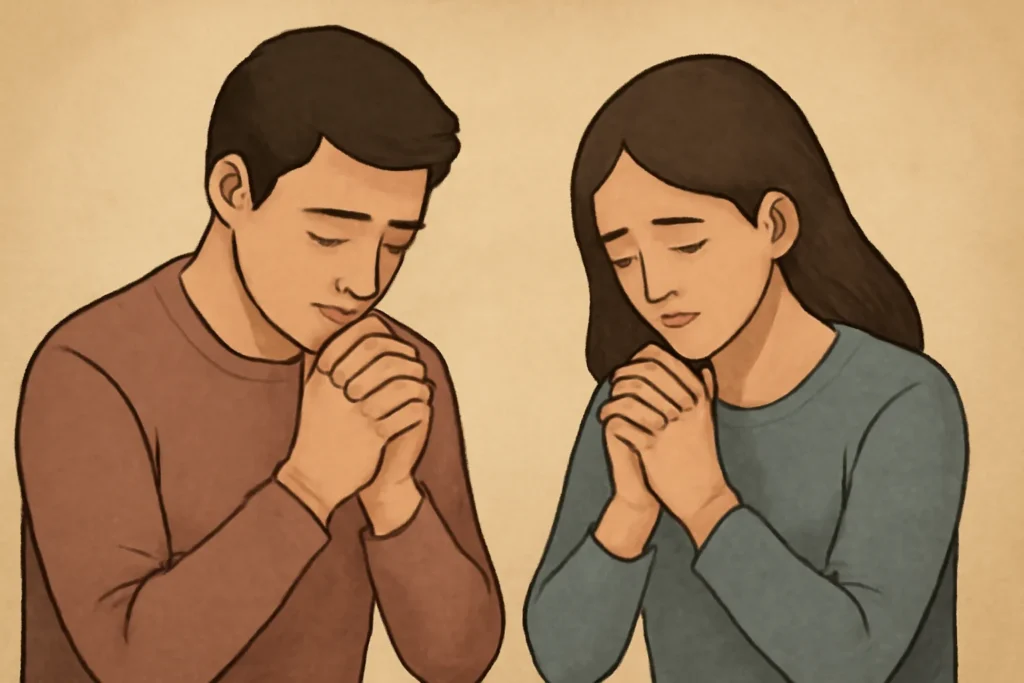
Pray for One Another Bible Verse: Encouraging Scripture on Intercession and Community — a title that invites readers to explore how intercession shapes faith, fellowship, and everyday life. This article gathers biblical insights, practical guidance, and reflective prompts to help believers understand why praying for one another matters, how it functions in different ages and contexts, and how to practice it faithfully in families, churches, and broader communities.
To pray for one another is to take another person's needs, hopes, fears, and burdens before God on their behalf. It is not simply a polite ritual; it is a relational, spiritual practice that acknowledges dependence on God's grace for others and invites God’s presence into human vulnerability. In Scripture, intercession is presented both as a noble privilege and as a necessary discipline for the community of faith. When we lift up others in prayer, we participate in the divine care that moves hearts, heals wounds, and sustains mission.
Several dynamics often accompany intercessory prayer. First, it embodies a posture of humility: recognizing that we do not have every answer or resource for another's struggle, but God does. Second, it expresses solidarity—partners in life and faith standing with someone else in their season of need. Third, it cultivates hope: prayer is a reminder that God often works beyond what we can see in the present moment. And fourth, it strengthens community: when believers consistently pray for one another, trust deepens, accountability grows, and the shared life of grace becomes visible.
In many translations, you will encounter phrases such as intercede for one another, bear one another's burdens, or pray fervently on behalf of others. Across biblical genres—from poetry and wisdom to epistles and gospel narratives—the call remains consistent: prayer for others is a practical, transformative practice that belongs to lively, connected communities.
Key Bible verses about intercession and intercessory prayer
Below are some core verses about intercession and praying for one another, presented with brief reflections to illuminate their contexts and implications. Where helpful, short quotes are included to anchor the discussion in the biblical text.
James 5:16 — A call to confession and intercession
“Confess your faults one to another, and pray one for another, that ye may be healed.”
This verse links two powerful practices: honest mutual transparency and the practice of interceding for others. The healing mentioned can be physical, emotional, relational, or spiritual. The verse assumes a community where vulnerability is safe, where accountability is welcomed, and where prayer acts as a conduit of God’s grace. In modern life, this passage invites us to cultivate intimate, trustworthy relationships in which we can bring one another's weaknesses before God with humility and love.
Galatians 6:2 — Carrying burdens in community
“Bear one another's burdens, and so fulfill the law of Christ.”
Here, intercession is linked explicitly to practical care. Intercession is not only a verbal practice but a way of modeling Christ-like mercy. The word burdens can refer to trials, sorrows, fears, or complex life circumstances. When we carry burdens together, we release a shared energy of encouragement and accountability that helps individuals endure and respond with faith. This verse also underscores that Christian ethics is not merely private piety but life together in mission and compassion.
“Be joyful in hope, patient in affliction, faithful in prayer.”
Intercession sits within a larger rhythm of Christian living. While we pray for one another, we are invited to hold steady in hope, even when circumstances are difficult. Prayer becomes a continual thread woven into the texture of daily life. This verse encourages us to maintain an attitude of perseverance—praying not only when needs are obvious but as a sustained practice that sustains both speaker and listener in faith.
Colossians 4:12 — The example of Epaphras and persistent intercession
“Epaphras, who is one of you and a servant of Christ Jesus, sends greetings. He is always wrestling in prayer for you,”
In Colossians, intercession is personalized and relational. Epaphras’ example shows that intercessory prayer can be a labor of love that involves persistence and spiritual vigilance. This instance helps us see that praying for others often requires intentionality, focus, and time—a daily discipline rather than a one-off gesture. The imagery of wrestling in prayer conveys the seriousness with which intercession should be pursued, especially for communities facing complex spiritual or social challenges.
John 17:20–21 — Jesus’ high priestly prayer for unity
“Neither pray I for these alone, but for them also which shall believe on me through their word; that they all may be one.”
While this passage is primarily about unity among believers, it also embodies the heart of intercessory prayer. Jesus prays for a connected, mission-bearing community that embodies His love to the watching world. When we intercede for others, we seek the kind of unity that reflects Christ’s presence in the church. This verse can inspire us to prioritize prayers for harmony, reconciliation, and shared witness in our local churches and beyond.
Short and unsentimental, this verse reminds readers that even apostolic leaders requested intercession. It models communal dependency and the humility to invite others into one’s own journey with God. We can translate this into a practice of praying for pastors, teachers, caregivers, and evangelists who carry heavy responsibilities in the faith community.
Additional verses and reflections
1 Timothy 2:1 — “I exhort therefore, that, first of all, supplications, prayers, intercessions, and giving of thanks, be made for all men.”
Ephesians 6:18 — “Praying always with all prayer and supplication in the Spirit, and watching thereunto with all perseverance and supplication for all saints.”
Colossians 1:9–12 — Paul’s prayer for spiritual wisdom and strength for the believers, a reminder that intercession often has a catechetical and empowerment dimension.
Hebrews 4:16 — “Let us therefore come boldly unto the throne of grace, that we may obtain mercy, and find grace to help in time of need.”
Across these passages, a common thread stands out: intercession is relational, ongoing, and God-centered. It moves believers to act in ways that extend beyond personal concerns and toward the flourishing of the entire community in Christ.
Variations on the theme: different ways to say and live out pray for one another
To expand our understanding and to help people connect with different biblical flavors of intercession, here are various expressions and practices that convey the same core idea as praying for one another.
Intercede for one another — to stand before God on behalf of someone else, pleading for mercy, grace, or guidance.
Lift others up in prayer — a vivid image of raising someone’s needs to God as a cherished spiritual act.
Carry one another’s burdens in prayer — recognizing that some weights require collective spiritual effort and support.
Pray on behalf of the neighbor — extending care beyond close friendships to strangers, colleagues, and the wider community.
Supplicate for the church — earnest, persistent prayers for the health, unity, and mission of a local body of believers.
Praying for the persecuted and the vulnerable — a biblically grounded focus on justice, mercy, and solidarity with those in hardship.
Intercessory prayer as a discipline — integrating prayer for others into daily routines, worship, and teaching times.
Prayers of blessing and protection — invoking God’s provision, safety, and spiritual growth for others.
Petitions for healing and restoration — recognizing God’s capability to bring wholeness in body, mind, and relationships.
These variations are not merely linguistic diversions; they reflect a shared spiritual posture: to be present with others through prayer, even when direct help is not immediately visible. Different traditions and communities emphasize different facets—some highlight petition and healing, others emphasize discernment and wisdom, and still others foreground forgiveness, reconciliation, and mission. What unites them is the conviction that prayer for others is a meaningful way to participate in God’s work in the world.
How intercession shapes community life
Intercession, at its best, strengthens the social fabric of a faith community. It helps believers cultivate a deep care for one another that goes beyond surface-level concern. Here are some practical ways that intercession can shape church life and family life alike:
Building trust: When people see their prayers being heard and answered in God’s timing, trust grows within the community; people are more likely to share burdens and celebrate breakthroughs together.
Encouraging accountability: Intercessory prayer invites a gentle accountability, where members encourage one another to live in alignment with God’s will and to pursue healing and reconciliation where there is brokenness.
Facing hardship together: In times of collective trial—persecution, illness, grief, or social pressure—intercession anchors the community in God’s sovereignty and sustains perseverance.
Witness through prayer: A praying community becomes a witness to hope, showing the world that faith does not operate only through programs or programs alone but through a living relationship with God.
Fostering discernment: Prayerful intercession invites divine insight into complex situations, helping leaders and laypeople discern next steps that honor God and serve people well.
In many churches, intercession takes visible form in organized prayer gatherings, prayer chains, home prayer groups, and weekend services dedicated to supplication. In families, it becomes a practice of blessing meals with prayers for members’ needs, requesting God’s protection for loved ones, and thanking God for answered prayers. In every setting, the core motive remains the same: love for neighbor connected to fidelity to God.
Practical guidance: how to practice intercession in daily life
For readers who want to cultivate a robust habit of praying for one another, here are practical steps and healthy patterns that can be adapted to individual and communal life. The goal is to move from occasional petitions to a sustained, joyful practice that becomes part of the rhythm of faith.
Establish a reliable prayer routine
Set a regular time for prayer each day, and include a segment for intercession.
Create a simple prayer list that includes family members, friends, church members, leaders, and people in need around the world.
Review the list weekly to reflect on answered prayers, adjust requests, and add new needs.
Adopt varied prayer methods
Supplication and petitions — bring specific needs before God with clear intentions.
Blessing prayers — verbally bless others, naming qualities you appreciate and asking God to cultivate them.
Thanksgiving and praise — celebrate God’s past faithfulness in others’ lives to build faith for the present.
Contemplative listening — spend time in silence, asking God to reveal burdens and directions for those you pray for.
Engage in collaborative intercession
Pair up with a prayer partner or form a small intercessory group where you can share needs and agree in prayer (Matthew 18:19–20 style).
Participate in corporate prayer services focused on specific themes (e.g., church leadership, revival, relief for the oppressed, missions).
Use written notes or digital tools to keep track of prayer points and updates on prayer requests.
Respect privacy—pray with sensitivity and seek consent before sharing someone’s needs publicly.
Use discernment in prayers, especially when addressing sensitive or complex issues; avoid prescriptive language that can sound harsh.
Invite the Holy Spirit to guide your prayers, acknowledging that God’s timing and methods may differ from ours.
Intercession across biblical history: Old and New Testament perspectives
The biblical narrative offers a continuum of intercessory practice, from the patriarchs and prophets to the apostles and early church. Though contexts differ, the impulse to stand in the gap for others remains a constant thread.
Old Testament examples: Abraham interceded for Sodom and Gomorrah (Genesis 18), Moses interceded for Israel during moments of danger, and Daniel sought God on behalf of his people during exile. These stories highlight intercession as a spiritual vocation that can shape national events and personal destinies.
New Testament patterns: Jesus’ high-priestly prayer (John 17) models intercession as relational unity and mission; Paul’s prayers for churches reveal how intercession supports spiritual growth, perseverance, and doctrinal clarity.
Community emphasis: Across both Testaments, intercession is never solitary; it is a communal practice that binds people to God and to one another in faith, hope, and love.
From these strands emerges a holistic vision: to pray for one another is to participate in God’s work of healing, transformation, and renewal, both within the church and in the wider world. In a culture that often feels divided or overwhelmed by problems, intercession becomes a way to express solidarity with neighbors, to stand with the vulnerable, and to acknowledge God’s sovereignty over history and daily life.
Examples of intercessory prayer in Scripture: stories and models
Reading the Bible with an eye for intercession yields powerful case studies and timeless principles. Here are a few representative examples that illuminate different facets of intercessory prayer.
Apostolic prayers: Paul’s letters are full of prayers offered for churches—often with specific aims such as spiritual wisdom, endurance, grace, and knowledge of God’s will. These letters remind readers that intercession is a concrete gift that accompanies teaching and exhortation.
Christ-centered intercession: Jesus’ prayers for believers, for unity, and for mission show that intercession is rooted in love, truth, and reconciliation. His example invites believers to imitate a pattern of praying for others as part of one’s walk with God.
Prayer as warfare and perseverance: Intercession sometimes carries a sense of spiritual warfare—praying against obstacles, spiritual blindness, or division—while always keeping trust in God’s ultimate victory.
Intercession as blessing: Prayers that bless, encourage, and affirm God’s good work in others reflect the generous aims of intercession—building up the body and strengthening faith for service.
These narratives and exhortations collectively teach that intercessory prayer is not a transactional gesture but a spiritual discipline through which God’s grace can flow into people’s lives and communities.
Study tips: how to dive deeper into “pray for one another” in the Bible
If you want to grow in understanding and practice, consider a guided study approach. Here are practical steps to explore the biblical theme of intercession with depth and discernment.
Choose key passages that address intercession (James 5:16, Galatians 6:2, John 17, Romans 12:12, Colossians 4:12, 1 Thessalonians 5:25).
Compare translations to see how different biblical words convey intercession, burden-bearing, and mutual care.
Use devotional prompts to reflect on each passage—consider questions like: What burden do I recognize in a loved one? How can I support them through prayer this week?
Create a prayer plan that combines personal requests with intercessions for others in the church, the city, and the world.
Practice reflective journaling after prayer times to track answered prayers and times when God’s guidance became clear.
Structured study can help communities grow into a robust culture of intercession, where prayers for one another become a daily rhythm rather than a sporadic event.
Common questions about praying for others
As readers explore the topic, some questions naturally arise. Here are concise answers to a few common inquiries, drawing on biblical insights and pastoral wisdom.
Is intercession only for clergy or spiritual leaders? No. While pastors and leaders may model and teach intercession, the biblical pattern invites all believers to participate. Intercession is a shared responsibility that strengthens the church as a whole.
What should I pray for when praying for others? Pray for God’s will to be done, for strength and comfort in trials, for healing where it aligns with God’s plan, for wisdom and discernment, for reconciliation, and for opportunities to show love in tangible ways.
How often should I pray for others? Consistency matters more than frequency alone. A steady habit—praying for others daily or several times a week—can sustain relationships and reflect a life anchored in prayer.
What if prayers seem to go unanswered? Prayer trains the heart to trust God’s timing and methods. Seek wisdom, maintain faith, and continue interceding with humility, acknowledging that God’s purposes often stretch beyond present understanding.
How can I maintain balance between praying for others and living out practical help? Intercession and action should work in tandem. Pray for guidance, then follow the Spirit’s lead by serving, encouraging, or advocating for justice and mercy where needed.
Conclusion: the transformative power of praying for one another
Across its pages, the Bible invites believers into a vibrant, communal life defined by intercession — a practice that forms character, strengthens bonds, and reflects the heart of God for the world. When we say pray for one another, we echo a timeless invitation to participate in God’s ongoing work of mercy, restoration, and hope. The scriptures remind us that intercession is not a one-way petition, but a shared journey—one that invites God into the deepest corners of human need and into the crowded spaces of daily life.
As you continue reading, praying, and practicing intercession, consider these brief exhortations to help keep the practice rooted in love and truth:
Let love be your motive: intercession is rooted in care and compassion, not in judgment or self-righteousness.
Keep humility central: acknowledge your limits as a prayer partner and depend on God’s grace for both the one you pray for and yourself.
Invite accountability: share prayer requests with trusted friends or groups, so prayers remain sincere and discerning.
Celebrate answered prayers: take time to thank God when needs are met or growth occurs, reinforcing faith and gratitude.
Spread the habit: model intercession for children, students, and new believers so that the practice becomes a natural part of community life.
Ultimately, the call to pray for one another is a call to deepen faith through relationship—with God and with others. It is a spiritual discipline that grows out of a heart that recognizes we belong to a community of grace, a people who depend on God together, and a mission that requires intercession as a steady, hopeful practice. When practiced with sincerity, biblical fidelity, and a compassionate imagination, intercessory prayer becomes a powerful expression of church life—an ever-present invitation to partner with God in healing, transformation, and the rediscovery of hope in a troubled world.









Leave a Reply