Knock and It Will Be Opened: A Practical Door Etiquette Guide
Knock and It Will Be Opened: A Practical Door Etiquette Guide
Knock and It Will Be Opened: A Practical Door Etiquette Guide
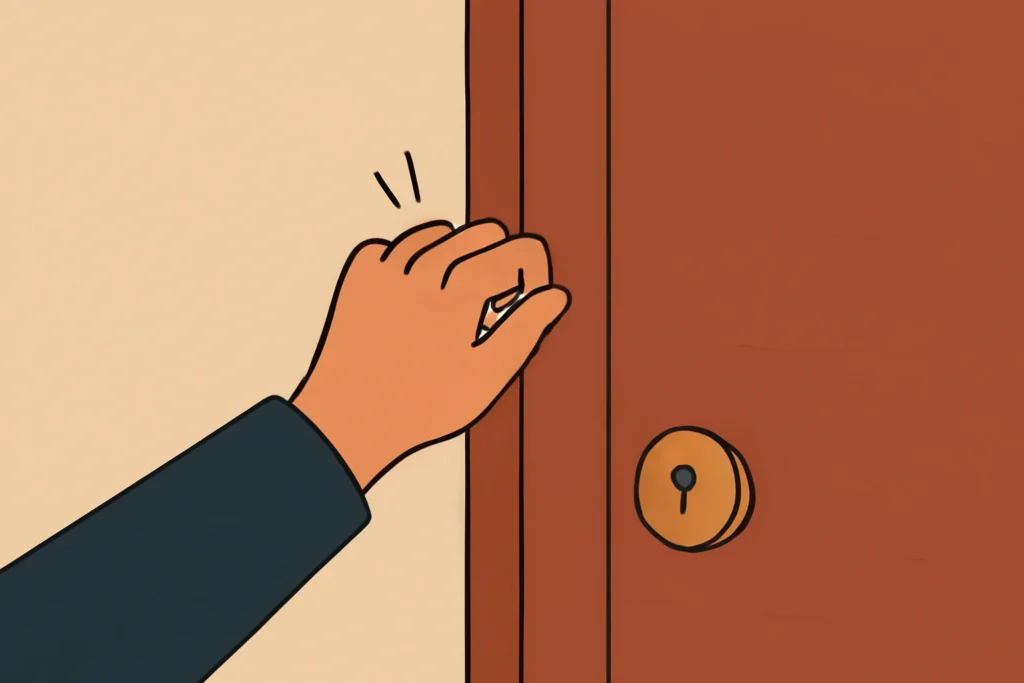
The act of knocking is more than a mechanical sound; it is a social signal that communicates intent, respect, and a willingness to engage on equal terms with the person on the other side. A simple knock can set the tone for a conversation, a visit, or a professional encounter. The maxim “knock and it will be opened” captures a timeless idea in a compact form: when you approach a closed door with consideration, you increase the likelihood of a positive reception. This guide explores the art and science of door etiquette in a modern context—homes, workplaces, shared spaces, and public venues—so you can navigate arrivals with calm, confidence, and courtesy.
Foundations of Door Etiquette
At its core, door etiquette is about respect for privacy, clear communication, and appropriate timing. The person behind the door may be resting, concentrating, or attending to an urgent matter. A respectful knock acknowledges that space and time are valuable, and it invites a response without demanding entry. When practiced consistently, this courtesy becomes a standard that others recognize and appreciate.
Key principles to keep in mind include:
Consent matters. Entry should be granted by the person inside, not assumed by you alone. A knock is an invitation, not a guarantee.
Privacy deserves protection. If someone is behind a closed door, assume they deserve quiet and personal space until invited to near the threshold.
Clarity beats ambiguity. A confident, brief knock followed by an identifiable greeting helps the other person understand your purpose quickly.
Safety comes first. In uncertain situations, a gentler knock or a call from a safe distance may be wiser than a forceful approach.
Knock vs. Ring: When to Tap, When to Ring, and How Etiquette Changes
Not every door responds the same way to the same signal. Some contexts call for a traditional knock, others for a doorbell, and in some cases, a quiet intercom or text message is more appropriate. Understanding the signal etiquette for different environments helps you choose the right approach.
Residential homes: Use a short, deliberate knock or a doorbell. If you live nearby or are visiting, a light knock is usually sufficient, followed by a brief greeting when the door opens.
Apartments and shared buildings: A doorbell is often expected, but if you knock first, keep it modest—one or two taps—so you don’t disturb neighbors.
Offices and workplaces: A doorbell or intercom might be in place, but when entering a conference room or cubicle, announce yourself before stepping through.
Public or semi-public spaces: In hotels, clinics, or libraries, follow posted guidelines; use the designated entry method and keep noise minimal.
Regardless of the method, the principle remains the same: initiate contact respectfully, make your purpose known, and respect the person’s decision about entry. In many situations, the idea is captured by variations of the phrase knock and it will be opened—not as a guarantee, but as a hopeful outcome built on politeness and mutual courtesy.
Techniques for Effective Knocking
The technique you choose communicates as much as your words. Different situations call for different knocks, tones, and rhythms. Below are practical approaches you can adapt.
For a door where occupants are likely to be resting, focusing, or in a private moment, a soft knock—one measured tap or two gentle raps—can signal that you’re present without intruding. Pair this with a calm, friendly greeting after the door opens or a brief message if the door remains closed.
Moderate Knock, Clear Intent
When you need to be heard but not overwhelming, a moderate knock with a predictable rhythm (two to three taps, evenly spaced) often works best. This approach is common for neighbors, delivery personnel, or service workers who need quick access but must remain courteous.
Firm Knock, Professional Presence
In professional settings, or when you know the door is closed for a workday, a firm knock can signal seriousness without aggression. Follow the knock with a concise introduction and the reason for your visit. If the door remains closed, move to a polite follow-up method (a call or message) rather than persisting at the door.
Rhythm and Pause
The rhythm of your knock matters. A quick sequence that feels predictable and not erratic helps the other person gauge your presence. If there’s no response after a short pause, a second gentle knock is acceptable in many contexts, but avoid repeating indefinitely. If you suspect someone is resting or in a private moment, a single, respectful knock is often enough.
Voice and Greeting
When the door opens, a calm, clear greeting helps set the tone. Simple phrases such as “Hello, it’s [Your Name]. May I come in?” or “Hi there, it’s [Your Name] from [Company]. I have a delivery for you” communicate purpose and respect without overwhelming the space.
Your posture, distance from the door, and facial expression convey more than words at first contact. Stand at a respectful distance, avoid leaning on the door, and maintain a friendly expression. Nonverbal cues reinforce the message that you honor the other person’s privacy and time.
Approach to Different Doors and Scenarios
Doors come in many forms, each with its own norms. Here are practical guidelines for several common contexts.
Private residence
In a home, the door is a boundary with a personal space behind it. If you don’t know the resident, introduce yourself with your affiliation and purpose. If the door is answered by a pet or a family member, acknowledge them politely and proceed to the intended recipient when invited.
Apartment or condo hallway
In multi-unit buildings, keep noise to a minimum. A fan-out of two or fewer taps is polite, and if you don’t receive a response after a brief pause, it’s appropriate to step back and try a doorbell or call if you have the number.
If entering a workspace, announce yourself and your purpose succinctly. For interviews or meetings, a courteous knock followed by “May I come in?” is standard protocol. If the door is closed, assume you should pause until you’re invited to proceed; avoid pushing or forcing entry.
Public spaces (hotels, clinics, libraries)
Follow posted signs or guidelines. If you’re a guest or client, a brief knock or using the designated entry signal is appropriate, followed by a respectful greeting. In clinical or service environments, be mindful of patient privacy and staff workflows, and proceed only when permitted.
Privacy, Boundaries, and Safety
A well-timed knock respects boundaries and reduces the chance of misinterpretation. Several practices help strengthen safety and comfort for everyone involved:
Don’t pry into private matters or look through gaps in the door. If someone asks for a moment, respect it.
Avoid intrusive questions before entry. Introduce yourself and explain the purpose of your visit, then wait for consent to enter.
Be mindful of emergencies. If you suspect someone is in danger or needs immediate assistance, prioritize safety and use appropriate channels (emergency services, building security).
Respect lock status. If a door is locked from the inside, do not force entry; this is a clear sign to stop and wait or contact the resident via an intercom or phone.
Acknowledge privacy tools. If a door has cameras or a video intercom, introduce yourself on camera and follow any posted instructions about entry or identification.
In Emergencies: When to Proceed and When to Refrain
In urgent situations, the default should be to seek help or contact the person through safe channels. If you cannot reach the resident and there is a live danger (fire, gas leak, medical emergency), call emergency services rather than attempting to force entry. If you are a building staff member or a caregiver with written authorization, follow the established protocols for accessing a unit in urgent cases, ensuring you document every action for accountability.
Even in emergencies, maintaining dignity and respect remains essential. A calm, measured approach reduces confusion and helps everyone feel secure about the steps being taken.
Deliveries, Repairs, and Service Visits
When you’re delivering a package, performing maintenance, or conducting a service call, the etiquette around knocking has practical consequences for efficiency and safety.
Identify yourself and your company or purpose immediately after the door opens or you reach a visible point in the doorway.
Present credentials if required, especially in professional settings; this builds trust and credibility.
Leave contact information and any necessary instructions if the recipient is not available to meet you in person.
Be mindful of timing. If it’s past business hours or a late delivery, consider leaving a note or using an alternative contact method rather than lingering at the door.
Cultural, Regional, and Building-Specific Variations
Etiquette isn’t universal. Cultural norms, regional humor, and building policies shape how people perceive knocking. Some communities favor a tailored approach:
Quiet neighborhoods. Soft knocks and brief greetings are highly valued to minimize disturbance.
Message-first cultures. In some contexts, leaving a note or calling ahead before approaching a door is common courtesy, especially in shared living arrangements.
Formal vs. informal settings. In formal environments, introductions and clear statements of purpose carry more weight; in informal contexts, a friendly approach may be sufficient.
Access-control environments. Some buildings require visitors to announce themselves at a front desk or use a buzzer with an attendant. Respect those processes even if you are impatient to enter.
The overarching idea, however, remains constant: approval to enter is earned through respectful conduct. The language of entry should always reflect consideration for others’ time, space, and privacy.
Once the door opens, your first impression matters as much as your knock. Consider a brief, deliberate greeting that sets the tone for the interaction:
State your name and purpose: “Hi, I’m Jamie from ACME Repairs. You asked us to check the thermostat.”
Apologize if you caused any disruption (briefly): “Sorry for the disturbance.”
Offer a quick value statement: “I’ll be quick.” or “I just need a minute to check the issue.”
Exit gracefully if the resident requests you to leave: “Please let me know if you’d prefer I come back later.”
If you’re a guest or visitor without a prior appointment, a polite introduction and a brief explanation are essential. The first 15 seconds of your interaction often determine whether the rest of your visit will be smooth.
Children, Guests, and Pet Considerations
Special situations require extra sensitivity:
Children may be excited or confused by a knock. A gentle approach, a calm voice, and a quick explanation help. If a parent or guardian is present, direct your words to them when engaging.
Guests arriving unannounced should be treated with warmth but with clear boundaries. If you’re unsure of the etiquette, defer to the host’s rules or the building’s policies.
Pets may react strongly to knocks. If you are delivering something to a pet-friendly home, anticipate possible interruptions and avoid startling animals by announcing your presence before the door opens.
The rise of video doorbells and smart locks has added new layers to door etiquette. Consider these practices when technology mediates entry:
Introduce yourself on camera when your entry is captured by a video system, especially if you’re visiting someone you don’t know well.
Respect privacy controls. If someone has configured their door system to reject certain types of calls or video feeds, comply with those settings and use alternate contact channels when possible.
Avoid spamming the system. Repeated attempts to enter within a short period can be perceived as aggressive or intrusive; give space and retry later if appropriate.
Obey building policies. Some buildings require a resident’s approval before a remote entry is granted; in such cases, do not override security settings.
Language, Tone, and Effective Communication
The words you choose after a knock set the emotional temperature of the encounter. Consider the following guidelines:
Be concise. A brief greeting and purpose statement are usually enough; lengthy explanations before entry can feel burdensome.
Be inclusive. If you are entering a shared space, acknowledge all parties present and address the primary occupant first.
Acknowledge boundaries. If the door opens to reveal a closed space or a person who indicates you should wait, comply immediately and with gratitude.
Say thank you. A simple “thank you for your time” after the exchange reinforces mutual respect.
Quick Reference: Do’s and Don’ts
For busy days when you need a quick mental checklist, here is a practical reference you can apply instantly.
Do approach doors with calm, steady behavior; avoid rushing or making the other person feel cornered.
Do announce yourself and your purpose right after the door opens or when you arrive at the threshold.
Do respect a door that remains closed or a host who asks you to wait outside the doorway.
Do adapt your approach to the context (home, office, public space) and to any posted rules regarding entry.
Don’t shout, slam, or pound on a door in anger or frustration.
Don’t enter a space if you are explicitly told not to or if you do not have permission to do so.
Don’t block a doorway with belongings or crowd the threshold; give space for others to move or respond.
Don’t rely on assumptions about the other person’s availability or mood; confirm before pushing forward.
Variations on the Theme: Expressing the Idea in Different Ways
Language can carry the same intent with different shades. Several phrasing variants can convey the same sentiment as the idea behind knock and it will be opened, while tailoring to tone and context:
“May I come in?” When you want explicit permission and to respect boundaries.
“Hello, this is [Name] from [Company]—delivery for [Recipient].” For practical, on-the-spot introductions.
“Good morning. I’m here to fix the thermostat.” A direct, task-focused variation.
“Pardon me, is this the right time to talk?” A courteous, permission-seeking approach.
“I’ll be brief.” If you anticipate a short interaction, keep it concise to respect the other person’s time.
The core idea remains consistent: communicate clearly, respect boundaries, and respond gracefully to the other person’s response.
Putting It All Together: A Practical Scenario Guide
To help translate these principles into real life, here is a scenario-based guide you can reference.
Neighbor requesting entry: You hear a friendly knock in a quiet neighborhood. You open the door with a smile and say, “Hi, how can I help you today?” If they need to borrow something, assess your comfort level before offering assistance.
Delivery person at your door: A brief knock or doorbell, followed by the delivery worker stating their name and purpose. If you’re unavailable, ask them to leave the package at a safe location or arrange a redelivery window.
Maintenance visit: The technician introduces themselves, explains the service, and asks for access to the area they need to work. If you’re comfortable with the scope, grant entry; if not, ask questions or request a time for a safer, more convenient visit.
Office entry: When a door to a conference room is closed, knock, wait, and announce, “Hi, I’m here for the 2:00 PM meeting.” If the door is locked, call or text to request entry rather than pushing past the door.
Public venue, late hours: In hotels or clinics, use the designated entry method and be mindful of quietness and respect for other guests or patients.
Closing Thoughts: The Endurance of Courteous Entry
The practice of knocking and seeking entry is a small but meaningful ritual in everyday life. It reflects a broader ethic of respect for others’ space, time, and autonomy. The idea that entry is earned through courtesy persists across cultures and contexts, adapting gracefully to new technologies and changing social norms. Whether you are a visitor, a resident, a service professional, or a host, the way you knock—whether a soft tap, a measured rap, or a simple doorbell chime—contributes to a moment of human connection. Remember the guiding principle: knock and it will be opened in the sense that the door to positive interaction is kept ajar by empathy, patience, and clear communication. When you approach doors with intention, you invite not just entry, but a respectful, constructive exchange that sets the stage for what happens next.
By embracing the varied forms of knock etiquette—from the quiet knock to the formal introduction to the respectful use of technology—you can navigate entrances with confidence, minimize misunderstandings, and foster more considerate interactions in your home, workplace, or community.











Leave a Reply