John 3:3 Explained: Meaning, Context, and Implications
John 3:3 Explained: Meaning, Context, and Implications
John 3:3 explained is a phrase that appears frequently in sermons, study guides, and academic discussions about the Gospel of John. This article aims to offer a thorough, balanced, and accessible exploration of the verse, its historical setting, and its enduring implications for belief and practice. We will look at the wording, the surrounding conversation with Nicodemus, and the broader theological themes that help readers grasp what it means to be “born again” (or “born from above”) and why that matters for understanding the kingdom of God.
The verse in question reads in a traditional English rendering as:
Jesus answered and said unto him, Verily, verily, I say unto thee, Except a man be born again, he cannot see the kingdom of God.
This compact statement carries a set of big ideas in compact form. The two central claims are that spiritual birth is necessary and that this birth enables a person to perceive or enter the kingdom of God. The structure of the sentence emphasizes truth-telling (the repetition “verily, verily”) and marks a threshold: without a transformative experience, a person cannot grasp or participate in the realm where God’s reign is acknowledged and realized.
In what follows, we will strain out some of the ambiguity that often arises in casual reading and illuminate how readers across time have understood this line. We will use multiple phrases to refer to the legacy of the verse, including “John 3:3 explained,” “Explaining John 3:3,” “What John 3:3 means,” and “John 3:3 interpretation”, to reflect the breadth of discussion surrounding this text.
Historical and Cultural Context
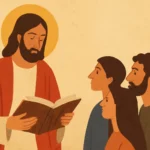
John 3:3 sits within a private nighttime conversation between Jesus and Nicodemus, a Pharisee and a respected member of the Jewish ruling council. This setting matters because it frames the question of “seeing the kingdom of God” in a way that resonates with first-century Jewish expectations about who can recognize God’s redemptive plan. Nicodemus begins with a statement of belief that Jesus might be from God, but Jesus responds with a radical claim about birth. The discourse that follows in John 3 reshapes how readers should understand divine sovereignty, human responsibility, and the means by which people participate in God’s life.
The terminology surrounding the verse is also historically significant. In the original Greek, the phrase commonly translated as “born again” is more precisely rendered as gennaō anōthen, often translated as “born from above.” The word anōthen can carry the sense of origin from a higher source or origin “from above,” not merely repetition. Acknowledging this nuance helps clarify why many modern translations render the phrase as “born from above” rather than simply “born again.” This linguistic nuance is a frequent point in discussions about John 3:3 explained across different Bible translations.
The citation of the kingdom of God reflects a central theme in the Gospel of John, where the kingdom is not merely a future, distant realm but a present reality that believers enter through faith and regeneration, while also looking forward to its consummation in the age to come. This dual aspect—present experience and future fulfillment—shapes how scholars and pastors explain what it means to “see the kingdom of God.”
Meaning and Theological Implications
Born From Above vs Born Again
A pivotal interpretive question in John 3:3 explained is whether the phrase refers to a second physical birth (recreation of life) or a spiritual rebirth originating from God. Most contemporary biblical scholars favor born from above as the more accurate sense of anōthen, signaling a divine initiative that originates beyond human effort.
The evangelical phrase “born again” remains common in many English translations and in popular usage. While it captures the essential idea of a transformative birth, it risks implying a purely mystical or subjective experience if divorced from the divine act of regeneration described in subsequent verses. A cautious reading suggests that spiritual rebirth entails both an inner renewal by the Holy Spirit and a conversion that reorients a person’s life toward God and his kingdom.
Different Christian traditions have nuanced ways of explaining this rebirth. In some streams, the new birth is primarily an event of conversion—trust in Jesus as Messiah, repentance from sin, and acceptance of God’s gift of grace. In other streams, the new birth emphasizes ongoing sanctification—an ongoing process empowered by the Spirit that reshapes conduct, desires, and identity. In all traditions, however, the core claim of John 3:3 is that human effort alone cannot produce sight of the kingdom; a divine birth is necessary.
The phrase “the kingdom of God” in John is multifaceted. Some readers conceive of it as a future, eschatological reality that will be realized fully at the end of the age. Others emphasize the present dimension—the reign of God breaking into history through Jesus, transforming individuals and communities now. John 3:3 suggests that the capacity to perceive or participate in this kingdom depends on an upriver change in the human condition: a birth from above that makes a person receptive to Jesus’ message, mission, and the Spirit’s work.
The Epistemic “Seeing”
The verb “see” in John 3:3 is not merely optical. In biblical language, to see the kingdom of God often means to perceive, understand, and participate in the realities of God’s reign. It implies recognition of spiritual truths and the ability to live with the values of the kingdom. A person who has not experienced the new birth is described as unable to see this realm; that is, the fundamental capacity to grasp and align with God’s redemptive purposes is impaired without divine renewal.
Theological Connections in the Gospel of John
The moment in John 3:3 sits within a broader theological framework in the Gospel of John. The author weaves a consistent emphasis on encountering Jesus as the revelation of God, entering through faith, and receiving life through the Spirit. The discourse with Nicodemus continues into John 3:5–8, where Jesus links rebirth with being “born of water and the Spirit.” Some readers interpret “water” symbolically (as cleansing, purifying, or the natural order of birth), while others connect it to baptism or to the Spirit’s transformative power. Either way, the Johannine theme remains: human beings are dependent on God’s initiative for true spiritual life.
Beyond the immediate verse, the Gospel of John navigates the tension between belief and disbelief, light and darkness, and the contradiction between human tradition and divine revelation. John 3:3 explained becomes the opening doorway into a larger meditation on faith, revelation, and the nature of eternal life.
Connections to the Gospel Narrative
The encounter with Nicodemus is not an isolated encounter; it reflects a recurring pattern in John: Jesus offers a radical invitation that reveals both the insufficiency of human effort and the sufficiency of God’s grace. Surrounding chapters highlight that belief in Jesus leads to life, while rejection often produces misunderstanding or hardened resistance. The “birth” motif reappears in various Johannine passages, urging readers to reframe human identity in light of the divine-human exchange accomplished by Jesus and made effective through the Spirit.
Implications for Belief and Practice
Personal Transformation
Spiritual renewal as the groundwork for genuine discipleship.
Understanding that conversion is more than a one-time decision; it is a lifelong orientation toward God.
Recognizing that the Spirit’s work is essential for turning toward Christ and remaining faithful.
Community and Church Life
Communities are called to welcome those who seek God’s reign, recognizing that transformation is ultimately a work of grace.
Pastoral care and catechesis may emphasize the new birth as part of Christian formation—baptism, instruction, and ongoing sanctification.
Worship and preaching can center on the themes of light, life, and living in the Spirit, inviting believers to grow in understanding of the kingdom here and now.
The imperative of sharing the gospel becomes consonant with the doctrine of the new birth, as Jesus describes a necessary transition to belonging to God’s people.
Discussions about faith may emphasize not simply belief as an intellectual assent, but trust in Christ that leads to a reoriented life—justice, love, and obedience to God’s will.
Interpretive Variants Across Traditions
Across Christian traditions, John 3:3 explained takes on a range of emphases. Here are some representative perspectives:
Evangelical and Reformed: Emphasize personal conversion and a decisive moment when an individual places faith in Jesus Christ, receiving new life by the Spirit. The emphasis often falls on the transformative power of the new birth and the corresponding change in behavior and devotion.
Catholic and Orthodox: Often frame the new birth within the sacramental economy—grace mediated through baptism, the Holy Spirit, and ongoing participation in the life of the church. The new birth is both an initial act of grace and a lifelong process of transformation.
Liberal Protestant: May read the verse as highlighting a metaphor for radical moral and spiritual renewal that aligns human life more closely with divine purposes, while allowing diverse understandings of how that renewal occurs.
Pentecostal and Charismatic Traditions: Frequently connect the spiritual rebirth with manifestations of the Spirit, experiential faith, and ongoing empowerment for mission and service in the world.
Regardless of the tradition, most readers agree that the core claim remains that the human situation has moral and spiritual priority needs that only divine action can meet. The phrase “born from above” or “born again” functions as a marker for turning toward God’s life and becoming part of his redemptive project in Christ.
How should readers apply the insights from John 3:3 explained to daily life and ongoing faith? A few practical directions include:
Humility before grace: Acknowledging that personal effort has limits and that spiritual life depends on God’s initiative.
Prayer for renewal: Asking the Spirit to “breathe” life into one’s heart, desires, and priorities, aligning them with the kingdom’s aims.
Ethical consistency: Allowing the new birth to translate into practices of love, honesty, justice, and mercy within families, communities, and workplaces.
Pastoral discernment: In a church setting, recognizing that conversations about conversion, baptism, and discipleship may take different shapes while pointing toward the same truth of divine regeneration.
Common Questions and Clarifications
Does John 3:3 apply to infants or all people?
The text speaks to a person’s need for transformation in order to perceive God’s reign. Different Christian traditions view the timing and means of this rebirth in light of broader scriptural teaching about baptism, grace, and faith. Most traditions teach that a personal response to God through Jesus is central, though the timing and language differ (e.g., baptismal regeneration, infant baptism with later confirmation, etc.).
Is “seeing” the kingdom of God a present reality, a future hope, or both?
Most scholars and traditions affirm a twofold sense: a present experience of God’s reign in the life of believers, and a future fullness when the kingdom is finally realized in fullness. In John’s Gospel, belief and eternal life are often presented as both now and not yet.
What is the relationship between the new birth and baptism?
The relationship is interpreted differently across traditions. Some view baptism as a visible sign of the inward rebirth, others see baptism as a different but connected channel of grace. The New Testament presents both themes in ways that are complementary rather than strictly identical.
How does the Spirit relate to birth in this passage?
The Spirit is commonly understood as the agent who works regeneration. Being “born of the Spirit” implies a transformative encounter with God that enables faith, obedience, and a new life posture toward God’s kingdom.
Related Passages and Thematic Linkages
To deepen understanding, readers often compare John 3:3 with other key Johannine and broader biblical passages. For example:
John 1:12-13: Belief in Jesus leads to becoming children of God, a related truth about spiritual birth and identity.
John 3:5: “Born of water and the Spirit”—a companion line that expands the discussion on how rebirth is enacted in the life of a believer.
John 6:37-40: Assurance of eternal life through faith in Christ, reinforcing the present and future dimensions of the kingdom.
1 Peter 1:23: The concept of being born again through the enduring word of God emphasizes ongoing dependence on divine grace.
Together, these passages illuminate a cohesive narrative: God initiates a transformative work, humans respond in faith, and the consequence is a new life characterized by participation in God’s reign and mission in the world.
Key Takeaways from John 3:3 Explained
Divine initiative is essential: Human effort alone cannot bring about true spiritual sight or entry into the kingdom.
New birth is foundational: The experience described evokes a profound change in a person’s relationship with God, orientation of life, and capacity to perceive God’s reign.
Kingdom perception is integrally linked to transformation: Seeing the kingdom is inseparable from living in alignment with its values, powered by the Spirit.
Textual nuance matters: The Greek term anōthen invites a nuanced reading—“from above” can rightly be considered, alongside the traditional “again” renderings, to capture the full theological sense.
Context enriches understanding: Knowing that the dialogue with Nicodemus occurs at night, among a learned religious leader, clarifies why Jesus speaks in terms that challenge natural assumptions about eligibility, status, and righteousness.
In the end, John 3:3 explained as a theological hinge can help readers move beyond a simple slogan to a richer understanding of human nature, divine grace, and the gracious invitation to participate in the life of God’s kingdom. While debates continue across traditions about the precise mechanics of rebirth—whether through baptism, the Spirit, faith, or a combination thereof—the core claim remains: a transformative encounter with God is necessary to know and enter the realm where God reigns, now and in the age to come.
Glossary of Key Terms for Further Study
Born from above (anōthen): A Greek phrase often translated as “born again,” with a nuance suggesting spiritual birth from a higher source.
Kingdom of God: The realm of God’s rule, both present in Christ’s ministry and anticipated in its fullness at the consummation of all things.
Nicodemus: A Pharisee and member of the Jewish ruling council who engages Jesus in this nocturnal dialogue.
Regeneration: The theological term for the spiritual rebirth described in John 3:3 and related passages.
Belief/Birth in Johannine literature: The interplay between faith in Jesus and the life that follows as a result of that faith.
If you found this exploration helpful, you might also explore how John 3:3 explained relates to a broader study of the Gospel of John, the themes of light and dark, belief and disbelief, and the transformation that comes from encountering Christ. The verse remains a doorway into a larger conversation about what it means to live as part of God’s people in a world that longs for true sight, true life, and true righteousness.







Leave a Reply