Encounter with God: Understanding the Signs and Steps to a Transformative Spiritual Experience
Encounter with God: Understanding the Signs and Steps to a Transformative Spiritual Experience
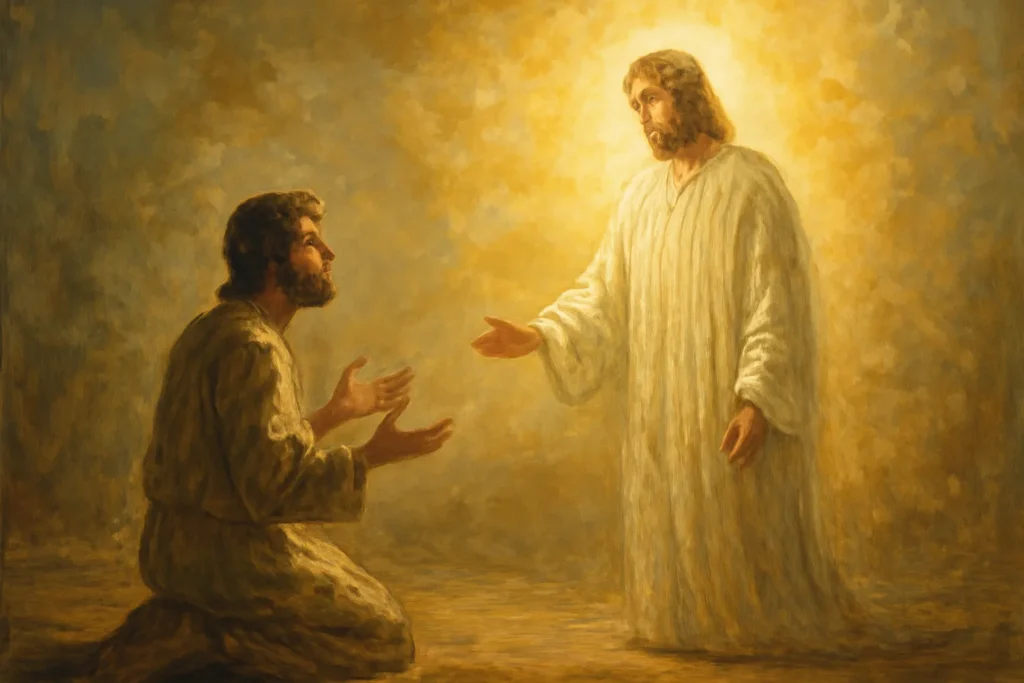
Encounter with God is a phrase that appears across many cultures, faiths, and personal journeys. It is not a single event with a universal script, but rather a spectrum of experiences that people describe as a direct meeting, an inner invitation, or a felt presence of the sacred. This article offers an in-depth, practical exploration of the signs that such an encounter might be approaching, the steps that can prepare the heart and mind for a transformative spiritual experience, and the ways to integrate what is received into daily life. By using variations of the language—encounters with the Divine, meeting the Sacred, divine communication, holy visitation, and other phrases—we acknowledge that people come to this topic from different traditions, yet share a common longing for transcendence, meaning, and connection.
The journey toward a real transformative spiritual experience is not a shortcut, nor is it a guarantee. It is more like a pilgrimage of the heart, requiring discipline, discernment, and a willingness to be changed by what is encountered. The aim of this article is to offer clarity about what to expect, practical guidance on what to cultivate, and thoughtful reflections on how to live through and after an experience that may alter the way you see yourself, others, and the world.
Understanding the Concept: What is an Encounter with God?
To begin, it helps to name the different ways people describe a divine encounter or a meeting with the Sacred. Across traditions, there are common threads—moments of truth, shifts in perspective, or deep affirmations of life’s meaning. Yet there is also a rich variety in how these experiences manifest. For some, the encounter comes through commands or visions; for others, through a quiet, pervasive sense of companionship with the Divine. The following subsections outline how scholars, theologians, mystics, and everyday seekers speak about this event, and why the distinctions matter for understanding your own path.
Definitions Across Traditions
Definitions of an encounter with the Divine vary, but several enduring motifs recur:
Direct revelation: A moment in which the sacred speaks or makes truth clear in a way that feels beyond ordinary perception.
Near-absence of self: A resetting of ego or self-centered concerns, often accompanied by a sense of belonging to something greater.
Transformative clarity: Insights that reframe values, priorities, and life direction with a sense of certainty.
Companionship: A felt presence or guidance that does not feel like an external voice, but like a friend or consoler who accompanies one’s journey.
Call or consecration: An invitation to devote one’s life, time, and talents to a higher purpose.
Common Misconceptions
It can be tempting to treat the encounter as a dramatic, cinematic moment. In reality, transformative spiritual experiences most often unfold gradually and reverberate across time. Keep these cautions in mind:
Not all signs are dramatic: Subtle changes—new empathy, steadier patience, or a renewed sense of responsibility—can be the most enduring indicators.
Not every significant feeling is supernatural: Deep psychological shifts, compassionate turns, or moral awakenings can be the fruit of ordinary processes like meditation, prayer, and action.
Not every experience must be labeled: Some people describe a gradual awakening rather than a single moment; both paths are valid.
Signs That You Are Moving Toward a Divine Encounter
Recognizing the signs can help you stay attentive without forcing results. The signs are best understood as a constellation rather than a single flashlight beam. They can appear in your inner world, in relationships, in nature, or through events that feel meaningful beyond ordinary logic. Below are common indicators people report when they are on the cusp of a holy visitation or a divine encounter.
Inner Shifts
Several inner experiences often precede or accompany a transformative encounter. These shifts are not guarantees, but they frequently accompany people who are prepared to welcome a deeper reality:
Intense longing for truth, goodness, and beauty that outstrips prior appetite.
Increased silence or a desire for solitude, which may be mistaken for withdrawal but often signals receptivity.
Persistent questions about purpose, identity, and the meaning of suffering.
Shifts in values: Greater compassion, reduced attachment to status, or a new sense of responsibility toward others.
Emotional and Relational Signals
Emotions often accompany spiritual openings, though they are not the only indicators. Be attentive to these patterns:
Compassion overflow—a heightened concern for others’ well-being or a sudden willingness to suffer with others.
Forgiveness and reconciliation becoming easier or more natural.
Nonviolent resolve in the face of conflict; a preference for peaceable means over coercion.
Resonant symbols or experiences that repeatedly echo a sense of sacredness, such as recurring dreams or meaningful coincidences (often called synchronicities).
Physical and Behavioral Indicators
Some people notice how their bodies respond to the idea or presence of the sacred. These physical and behavioral signs might include:
Stillness in the body, breath changes, or a feeling of warmth or lightness when contemplating sacred truths.
Clear momentum in decisions that align with a higher sense of purpose, even when the path is difficult.
Attention reorientation—less fixation on superficial concerns, more focus on meaningful work, service, or study.
Keep in mind that none of these signs guarantees an encounter, but when several of them appear together over a period of time, it often signals a meaningful spiritual opening. In this sense, you are not chasing a moment as much as cultivating a spiritual climate in which a divine encounter is more likely to occur.
The Stages of a Transformative Spiritual Experience
People frequently describe a journey that unfolds across stages, not as a single instant. A helpful way to think about this journey is as a pilgrimage with four overarching phases: preparation, encounter, integration, and ongoing transformation. Each phase has practices, challenges, and opportunities for discernment. While not every seeker experiences all stages in the same way, recognizing these phases can bring clarity and steadiness to the path.
The soil must be prepared for anything that wants to plant itself deeply. Preparation is less about sheer effort and more about cultivating the conditions in which truth can arise:
Regular discipline—daily practice of prayer, meditation, mindful reflection, or contemplative reading.
Humility—recognizing the limitations of the ego and the need for grace or guidance beyond oneself.
Ethical consistency—aligning thoughts, words, and deeds with a growing sense of what is right and for the good of others.
Openness to mystery—a willingness to live with questions without demanding immediate, clear answers.
2. Encounter: The Apparent Moment of Contact
When preparation has laid a fertile ground, the encounter can appear as a decisive moment or as a series of experiences that accumulate in one’s heart and mind. Possible characteristics include:
Sudden clarity about life’s purpose or a sense of direction that feels beyond human reason.
Affirmation from within or from trusted companions that pursue a certain path is meaningful and good.
Silence and attention become the primary posture, with a sense of listening more than speaking.
Love in action emerges as a tangible consequence—care for the vulnerable, justice for the overlooked, or service as a form of devotion.
3. Integration: Making It a Way of Life
After an encounter, the real work begins: translating revelation into daily living. Integration involves discernment, accountability, and the hard work of changing habits. Elements of integration include:
Discernment—weighing what is personal intuition versus what is universal or communal insight.
Consistency—establishing routines that keep the encounter’s energy present over time.
Community support—sharing experiences with trusted mentors, peers, or spiritual directors who can offer perspective and accountability.
Service and ethical action—expressing the encounter through acts that benefit others and the common good.
4. Transformation: A Whole-Life Reorientation
Over time, a transformative spiritual experience can reframe how you see the world, your role in it, and your relation to the sacred. Transformation is often incremental, yet cumulative, and it may imprint a lasting sense that life has a deeper purpose. Signs of ongoing transformation include:
Resilience in the face of difficulty, with a sense that life’s challenges are navigable through trust or wisdom gained.
Compassion as a norm rather than a choice, shaping decisions and daily interactions.
Non-attachment to outcomes while still pursuing meaningful goals, with a growing trust in a larger order.
Ever-deepening relationship with the divine or sacred reality, which might take different forms as life unfolds, but remains a guiding center.
Stories and Patterns Across Traditions: What People Share
While every individual’s path is unique, many narratives echo similar themes. By listening to stories from different spiritual communities, seekers can identify patterns without trying to force fit their own experience into someone else’s script. The following short vignettes illustrate diverse expressions of the same underlying process:
Biblical and Judeo-Christian Perspectives
In biblical history and in Christian tradition, encounters with God often begin with a call or commission—Moses at the burning bush, the apostle Paul on the road to Damascus, or Mary at the annunciation. Yet the core motif is not the drama of the moment alone; it is the subsequent obedience and transformation. An enduring memory might be the sense of a trial overcome, the decision to forgive, or the courage to stand for justice in the face of risk.
Christian Mystical Traditions
Within mysticism, an encounter with the Divine is described as a union or intimate presence rather than a mere message. Mystics emphasize the cultivation of intimate, continuous awareness of the divine—practices that heighten receptivity and deepen trust. For mystics, the encounter is often not a single event but a long apprenticeship toward a reality in which God’s love permeates ordinary life.
Islamic Spiritual Traditions
In Sufi literature and other Islamic spiritual traditions, the encounter can be described as a wine of divine love, a nearness to the One that alters perception and behavior. The emphasis tends to be on remembrance (dhikr), ethical refinement, and the surrender of will to the divine plan. The aim is a life that breathes with God-consciousness (taqwa) and a heart attuned to the Beloved.
Hindu and Buddhist Paths
Across Hinduism and Buddhism, encounters with ultimate reality can be described as realization, liberation, or awakening. The language may resemble enlightenment, nirvana, or samadhi—experiences that reframe the sense of self and its relation to the cosmos. Even though doctrinal differences exist, many seekers share a posture of equanimity, compassion, and a commitment to freeing oneself and others from suffering.
Indigenous and Naturalistic Perspectives
Many communities speak of the divine as immanent in nature or in ancestral presence. Encounters may occur in landscapes of meaning—mountains, rivers, forests, or community rites—where the sacred is recognized in kinship, reciprocity, and the rhythms of life. Here, the encounter is often oriented toward stewardship, healing, and the nourishment of life through relationships with the land and with community.
Practices That Encourage an Encounter
While no practice guarantees a direct encounter, certain disciplines are consistently identified as fertile ground for receptivity. They nurture attention, humility, and discernment—preconditions for experiencing the sacred more clearly. The following practices can be adopted individually or within a community setting.
Structured prayer or devotional recitation provides a framework for opening the heart to what is larger than oneself.
Quiet meditation and mindful breathing cultivate a stillness that makes space for subtle insights to emerge.
Contemplative reading—lectio divina, spiritual readings, or sacred poetry—to invite resonance and reflection.
Silence, Solitude, and Nature
Solitude creates a sanctuary where assumption can fall away and the voice of the divine can become audible in nonverbal ways.
Nature immersion—spending time in landscapes that inspire awe can evoke a sense of the sacred and remind us of our place in a larger order.
Ethical Action and Service
Service to others—acts of mercy, justice, and generosity are not substitutes for spiritual experience, but their fruit often invites a deeper sense of connection to the divine plan for humanity.
Fasting or self-denial—temporarily depriving the self of comfort can sharpen focus on more essential concerns and awaken gratitude.
Study, Reflection, and Community
Study circles or group reflections help test personal experiences against broader wisdom and moral perspectives.
Spiritual direction or mentorship provides guidance to discern whether experiences are meaningful and how to live them responsibly.
Ritual discipline—regular participation in rituals, sacraments, or seasonal practices can anchor the interior life in a shared sacred rhythm.
Common Obstacles and How to Overcome Them
Paths toward a encounter with the divine are rarely linear. People encounter a number of obstacles that can hinder openness or misinterpret experiences. Recognizing these challenges is the first step toward a more faithful and fruitful journey.
Disbelief and Skepticism
It is natural to doubt a sudden revelation or misread a moment of intuition as merely psychological. Handling doubt with honesty—examining the evidence, seeking wiser counsel, and allowing time for maturation—helps maintain a healthy balance between openness and critical judgment.
Despair and Fear
The encounter with the sacred can intensify fear of the unknown or the risk of loss. Counseling, community support, and a patient approach to processing emotion can transform fear into reverent curiosity rather than paralysis.
A Busy or Overstimulated Life
Modern life may crowd out space for sacred experiences. A practical remedy is to create regular, small pockets of stillness—daily rituals, weekly retreats, or even simple reminders to pause and breathe. Even brief, consistent practices can accumulate significant spiritual momentum.
Misinterpretation and Misuse
There is a danger in over-interpretation—labeling every feeling as divine communication, or using spiritual experiences to justify harmful actions. The antidote is discernment: inviting trusted mentors into the process, testing experiences against shared ethical norms, and maintaining humility about what one can truly know.
Isolation and Secrecy
Some seekers withdraw into isolation, hoping to avoid scrutiny. Healthy spiritual growth often travels more safely within a community or with a mentor who can offer accountability, perspective, and accountability.
Interpreting the Experience: From Personal Revelation to Community Life
When a person claims to have had a divine encounter, the question then becomes: how does this revelation translate into life with others? Interpretation must balance subjective experience with communal wisdom and ethical responsibility. Below are guiding principles for interpreting encounters in ways that honor both personal truth and the common good.
Discernment is not a solitary exercise. It involves listening to the inner voice of the sacred and submitting that hearing to the light of communal insight. In practice, discernment can involve:
Consultation with trusted spiritual guides, mentors, or elders who can offer perspective beyond one’s own frame of reference.
Journaling to track how an experience evolves, what changes in behavior follow, and whether the initial impression remains coherent over time.
Correspondence with a faith community or philosophical tradition to see how others have interpreted similar experiences.
Ethics and Responsibility
Interpretation must consider consequences. A genuine encounter should lead to greater love, justice, and mercy rather than coercion or harm. Important questions include:
Does this interpretation promote the flourishing of all beings?
Are there vulnerable people who may be affected by how this experience is enacted?
Is there accountability for actions that flow from the experience?
From Personal Revelation to Community Service
Many people notice that what they receive reverberates in how they serve others. Transformative experiences often lead to:
New commitments to social justice, environmental stewardship, or charitable work.
Relationships built on greater empathy, patience, and nonviolence.
Educational projects—teaching, writing, or mentoring to share insights with a wider audience.
Steps to Integrate and Live the Encounter
Integration is the work of translating a spiritual encounter into a sustainable, ethical, and meaningful life. The steps below are practical guidelines that help you carry the sacred into daily routines, relationships, and public life. They are designed as an adaptable framework rather than a rigid program.
Name what you received—write a clear, honest account of the experience, its emotions, and its implications for your life. Naming helps crystallize understanding and invites accountability.
Set a long-term intention—identify one or two areas of life that you resist changing or that need reform in light of the encounter, such as anger, pride, or neglect of loved ones.
Develop a sustainable practice—commit to a daily rhythm of prayer, meditation, study, and acts of service that anchors the experience in ordinary life.
Seek accountability—enlist a trusted companion or mentor who can offer gentle correction and encouragement over time.
Engage in discernment dialogues—participate in group discussions or spiritual direction to test your understanding against broader perspectives.
Translate into action—choose concrete commitments (volunteering, advocacy, financial stewardship) that reflect the encounter’s values.
Practice humility and discernment—remember that clarity may emerge gradually; avoid forcing conclusions or controlling outcomes.
Celebrate and grieve honestly—allow space for both gratitude and processing of pain, recognizing that the life of faith is often a path of complex emotions.
Maintaining the Momentum
To sustain the momentum of an encounter, consider these ongoing habits:
Regular retreats—short periodic pauses to reorient toward the sacred.
Continued education—study texts, attend lectures, or participate in discussion groups to deepen understanding.
Community service—allow acts of service to be a constant reminder of the encounter’s implications for others.
Mindful attention—cultivate attentiveness in daily life so that sacred words and intentions translate into deeds.
The Transformative Path: Living as a Person Who Has Encountered the Divine
Ultimately, the mark of a genuine encounter with God is not merely a private feeling but a public witness to a changed life. A transformative spiritual experience invites you to become a different kind of person—one who bears witness to truth, loves courageously, and acts justly in the world. The following reflections offer a practical vision for how to live with integrity after such an encounter.
A Shaped Identity
Identity is reoriented with a deeper sense of belonging to a larger order. You might notice:
Humility that exceeds pride, recognizing the mystery of life and one’s small part within it.
Gratitude rooted in recognition of grace, even amid difficulty.
Duty to others that arises from a felt responsibility toward the vulnerable and the earth itself.
Encounters with the sacred often recalibrate how you relate to friends, family, colleagues, and strangers. Look for shifts such as:
Forgiveness and reconciliation that heal old wounds and open space for new forms of relationship.
Listening more deeply to others’ stories, needs, and authentic experiences.
Nonviolent communication that seeks truth without coercion or manipulation.
Ethics in Daily Practice
Ethical life takes on more weight when you believe you have touched something beyond yourself. Expect greater courage to do the right thing, even when it is costly. You may notice:
Consistency between belief and behavior—what you say you value aligns with how you act.
Willingness to bear consequences for choices made in light of the encounter, including the possibility of loss or rejection.
Advocacy for justice—a readiness to stand with the marginalized and to challenge systems that perpetuate harm.
Communal Life and Service
Many people find that an encounter becomes more meaningful when shared within a community. The community offers accountability, hospitality, and a platform for collaborative action. As part of a community, you might:
Offer mentorship to others who are on their own path toward encounter and transformation.
Participate in liturgy or ritual that marks milestones of spiritual growth and invites ongoing renewal.
Engage in service projects that reflect the values born from the encounter—justice, mercy, and solidarity with the vulnerable.
Conclusion: The Ongoing Path of Encounter
The journey from the first spark of recognition to a sustained, life-giving relationship with the sacred is not a destination but a direction. An encounter with God or a divine encounter is best understood as a turning toward greater truth, love, and freedom. It invites you to become more fully human—more courageous, more compassionate, and more faithful to the good that transcends personal interest. The signs, stages, and practices described here are offered as a map, not a final verdict. Every traveler on this path has a unique terrain—mountains, valleys, rivers, and deserts—and every journey unfolds at its own pace.
Whether you use the language of spiritual awakening, epiphany, holy visitation, or inner revelation, the core invitation remains the same: to open, to listen, and to live with a sense of reverence for the mystery that surpasses explanation. May your path toward an ever-deepening encounter with the sacred be marked by humility, discernment, and a heartfelt commitment to love in action.











Leave a Reply