Deliverance Prayers: How to Pray for Deliverance and Freedom
Deliverance Prayers: How to Pray for Deliverance and Freedom
Deliverance prayer is a spiritual practice aimed at inviting divine intervention to free a person, household, or community from spiritual oppression, bondage, or influence that hinders life in God. This article offers a comprehensive overview of deliverance prayers, explaining what they are, how they work, and how to pray them with care, discernment, and rooted faith. It covers practical steps, different forms of prayer, biblical foundations, and real-world considerations so that readers can approach deliverance with wisdom, humility, and hope.
Deliverance prayer is a form of prayer that seeks to remove spiritual bondage and hindrances that keep a person from experiencing abundant life in Christ. It often involves an explicit declaration of opposition to demonic influences, a confession of sins, renunciation of occult or harmful ties, and a plea for cleansing, protection, and freedom. Deliverance prayer rests on the conviction that God has given believers authority over the spiritual realm through Jesus Christ and that spiritual freedom is part of the Christian life. While deliverance can be instantaneous in some cases, it is often a process that includes discernment, repentance, inner healing, and ongoing spiritual growth. In all cases, the aim is not spectacle or control but genuine freedom, sanctification, and closer alignment with God’s purposes.
Biblical Foundations for Deliverance Prayers
Deliverance prayers draw from a range of biblical passages that highlight God’s power to set people free and the authority believers have in Christ. A solid understanding of scripture helps ground deliverance in theological clarity rather than fear or superstition. Key themes include renunciation of the powers of darkness, the armor of God, the cleansing power of the blood of Jesus, and the call to live in the light.
New Testament Foundations
Authority in Jesus’ Name: Jesus' commissioning of the disciples and His authority over demons (for example, Luke 10:19; Matthew 28:18-20) provides a basis for believers to exercise spiritual authority in His name.
Deliverance as Part of the Kingdom Life: The ministry of Jesus included deliverance as part of proclaiming the Kingdom (Mark 1:21-28; Luke 4:18-19).
Scriptural Calls to Renounce Darkness: Believers are urged to put off the deeds of darkness and to walk in the light (Ephesians 5:11; Romans 13:12).
Cleansing by the Blood: The cleansing work of Jesus’ blood provides cleansing from sin and defilement (1 John 1:7-9; Hebrews 9:14).
Old Testament and Wisdom Literature
Scriptures that emphasize separation from occult practices, idols, and superstition provide cautionary contexts for believers seeking deliverance.
Stories of spiritual turning points show that repentance and obedience align a person with God’s protection and favor.
When to Pray for Deliverance
Deliverance prayers are appropriate in several contexts, though discernment and pastoral wisdom are essential. Common scenarios include:
Overt spiritual oppression or persistent habits that hinder faith or obedience.
Opressive thoughts, fear, or anxiety that feel beyond typical coping strategies.
Oppressive family patterns or generational struggles that reappear across generations.
Engagement with occult practices or involvement with substances, media, or activities that open doors to harmful influences.
Spiritual conflicts in a local church, community, or mission context where prayer for freedom can restore peace and focus.
It’s important to note that deliverance prayer is not a magic formula. It is a spiritual discipline that often works best in conjunction with:
Scriptural study and obedience
Repentance and confession of sin
Accountability and pastoral care
Healthy patterns of worship, community, and service
Preparation Before a Deliverance Prayer Session
Preparation helps align the heart with God and creates a safe, focused environment for ministry. Consider the following steps before engaging in deliverance prayer.
Spiritual and Moral Preparation
Self-examination: Reflect honestly on sin, fear, anger, and areas of contact with harmful influences. Confession and repentance are foundational.
Repentance: Turn away from anything that is contrary to God’s commands and purposes. This sets a clean context for prayer.
Faith and expectation: Cultivate faith that God is powerful to bring true freedom, not mere relief from symptoms.
Practical Arrangements
Create a quiet, distraction-free space. This can be a private room with dimmed lights, a comfortable seating arrangement, and minimal noise.
Have a trusted spiritual leader or a small, accountable team present if possible. Corporate support often strengthens personal deliverance.
Preferably engage in deliverance prayer after a time of worship or devotional reading to set the spiritual atmosphere.
Core Elements of Deliverance Prayers
Effective deliverance prayers typically include several core elements that help ground the prayer in faith, authority, and compassion. The following components are commonly found in powerful sessions.
Invocation of God’s Authority
Believers begin by acknowledging God’s sovereignty and Jesus Christ’s victory. This establishes that the prayer is conducted in God’s power, not human strength. Examples of opening language include:
“We come before you in the name of Jesus Christ, whose blood cleanses and whose word is truth.”
“Lord, we acknowledge your authority over darkness and ask for the power of your Kingdom to come.”
Confession and Renunciation
Confession of sins and renunciation of any deception or agreement with darkness are common in deliverance prayer. This is not about condemnation but about stripping the power of sin and false allegiance over a person’s life.
Confession of personal sins, fear-based beliefs, and any known associations with occult practices or addictions.
Renunciation statements that explicitly disavow:
Occult or occult-adjacent practices
Occasioning traumas or curses through fear, superstition, or divination
Contact with idols, divination, or spiritualism
Demanding Freedom and Protection
Deliverance prayers often include binding the works of the enemy and releasing God’s protection over the person. This is grounded in scriptural language about spiritual warfare and the care God provides for his children.
Requests to break chains and remove oppressive influences
Declarations of God’s healing, restoration, and mind renewal
Protection over heart, mind, body, and family
Reclaiming the Mind, Will, and Emotions
Deliverance ministry commonly addresses inner wounds, lies, and false beliefs that have shaped behavior. The aim is not just external deliverance but holistic renewal of the person’s inner life.
Closing with Worship and Gratitude
Ending the session with worship, thanksgiving, and commitment to follow Christ helps stabilize the deliverance, nurture gratitude, and invite ongoing spiritual growth.
Variations of Deliverance Prayers
Deliverance prayers come in many forms to fit different contexts, cultures, and spiritual traditions. Here are several variations that reflect semantic breadth while keeping core principles intact.
Personal Deliverance Prayers
These are prayed by individuals for themselves. They emphasize confession, renunciation, and personal declaration of freedom in Christ. Variations may include:
Short, targeted prayers for daily renewal
Longer, structured prayers that walk through confession, renunciation, and declaration
Prayer prompts that guide the practitioner through the steps of deliverance
Family and Household Deliverance Prayers
When a household faces spiritual pressure, praying for collective freedom can bring peace and unity. This often includes:
Renunciation of generational patterns and ancestral ties that obstruct faith
Declarations of household protection and shared commitment to God’s ways
Invocation of God’s presence in the home as a sanctuary
Corporate or Church-Wide Deliverance Prayers
In a church or ministry context, deliverance prayers may be led by pastors or teams with the consensus and oversight of the local community. Features include:
Collective declarations of freedom in Jesus’ name
Discernment processes to ensure safety and order
Support for individuals who need follow-up discipleship and ministry
Deliverance Prayers for Distinct Areas
Some prayers target specific areas of struggle, such as fear, addiction, or spiritual oppression. Examples include:
Deliverance from nightmares, trauma-related darkness, or mind-binding lies
Deliverance Prayers with Fasting
Combining fasting with prayer is a common practice in many traditions. It is understood as a way to intensify spiritual focus, humility, and dependence on God:
Fasting is not a magical requirement but a discipline that often aligns the will with God
Coupled with prayer, fasting can deepen discernment and resolve
Scriptural-Based Deliverance Prayers
Prayers anchored in scripture can provide strong foundations and familiarity of language. Examples include prayers built on:
Psalm-based expressions of trust and protection
Declarations drawn from Ephesians 6 (the Armor of God)
Proclamations that reference Jesus’ authority over demons (Mark 16:17-18; Luke 10:19)
Practical Guidance for Effective Deliverance Prayers
Effective deliverance prayer requires more than well-chosen words. It involves character, community, and a God-centered focus. The following practices help create a safe and fruitful environment.
Discernment and Safety
Discernment is essential—practitioners should seek the guidance of mature leaders and be careful not to misinterpret symptoms or sensations as demonic activity.
Prayer should avoid sensationalism, manipulation, or coercive expectations about outcomes.
Be mindful of vulnerable individuals; ensure informed consent and proper pastoral care before engaging in deep deliverance prayer.
Pastoral Oversight and Accountability
Deliverance ministry should function within a church’s pastoral framework and with appropriate accountability.
Leaders should debrief, provide follow-up discipleship, and connect individuals with ongoing spiritual growth resources.
Balance with Discipleship
Deliverance is best paired with ongoing discipleship—teaching, worship, prayer, accountability, and service help a person maintain freedom and grow in spiritual maturity.
Ethical and Compassionate Approach
Approach every person with compassion, avoiding judgment or branding. The goal is freedom with dignity and the restoration of health, hope, and purpose.
Common Phrases and Language in Deliverance Prayers
Below are examples of phrases you may encounter or adapt in deliverance prayers. The language is not prescriptive for every situation, but it can help you articulate core ideas clearly and respectfully.
In the name of Jesus – invoking Christ’s authority over all powers of darkness.
I renounce any agreement with darkness or deception.
I break every chain of oppression in Jesus’ name.
I plead the blood of Jesus over my mind, heart, and home.
I declare freedom from fear, anxiety, anger, addiction, or recurring sin.
Protect my mind and renew my thoughts according to God’s truth.
Restore the years the locusts have eaten in my life; heal emotional wounds; restore relationships.
Sample Deliverance Prayers
To provide practical illustration, here are several sample prayers with different lengths and emphases. Use them as templates, adapting language to fit your tradition, voice, and the guidance of wise counselors.
Short Personal Deliverance Prayer
Lord Jesus Christ, I come before you now with a humble heart. I repent for any way I have opened doors to darkness through fear, anger, or disobedience. I renounce every association with anything that opposes your truth. I command any unclean spirit that would oppress me to leave now in your powerful name. I plead the blood of Jesus over my mind, will, and emotions. Fill me with your peace, guard my heart, and direct my steps. I declare that I am free in you, and I will walk in that freedom today and always. Amen.
Comprehensive Personal Deliverance Prayer
Heavenly Father, I come to you in the name of Jesus Christ, acknowledging your supremacy over all powers, authorities, and rulers of darkness. I confess any sin in my life, including secret sins, that may have opened doors to the Enemy. I renounce all ties to occult practices, witchcraft, divination, or ungodly covenants. I separate myself from anything that contaminates my soul. I take up the authority given to me in Christ and command every spirit of darkness, infirmity, oppression, and bondage to depart from me now, in Jesus’ name. I apply the cleansing power of the blood of Jesus to my mind, body, and spirit, and I receive your healing where there is trauma, fear, or brokenness. I declare that I am a child of light, clothed in the armor of God, and protected by your divine presence. Please fill me with your Holy Spirit, renew my mind according to your truth, and guide me into lasting freedom, holiness, and purpose. Thank you for your steadfast love and mercy. Amen.
Night Prayer for Deliverance
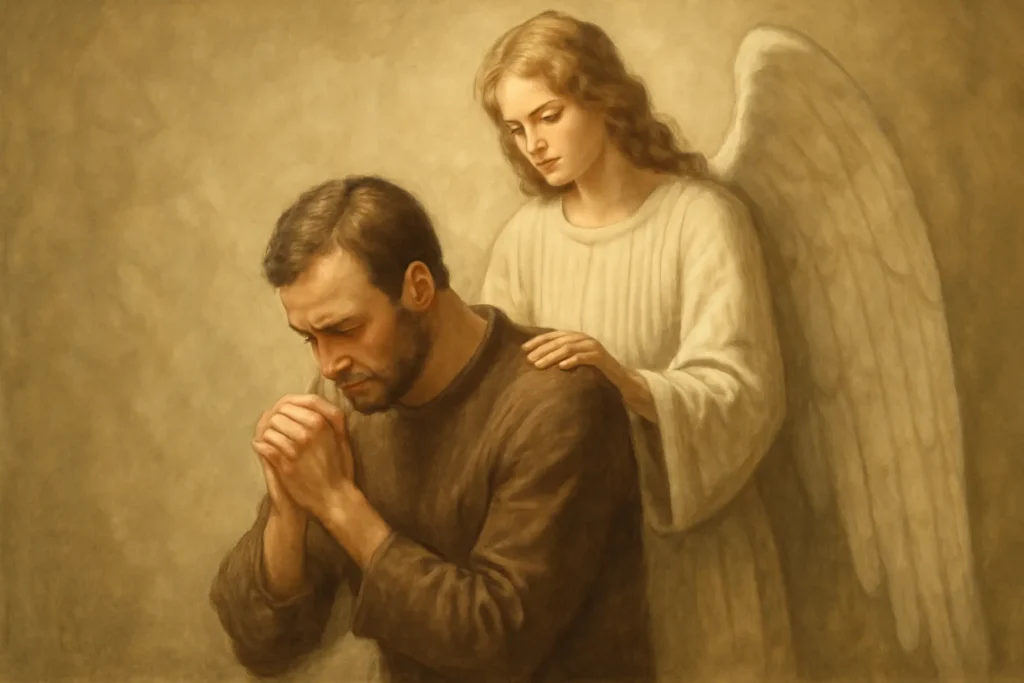
Father God, as I lay down to sleep, I surrender my thoughts to you. I acknowledge any fear or night terrors as lies trying to steal my rest. I renounce all interference from the powers of darkness and plead the blood of Jesus over my dreams and my waking hours. I ask for your guardian angels to keep watch over my room, my family, and my home. I declare that the night is under your protection, and I trust in your promises for peace and restoration. May angels of light guard my entry into tomorrow. In the name of Jesus, I pray. Amen.
Lord of Hosts, we come as a family and ask for your mercy and mercy for our home. We renounce any foothold that fear, anger, addiction, or ungodly covenants may have gained. We declare the blood of Jesus over our family line and over every door, window, and space in this house. We release forgiveness where there has been harm, and we choose to walk in unity and love. We invite your Holy Spirit to dwell among us, to heal wounds, and to empower us to live in truth and freedom. We commit to ongoing discipleship, prayer, and worship as our lifestyle. In Jesus’ mighty name, Amen.
Common Obstacles in Deliverance Prayers and How to Overcome Them
Deliverance prayer can encounter challenges. Being aware of these obstacles helps ensure the process remains safe, respectful, and spiritually fruitful.
Misunderstanding of freedom: Deliverance does not always mean an immediate victory over every symptom; it often involves ongoing growth, inner healing, and ongoing submission to God’s will.
Fear-based dynamics: Approaching deliverance with fear can hinder discernment and faith. Focus on God’s love, truth, and authority rather than fear of the dark.
Manipulation or coercion: Avoid pressure to produce dramatic displays or miracles. True deliverance grounds in God’s sovereignty and the believer’s responsibility to pursue righteousness.
Unresolved trauma: Deep emotional wounds may require therapy, counseling, or pastoral care alongside spiritual ministry.
Frequently Asked Questions (FAQ)
Here are answers to common questions people have about deliverance prayers.
Q: Are deliverance prayers the same as medical or psychological treatment?
A: Deliverance prayers complement but do not replace medical or psychological care. When trauma, mental health issues, or addiction are involved, seek qualified professionals in addition to spiritual support. Deliverance ministry should be integrated with holistic care and respect for medical advice.
Q: Can one person deliverance-pray over others without consent?
A: It is best to obtain informed consent and, when possible, involve trained leaders or pastoral care. Prayer for others should be conducted with love, respect, and clear boundaries.
Q: How do I know if I am experiencing real deliverance or medical issues?
A: discernment is crucial. If symptoms persist, seek counsel from a trusted spiritual mentor or pastor, and consider medical or psychological evaluation when appropriate. God’s peace, alignment with scripture, and visible fruits of freedom are helpful indicators.
Q: What if deliverance prayers do not seem to work?
A: Prayer is not a transaction but a relationship with God. Trust the process, continue in faith, and pursue ongoing spiritual growth, discipleship, and accountability. Sometimes it takes time, and sometimes the effect is spiritual resilience rather than dramatic change.
Conclusion: A Path Toward Freedom and Growth
Deliverance prayers are a meaningful practice for Christians seeking freedom from spiritual oppression and a deeper alignment with God’s purposes. They are most effective when rooted in biblical truth, exercised with integrity, and coupled with ongoing discipleship, prayer, and community support. By understanding the biblical basis, respecting boundaries, and using varied forms of prayer thoughtfully, believers can approach deliverance with confidence, humility, and a posture of worship. Whether you are praying for yourself, your family, or your church, the heart of deliverance is not merely breaking chains, but advancing into a life characterized by love, purity, and purpose in Christ.







Leave a Reply