Introduction to Bible Word Find: A Gentle Gateway to Scripture and Puzzle Solving
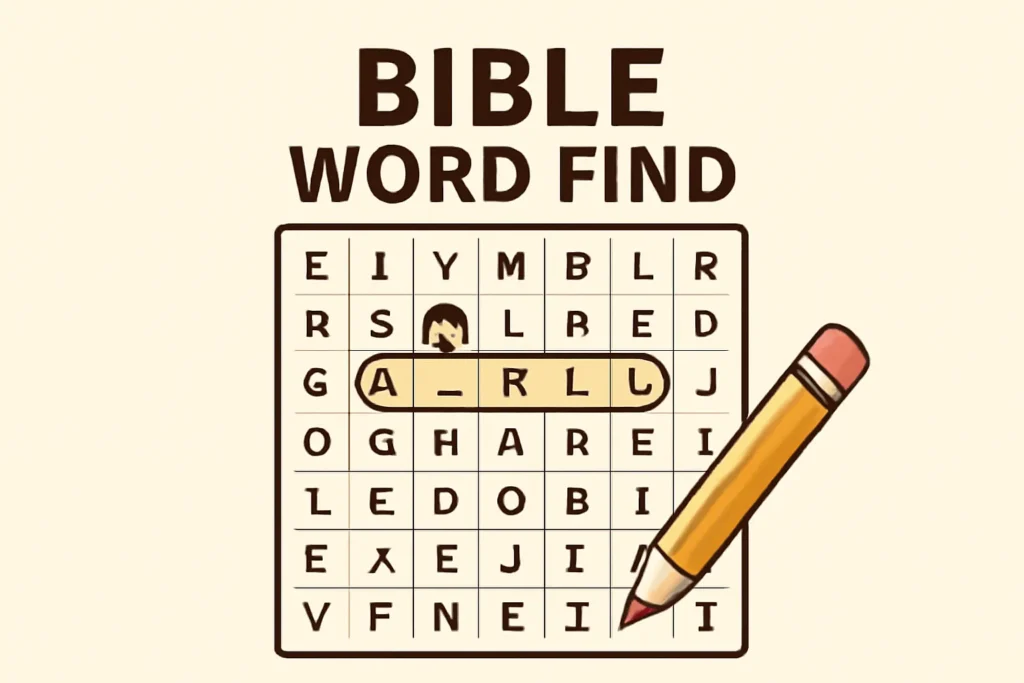
Bible Word Find, often referred to as a Bible word search, is a type of puzzle that blends the quiet concentration of a traditional word search with the rich context of biblical language. In these puzzles, players scan grids of letters to locate hidden terms that are drawn from biblical topics, verses, personages, places, and themes. While the mechanics are simple—finding words in a letter grid—the broader experience can be both educational and meditative. This guide explores the ultimate approach to Bible Word Find puzzles, including how these puzzles are designed, how to solve them efficiently, and how to use them as both a devotional aid and a classroom resource.
Whether you call it Bible word find, scripture word find, or biblical word search, the core idea remains the same: a carefully arranged set of letters hides a list of terms that you can reveal by looking in all directions. This article will walk you through the history of word searches as a format, the unique considerations when creating themed word finds around biblical topics, and practical strategies for solvers of all ages. By the end, you’ll understand how to enjoy, design, and teach with Bible Word Find puzzles in a way that respects both the integrity of scripture and the joy of puzzle play.
What Is a Bible Word Find and How Does It Differ From Other Word Puzzles?
At its most basic level, a Word Find or Word Search is a grid filled with letters in which a set of words are hidden. The puzzle solver’s job is to locate those words and mark their positions. A traditional Wordfind may feature common English words, country names, or famous terms. A Bible Word Find, however, centers on terms drawn from the Bible. This difference shapes every aspect of the puzzle—from word lists and grid design to the educational and spiritual intent behind the activity.
Thematic focus: The word list is curated around biblical topics—such as parables, patriarchs, apostles, miracles, church offices, or places mentioned in Scripture.
Verses and phrases: Some puzzles hide not only single words but also short phrases or scripture citations (for example, “GOD IS LOVE” or “John 3:16”).
Language considerations: Some Bible Word Finds use biblical names and terms that may have multiple spellings (e.g., “Jeremiah” vs. “Jeremiahs” not allowed in the grid) or older forms (e.g., “Edom” vs. “Edomite”).
Educational goals: The puzzles are often designed to reinforce biblical literacy, assist vocabulary development, and provide a quiet, reflective activity that compliments study or worship times.
Why Bible Word Find Puzzles Engage Mind and Spirit
There are many reasons readers and learners gravitate toward Bible Word Find puzzles. They stimulate cognitive processes while offering space for contemplation and spiritual reflection. Here are some key benefits to consider:
Memory and recall: Recalling biblical terms and categories strengthens memory pathways, particularly for new learners or children encountering scripture for the first time.
Vocabulary development: Encountering names, places, and theological terms expands vocabulary in a religious or historical context.
Focused attention: The act of scanning for hidden words requires sustained attention, which can be a calming, meditative practice during personal devotions or Sunday school activities.
Contextual learning: When a solver finds a term, it’s often paired with its biblical context, encouraging broader reading and inquiry about the term’s meaning, origin, and relation to a verse.
Accessible education: Bible Word Finds are approachable for diverse ages and learning styles, making them a versatile tool for family reading time, classrooms, or church programs.
Key Elements of a Bible Word Find Puzzle
Successful Bible Word Find puzzles share several core components. Whether you are a puzzle designer or a solver, keeping these elements in mind helps maintain quality, balance, and educational value.
Word list: A curated roster of biblical terms that will be hidden within the grid. This can include person names (e.g., Abraham), places (e.g., Jerusalem), events (e.g., Exodus), or theological concepts (e.g., covenant).
Grid (letter matrix): The physical space where words appear. Grids vary in size—ranging from compact 10x10 to larger 20x20 or beyond—depending on the target audience and difficulty level.
Directionality: Words can appear horizontally, vertically, diagonally, and, in some layouts, backwards. The choice impacts difficulty and solving strategies.
Theme coherence: The words are selected to align with a central theme, such as a Biblical book (Genesis-themed terms) or a specific topic (miracles, prophets, or the life of Jesus).
Clue and guidance: In some puzzle variants, a short note or legends help solvers infer the focus area without giving away too much. This can be especially helpful for younger solvers or learners new to scripture.
Solution key: An answer sheet or image showing the location of each word. For digital puzzles, interactive solutions or checkmarks often accompany the grid.
Common Formats and Variants of Bible Word Find Puzzles
There isn’t a single typology for Bible Word Find puzzles. Designers experiment with formats to increase accessibility, challenge, or educational depth. Here are several common variants you might encounter:
Classic grid word search: The standard format with a single list of words to locate in a square or rectangular grid. Words may appear in any direction.
Themed word finds: Every puzzle centers around a particular biblical topic, such as parables, the Ten Commandments, or the apostles, providing a cohesive learning thread.
Phrase-focused word finds: Some grids incorporate phrases or verse fragments in addition to single terms, encouraging recognition of common scriptural expressions.
Diagonally enriched grids: A design where diagonal word entries are emphasized, resulting in more challenging layouts that require extra attention to path direction.
Backward and mirrored words: Including words that appear in reverse or mirrored directions adds another layer of difficulty while keeping the activity solvable with careful scanning.
Printable vs digital: Printable puzzles are distributed as PDFs or images for offline use, while digital versions support interactive marking, automatic progress tracking, and hints.
Dual-language word finds: Some puzzles present terms in two languages or provide glossaries, which can support bilingual classrooms or multilingual households.
Designing a Bible Word Find Puzzle: A Step-by-Step Guide
For teachers, church leaders, and puzzle enthusiasts who want to create meaningful and engaging Word Finds, here is a practical workflow. A well-designed puzzle balances challenge with accessibility while remaining firmly rooted in biblical content.
Step 1: Choose a Theme and Scope
Begin with a clear theme. Do you want a broad biblical vocabulary from across the Bible, or a narrow focus on a single book, character, or topic? Examples include Genesis vocabulary, early church terms, or miracles of Jesus. Decide on the intended audience (children, students, adults) and the difficulty level you aim for.
Gather a set of terms that fit the theme. Consider including a mix of names, places, events, and theological terms to keep the puzzle educational and engaging. When creating a list, you might:
Map terms to recognizable forms (avoid overly obscure spellings for younger solvers).
Ensure diversity of letter patterns to keep the grid interesting.
Include a few longer entries to stretch the grid design and provide visual anchors.
Cross-check the terms for accuracy and avoid duplication.
Step 3: Design the Grid
The grid should provide enough space to hide all listed terms. A typical approach is to choose a grid size based on the number and length of words. For example, 12x12 or 15x15 grids work well for moderate word lists. Consider:
Providing orientation diversity (horizontal, vertical, diagonal) to create a balanced puzzle.
Incorporating a few extra letters to prevent easy guessing and to obscure word locations.
Testing for solvability and ensuring all words can be placed without forcing impossible overlaps.
Step 4: Populate and Validate the Grid
Place the words on the grid first, then fill the remaining cells with random letters. This step requires careful checking to ensure:
All words are present exactly once (or as intended).
Shared letters between words do not create unintended additional words that could mislead solvers.
The final grid is readable and aesthetically balanced, with no overly dark clusters that obscure word paths.
Step 5: Prepare a Clear Word List and Legend
Provide the word list in a logical order (alphabetical, thematic clusters, or ascending length). For educational value, you might also include:
Brief definitions or scriptural references for each term.
Cross-links to relevant Bible verses or a short note about the term’s significance.
Optional an answer key to assist teachers and facilitators.
Step 6: Test Solve and Refine
Before distributing the puzzle, have someone else attempt it to catch any ambiguities or mistakes. Use feedback to adjust word placement, increase or decrease difficulty, or clarify instructions. The solve-then-refine cycle is essential to maintaining quality across a series of puzzles.
Step 7: Decide on Distribution Format
Choose how solvers will access the puzzle. Options include:
Printable formats (PDFs for church bulletins, classroom handouts, or family activity sheets).
Digital formats (interactive grids for web or mobile apps, with markings, hints, and timer features).
Supplementary resources (answer keys, glossaries, or discussion questions for group study).
Solving Strategies for Bible Word Find Puzzles
For many solvers, the challenge of a Bible Word Find is best approached with a plan. Whether you’re a parent helping a child, a teacher guiding a class, or an individual learner, the following effective solving techniques can improve accuracy and speed without diminishing the sense of discovery.
Strategy A: Scan Areas in a Systematic Manner
Rather than randomly scanning, adopt a methodical approach. Start with frequent word patterns or common biblical terms that have distinctive letter sequences. Move in a consistent direction—perhaps left-to-right, top-to-bottom—and then switch directions after completing a row. A steady routine reduces misreads and missed terms.
Strategy B: Use Word-End Clues and Letter Patterns
Look for distinctive letter combinations that appear in biblical terms. For example, many biblical names end with familiar suffixes (e.g., -iah, -iel, -iah). Recognize common prefixes (such as El- or Beth-), and pay attention to letter clusters that recur in biblical vocabulary.
Strategy C: Check for Letters Shared Across Terms
In many puzzles, multiple words share letters. When you identify a shared letter, consider what other letters around it could form with it to reveal a complete term. This approach can unlock words that might not be immediately obvious.
Use a consistent marking method—color-coded highlights or bold underlines—so you can keep track of found words without confusing overlaps. Confirm each found word by tracing its entire path before moving on to the next one.
Strategy E: Leverage Thematic Hints
In themed Word Finds, the puzzle’s topic can guide your search. If the theme is the apostles, you’ll anticipate names like Peter, John, Paul, and other related terms. Theme hints can be especially useful for younger solvers learning the characters and their roles in scripture.
Educational and Spiritual Benefits of Bible Word Find Puzzles
Beyond entertainment, Bible Word Find puzzles can serve as a meaningful educational tool. Here are several categories of benefits that researchers, educators, and families often observe.
Bible literacy improvement: Regular exposure to biblical names, places, and terms helps learners recognize and remember scriptural language.
Contextual interpretation: When solvers encounter a term, they can be encouraged to connect it to a verse or story, deepening comprehension.
Memory and cognitive flexibility: The process of finding terms in multiple directions exercises memory, pattern recognition, and mental flexibility.
Focus and calm: The paced, quiet activity can support stress reduction and mindful engagement, making it appealing for family devotional times or classroom routines.
Cross-curricular potential: Bible Word Finds can be integrated with history, geography, language arts, and religious studies, providing a multi-disciplinary learning experience.
Variations in Difficulty: Tailoring Bible Word Find Puzzles to Audiences
Different age groups and learning objectives require puzzles of varying difficulty. Here are some practical guidelines for adjusting complexity while preserving the educational and spiritual aim.
For beginners and children: Use smaller grids (e.g., 8x8 or 10x10), a shorter word list, and more common names with frequent letters.n Include a glossary or brief hints to guide discovery.
For intermediate learners: Use medium-sized grids (12x12 to 15x15) with a mix of names, places, and phrases. Include some diagonal or backward words to challenge pattern recognition.
For advanced solvers: Create larger grids with a longer word list, encourage diagonal and reverse terms, and incorporate multi-word phrases or citations. Consider adding a time element or optional extension tasks, such as matching each term to a verse reference.
For classroom settings: Align puzzles with the current curriculum, incorporate discussion questions after solving, and provide teacher notes that connect terms to Bible passages.
Words, Phrases, and Citations: Building a Rich Word List
The heart of any Bible Word Find puzzle is the word list. A strong list is not merely a random collection of biblical terms; it’s a thoughtfully curated set that reinforces learning, reflection, and spiritual curiosity. Here are categories and examples to guide list construction.
People and figures: Adam, Eve, Moses, Abraham, David, Mary, Jesus, Peter, Paul.
Places: Jerusalem, Bethlehem, Nazareth, Egypt, Sea of Galilee.
Short phrases or verse cues: Examples include short well-known phrases or references that are easy to verify, such as “God is love” or “I can do all things” (with proper citation). When including phrases, ensure correct spacing and capitalization to aid recognition.
Integrating Bible Word Find into Education and Group Activities
In settings like classrooms, Sunday schools, or family devotional times, Bible Word Find puzzles can serve as a bridge between academic learning and spiritual formation. Here are several practical implementations that maximize impact while keeping the activity approachable and enjoyable.
In Class and Sunday School
Use a weekly puzzle as a warm-up exercise or as an extension activity after a lesson. Benefits include:
With the rise of online learning and digital classrooms, Bible Word Finds can be adapted to interactive formats. Tips include:
Using online puzzle generators to customize grids quickly with specific word lists.
Providing interactive hints or a timer to add an element of challenge.
Linking each term to a short, related devotional or verse for deeper reflection.
Creating a Biblical Word Find Experience: Practical Tips for Educators and Hobbyists
To sustain engagement and foster meaningful learning, consider the following best practices when building or selecting a Bible Word Find puzzle.
Clarity of instructions: Offer concise directions so solvers know what to look for, how to mark found terms, and whether phrases are allowed. Include a short example of a solved grid to set expectations.
Balance between challenge and accessibility: Ensure the word list length and grid size align with the intended audience. Provide multiple difficulty levels in a single resource or a labeled progression of puzzles.
Quality source material: Rely on accurate biblical terms, consistent spellings, and correct verse references when used. Consider cross-checking terms with a Bible concordance or reliable biblical reference.
Accessibility and inclusion: Use large-print options, readable fonts, and high-contrast designs for those with visual impairments. If including non-English terms, provide transliterations or glossaries as needed.
Supplementary resources: Offer discussion questions, short reflections, or teacher notes that connect each term to Scripture passages and themes, turning a puzzle into a learning experience.
Examples of Thematic Bible Word Find Sets
To illustrate how Bible Word Find puzzles can be organized around specific themes, here are a few example sets that demonstrate the range of possibilities. These examples are not complete puzzles themselves but demonstrate how you might assemble word lists and grid concepts.
Creation and Covenant: Terms like God, Heaven, Earth, Light, Adam, Eve, Noah, Covenant, Promise.
Patriarchs and Matriarchs: Names such as Abraham, Sarah, Isaac, Rebecca, Jacob, Rachel.
Prophets and Promises: Isaiah, Jeremiah, Elijah, Prophecy, Messiah, Hope.
Life of Jesus: Terms like Bethlehem, Nazareth, Apostles, Gospel, Crucifixion, Resurrection.
New Testament Letters: Names like Paul, Peter, John, Grace, Peace.
Digital Tools and Resources for Bible Word Find Creation and Solving
In the digital era, a range of tools supports both puzzle creation and solving. Whether you’re a hobbyist producing weekly challenges or a teacher planning activities, these resources can help.
Online word search generators: These allow you to enter a word list, choose grid size, and generate printable or interactive puzzles quickly. Some offer options for diagonal words and backward entries.
Bible concordances and lexicons: Tools like strong’s concordance or modern lexicons help you locate terms, confirm spellings, and discover related words you might want to include in a puzzle.
Educational platforms: Learning management systems and classroom apps can host Bible Word Find puzzles, track progress, and integrate with devotional prompts or discussion prompts.
Design software: For print-ready puzzles, graphic design tools enable polished layouts, legible fonts, and artistic headings that resonate with a faith-based audience.
Ethical and Spiritual Considerations in Bible Word Find Puzzles
When designing and distributing Bible Word Find puzzles, it’s important to honor the sacred nature of Scripture and the diverse beliefs of readers. Consider these guidelines to ensure that puzzles are respectful, accurate, and helpful in spiritual development:
Accuracy: Verify the spellings and spellings for biblical terms, names, and places. Avoid modern misrepresentations or misattributions of biblical content.
Contextual sensitivity: When including phrases or verse cues, present them with proper context or references. Encourage readers to consult the actual verses to avoid misinterpretation.
Inclusivity: Offer puzzles that accommodate varied ages, literacy levels, and backgrounds. Provide alternative formats or glossaries to support all learners.
Reflection opportunities: Pair puzzles with brief devotional reflections or discussion prompts that help solvers connect the terms to biblical narratives and moral lessons.
Conclusion: Embracing the Richness of Bible Word Find Puzzles
In summary, Bible Word Find puzzles are more than entertaining diversions. They are flexible educational tools that can reinforce biblical literacy, promote thoughtful reflection, and support a calm, focused learning environment. Whether you call them scripture word finds, biblical word searches, or simply Bible Word Find puzzles, their enduring appeal lies in a simple yet powerful combination: a grid of letters, a curated word list from Scripture, and a moment of quiet engagement with sacred texts. The ultimate guide to Bible Word Find puzzles invites you to design meaningful experiences, solve with intention, and weave puzzles into the broader practice of study, teaching, and devotion. May your journeys through these word finds deepen both knowledge and wonder as you explore the stories, themes, and promises of the Bible in new and rewarding ways.
Appendix: Quick Reference Glossary
Bible Word Find: A puzzle where words drawn from biblical content are hidden in a grid of letters.
Word List: The set of terms to be located within the puzzle.
Grid: The matrix of letters that contains the hidden words.
Theme: The central biblical topic that unites the words within a puzzle.
Diagonal, Horizontal, Vertical: Common directions in which words may appear.
Concordance: A reference tool that lists words and their occurrences in the Bible, useful for verifying terms during puzzle creation.






Leave a Reply