Bible Archaeology Discoveries: A Look at Recent Finds
Bible Archaeology Discoveries: A Look at Recent Finds
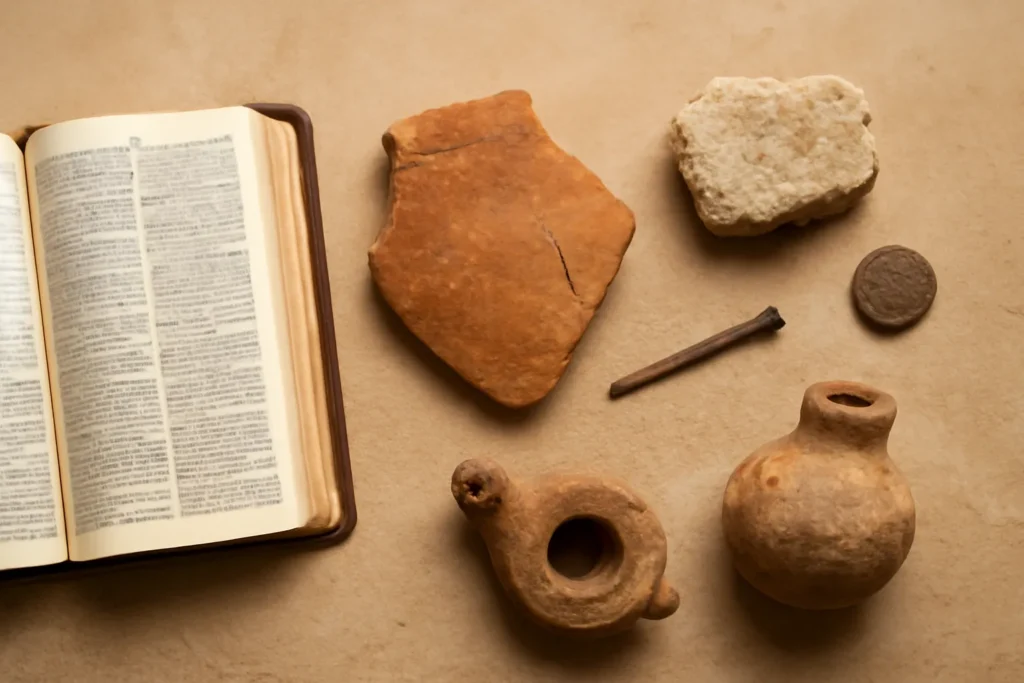
Bible archaeology discoveries offer windows into ancient life, belief, and power by connecting sacred texts to the material
world that surrounded them. This article surveys how scholars today interpret recent biblical-era discoveries, how new
evidence reshapes traditional readings, and what methods are advancing the field. Rather than presenting a single narrative, the
following sections highlight different kinds of finds—inscriptions, manuscripts, monumental architecture, and everyday objects—that
together illuminate the history behind the stories in the Bible. The field remains dynamic: new digs, new analyses, and new
technologies continue to refine our view of the past.
The study commonly called biblical archaeology seeks to align textual data with surviving artifacts and city contexts.
It does not prove or disprove theological claims; rather, it helps archaeologists and scholars test the plausibility of details,
timelines, and cultural practices described in sacred books. Some core goals include:
Locating sites mentioned in biblical narratives and understanding their layout, economy, and daily life.
Dating and analyzing inscriptions that bear names, titles, and events referenced in the Bible.
Assessing how religious rituals, temple practices, and pilgrimage shaped communities in the ancient Near East.
Evaluating how political power, conquest, and diplomacy influenced the text’s portrayal of kings, prophets, and priests.
Using science-based methods—radiocarbon dating, paleography, epigraphy—to place objects in a reliable chronology.
Landmark inscriptions and texts: voices from stone and metal
Inscriptions and manuscripts are among the most impactful kinds of biblical-era discoveries. They translate choices,
alliances, and belief into tangible evidence. Here are some emblematic cases that have shaped scholarly conversation in the modern era.
Tel Dan Stele: a late-9th-century BCE reference to a kingly line
The Tel Dan Stele (discovered in 1993 at Tel Dan in the Upper Galilee) is a basalt inscription dating to about the
late 9th century BCE. It is famous for containing a poetic reference to the “House of David”, a phrase that
scholars treat as a crucial external attestation of the biblical figure revered in later texts. While the stele is a record of evidence
from a rival kingdom, its mention of a dynastic lineage associated with a biblical-era figure helps historians triangulate the
existence of a Davidic dynasty in the historical memory of the region. For students of bible archaeology discoveries,
this stele demonstrates how a foreign inscription can illuminate biblical history from a contemporary perspective.
Pilate Stone: a 1st-century inscription tied to the New Testament world
The Pilate Stone from Caesarea Maritima dates to the 1st century CE and bears the name of
Pontius Pilatus, the Roman official known from gospel narratives as having presided over Jesus’s trial. Found in 1961 and
published in the following years, this inscription provides a tangible link to the governance structures described in the New Testament.
Its presence in an imperial-era harbor city helps scholars understand urban administration, religious diversity, and the interplay
between Roman authority and local Jewish communities. In discussions of modern biblical archaeology, the Pilate Stone
stands as a landmark artifact illustrating how material culture intersects with gospel-era geography and governance.
Ossuaries and family inscriptions: Caiaphas, James, and related burial texts
The late 20th century brought attention to family tombs and inscribed ossuaries recovered in Jerusalem and surrounding sites.
The Caiaphas Ossuary (discovered in 1990) is among the most famous, reputed to belong to the high priest
Caiaphas who appears in the passion narratives. The James Ossuary (publicized in 2002) contains an inscription
linking James, son of Joseph, to Jesus of Nazareth in a way that generated intense scholarly and public interest and sparked ongoing
debates about authentication and dating. These finds underscore how bible archaeology discoveries can intersect
with 1st-century Jewish priesthood, family lineages, and early Christian memory, even as scholars carefully weigh provenance, script,
and context.
Ketef Hinnom scrolls: the oldest biblical text in silver
The Ketef Hinnom silver scrolls were uncovered in 1979 and date to the late 7th century BCE. They contain
texts that resemble the Priestly Blessing from Numbers and are widely regarded as the oldest known
biblical texts discovered to date. The significance lies less in a single verse than in the demonstration that biblical texts circulated in
ritual contexts earlier than many earlier estimates suggested. This discovery anchors a key question in biblical archaeology:
how early biblical material circulated within Jerusalem and Judea, informing our understanding of how the Hebrew Bible’s text evolved
within a living religious culture.
Dead Sea Scrolls: ongoing textual illumination from a covenant world
Beginning with the famous 1947 find at Qumran, the Dead Sea Scrolls have produced thousands of fragments
spanning late Second Temple Judaism. In the ensuing decades, new fragments and new editions have continually revised our sense of
textual transmission, variant readings, and the diversity of scriptural traditions present in the Jewish world at the time. The scrolls have
deepened scholarly appreciation for the breadth of biblical interpretation, from the prophetic books to the Pentateuch and non-biblical
texts that illuminate social and religious life. Today, researchers still publish new textual discoveries and engage in debates about
how certain passages were read in communities that produced these manuscripts. In contemporary discussions of biblical manuscript
discoveries, the Dead Sea Scrolls remain the most influential corpus for understanding the text’s formation and transmission.
Inscriptions from daily life: language in ordinary objects
Beyond high-profile royal or priestly inscriptions, many bible archaeology discoveries come from everyday items that reveal
language, literacy, and routine practice. Ostraca (pottery shards with inscriptions) and small inscriptions on bowls or seals illustrate
how ordinary people interacted with language and administration. These finds help to anchor the biblical world in lived experience.
Arad Ostracon and Beersheba Ostraca: glimpses of administration at the edge of the kingdom
The Arad Ostracon (late 7th century BCE) and related documents from Beersheba and nearby sites offer glimpses into local
administration under Judean rule. These inscriptions often mention officials, payments, and offerings, providing a granular view of
daily governance. They are not dramatic theophanies or grand historical events, but they are essential for understanding how state
power functioned on the ground. For students of biblical-era inscriptions, such texts demonstrate that biblical narratives
were supported by a bureaucratic culture with real budgets, duties, and accountability.
Urban centers and monumental archaeology: the shapes of biblical cities
A sizable portion of biblical history unfolds in city life: walls, gates, water systems, temples, and palaces. Modern excavations and re-
analyses have clarified how major cities described in the Bible operated and why they mattered to ancient neighbors. This work often relies on
stratigraphy, architecture, and material culture to interpret textual references in a broader political landscape.
Lachish, Hazor, Megiddo: city networks and military horizons
Sites such as Lachish, Hazor, and Megiddo have yielded substantial data about urban planning,
fortifications, and diplomatic exchange. Megiddo, for example, reveals layers of city-building that reflect eras of conquest and resilience,
key to understanding how biblical authors depicted triumphs and disasters. Interpretations of these monumental remains must be carefully
integrated with textual timelines to avoid overreaching a single narrative. The ongoing synthesis of architectural remains with textual data
helps illuminate how the biblical world imagined its own geography.
City walls and gates: evidence of political and religious life
Excavations that focus on city walls, gates, and water systems offer a tangible sense of how communities organized survival, worship, and
defense. For instance, water tunnels and relief installations demonstrate the deliberate engineering behind urban life, which in turn
contextualizes biblical writers’ descriptions of secure cities, sanctuaries, and access to sacred spaces. Each new discovery about city
infrastructure contributes to a broader picture of how faith communities navigated danger, scarcity, and ritual needs in a hostile
environment.
Manuscripts and textual culture: how copies traveled and were read
The biblical world did not exist only as a single canonical text; it existed as a living manuscript culture with multiple copies,
translations, and interpretive communities. 21st-century scholarship continues to unpack how scribes copied, edited, and circulated
sacred writings, and how readers engaged with those texts in synagogues, households, and academies.
The Dead Sea Scrolls and other finds demonstrate that biblical books circulated with variant readings in different communities. Analysts
examine paleographic features, orthography, and formulaic language to trace how copies diverged. This work helps explain why modern Bibles
sometimes reflect multiple manuscript traditions rather than a single fixed form. For readers of bible archaeology discoveries,
understanding textual transmission is crucial for appreciating both continuity and change in biblical texts.
Fragmentary evidence and synoptic interpretation
Fragments from various sites—whether from caves, cisterns, or workshops—encourage scholars to consider how early believers
interpreted shared stories. Some fragments preserve non-canonical or paraphrastic readings, inviting careful analysis about what
communities considered authoritative, and how those decisions affected later canonical shaping.
New frontiers: methods changing how discoveries are made and understood
The discipline is increasingly interdisciplinary. Science, technology, and collaboration across museums, universities, and local
communities broaden the scope and pace of discovery, guiding how researchers interpret evidence and present it to the public.
Remote sensing, survey archaeology, and LiDAR
Modern campaigns use remote sensing to map subsurface features without intrusive digging. LiDAR and satellite imagery help identify
telltale shapes of ancient structures, roads, and quarries, guiding targeted excavations. When applied to regions with biblical associations,
these techniques can reveal infrastructural patterns, industrial activity, and settlement hierarchies that would be invisible from surface
exploration alone. The result is a more nuanced map of the biblical world and its neighboring cultures.
Radiocarbon dating, paleography, and laboratory science
Advances in radiocarbon dating and materials analysis enable researchers to place objects in more precise chronologies. Paleographic studies
of inscriptions—analyzing letter shapes and writing styles—refine dating and cultural affiliations. Together, these scientific tools help place
inscriptions, manuscripts, and artifacts within authentic historical frameworks, strengthening or challenging traditional timelines connected to
biblical narratives.
Underwater archaeology and maritime connections
Underwater work has potential to illuminate trade networks and shipwrecks connected to ancient Near Eastern trade routes. While not every
church or synagogue narrative has a maritime component, bronze, copper, or trade-related artifacts recovered from ancient harbors and
coastal sites can illuminate the scale and context in which biblical communities operated.
Interpreting discoveries: how to weigh evidence in biblical archaeology
The interpretation of bible archaeology discoveries must balance excitement with caution. Several guiding principles help
scholars and informed readers think clearly about what evidence does—and does not—establish.
Context matters: artifacts in their original setting
Artifacts gain meaning when they are understood in their original place and time. A seal impression or an ostracon is more informative when
its site’s administrative or ritual context is known. Cross-referencing with contemporary sites and with textual traditions reduces the risk
of overinterpreting a single object.
Provenance matters for credibility. Scholars and institutions strive to verify the authenticity of inscriptions and ossuaries and to
distinguish genuine material from forgeries or misattributions. The James Ossuary controversy is a reminder that authentication can be complex
and evolving, requiring ongoing scholarly review and transparent publication of methods.
Textual alignment and independent corroboration
When a find intersects with biblical text, researchers seek corroboration from multiple lines of evidence: other inscriptions, architectural
remains, and independent dating methods. A robust interpretation often rests on converging data from several sources rather than a single piece
of evidence.
Public history and the role of dialogue in biblical archaeology
As discoveries accumulate, public interest remains high. Museums, university galleries, and educational programs help explain how bible archaeology discoveries contribute to our understanding of the ancient world. Clear storytelling—paired with careful
sourcing—ensures that audiences grasp both the excitement of a new inscription and the caution required when drawing historical
conclusions. Public-facing projects often include interactive displays, digital reconstructions of ancient cities, and accessible
explanations of scientific dating methods, making the past tangible for learners of all ages.
Open questions and areas of future work
Despite advances, many questions remain. How did a particular inscription relate to a broader administrative system? What manuscripts existed
in minority communities and how did they influence later biblical canon formation? Can we piece together a richer socio-economic picture of
biblical-era life by analyzing everyday objects as a network rather than isolated finds? These questions guide ongoing digs, collaborations with
linguistic specialists, and the integration of digital humanities to curate and compare discoveries across sites.
Practical takeaways for readers: engaging with biblical archaeology finds
For readers seeking a productive understanding of bible archaeology discoveries, here are practical guidance points:
Look for multiple lines of evidence: inscriptions, architecture, and dating methods together strengthen conclusions.
Differentiate between primary artifacts (like inscriptions) and secondary interpretations (such as later scholarship or reconstructions).
Note the date and provenance of a find, and whether its context is well-documented in excavation records.
Be aware of scholarly debates and the possibility of competing readings; many famous finds have sparked ongoing discussion.
Explore how discoveries interact with literary texts, rather than treating archaeology as a tool to prove or disprove a faith claim.
Closing reflections: a living conversation between text and artifact
The story of bible archaeology discoveries is not a single, finite narrative but a living conversation between
material remains and sacred texts. Each new inscription, every fragment of manuscript, and the remains of cities and water systems add
layers of nuance to our picture of the ancient world. The field thrives on collaboration among biblical scholars, archaeologists, historians,
linguists, conservators, and digital humanists who share a common aim: to understand how ancient people lived, worshiped, governed, and
remembered their past. While certainty may be elusive in some cases, the accumulation of well-supported evidence continues to refine
our understanding of the Bible in its historical and cultural setting.
As archaeological practice advances, future biblical-era discoveries will likely come from interdisciplinary work, new
technologies, and renewed excavation initiatives at sites with long histories of investigation. The impact of these discoveries extends beyond
antiquarian interest: they shape how communities understand their own stories and how educators translate the past into meaningful
learning for students and the general public. And in that sense, the field remains a dynamic bridge between faith, history, and science.










Leave a Reply