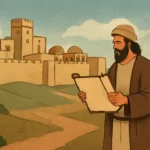
This article offers a comprehensive overview of the books commonly titled 1 Kings in many Bibles. It surveys the chapters, narrative arcs, major characters, central themes, and practical takeaways readers can draw from the book. Whether you know it as First Kings, the Book of 1 Kings, or the 1 Kings summary, this guide aims to illuminate how the text functions as a unified account of dynastic beginnings, prophetic voices, temple ambition, and covenant faithfulness.
What the book of 1 Kings is trying to do: an overview of purpose and scope
The book of 1 Kings continues the story of Israel and Judah from the death of David, tracing the rise of Solomon, the consolidation of the monarchy, and the fracturing of the united kingdom into two rival realms. It is less a single biography and more a composite of court history, prophetic interruption, and theological reflection. The author or compiler weaves together two main strands:
The dynastic line motif: the rise and fall of kings, the problem of succession, and the consequences of obedience or disobedience to the covenant.
The prophetic voice motif: the presence and activity of prophets who speak for YHWH, contest idol worship, and call the king and people back to covenant faithfulness.
In practical terms, 1 Kings helps readers ask questions about leadership, power, and responsibility: What makes a king righteous or ruinous? How does a nation stay faithful within political complexity? And how do prophetic voices influence national destiny? The book also invites readers to notice recurring patterns—glory, failure, repentance, judgment—and to see how even periods of success must be measured against fidelity to the divine covenant.
Major sections and narrative arcs
To navigate the text, it helps to understand its broad movements. The following outlines highlight the primary arcs that structure the book of 1 Kings.
From David to Solomon: the transfer of the throne
The opening chapters focus on the transition of leadership from David to Solomon. After David’s reign, the kingdom needs a successor who will carry forward the royal covenant and maintain unity. Solomon’s ascent is marked by a combination of political maneuvering, divine authorization, and personal petition. This section also foregrounds the idea that wisdom, wealth, and the temple project become hallmarks of Solomon’s era.
David’s final instructions and the selection of Solomon as heir.
Solomon’s request for wisdom at Gibeon, which leads to an emblematic model of divine generosity in response to righteous request.
The construction of the Temple in Jerusalem: a defining moment in Israelite worship and national identity.
Solomon’s reign: wisdom, wealth, and temple-building
The heart of this narrative is the reign of Solomon, a period famous for unprecedented wisdom, agricultural prosperity, and international diplomacy. Yet 1 Kings also shows the double edge of royal power: success can tempt pride, foreign alliances, and idolatrous practices that threaten covenant loyalty. Important threads include:
Solomon’s wisdom and the reputation that follows him from the surrounding nations.
Thematic episodes about worship and the centralization of ritual in the Jerusalem temple.
Solomon’s accumulation of wisdom literature and his role as administrator of a vast empire.
Prophetic interactions with figures who foresee limits on royal power and the consequences of idolatry.
The rise of the monarchy and the challenges that accompany it
Solomon’s son and successor era introduces tension that ultimately destabilizes the united monarchy. This section covers the dynastic challenges that lead to a split, the early years of division, and how political decisions intersect with religious life.
Following Solomon’s death, the kingdom faces a difficult question: who will rule the northern tribes and how will the royal line be shaped? Rehoboam, Solomon’s heir, confronts the crisis with a decision that triggers a rift. The rival leader Jeroboam rises in the north, and the country is divided into two kingdoms: the Southern Kingdom (Judah) under Rehoboam and the Northern Kingdom (Israel) under Jeroboam. This split has long-term implications for worship, politics, and foreign alliances, and 1 Kings emphasizes that disobedience to the covenant, especially concerning comparative worship sites and fidelity to the temple, undermines unity.
Worship, the temple, and the central shrine dilemma
A recurring theme in 1 Kings is the tension between centralized worship and local altars. The book shows the temple in Jerusalem as a defining symbol of national identity and covenantal worship, while warnings about syncretism and Baal worship appear as warnings against straying from exclusive devotion to YHWH. The northern kingdom’s attempts to establish alternative centers of worship create ongoing friction and prophetic opposition, highlighting how religious fidelity is inseparably tied to political loyalty.
The prophetic voices and their roles in 1 Kings
Prophets are not mere foretellers in 1 Kings; they are interpreters of covenant faithfulness who challenge kings, expose corruption, and reveal divine expectations. The two most prominent figures associated with 1 Kings are Elijah and the early portion of his prophetic circle, including the transition to his successor, Elisha, whose influence grows in the next book, 2 Kings. Key moments include:
Elijah’s dramatic confrontation with Ahab and the prophetic showdown at Mount Carmel against the prophets of Baal.
The drought, miraculous provision for a widow at Zarephath, and the restoration of a child’s life—narratives that demonstrate the power of prayer and obedience.
Elijah’s challenge to royal idolatry and the moral implications of leadership choices.
These episodes underscore a broader theological point: national success or failure is closely tied to fidelity to the covenant and the guidance of prophetic voices who remind rulers of their responsibilities before God.
Temple, worship, and covenant faithfulness in practice
1 Kings underscores the centrality of the temple as the dwelling place of YHWH among the people of Israel. The temple is not merely an architectural achievement; it is a theological claim about how Israel relates to God. The narrative explores:
The temple dedication and the significance of priestly order and liturgical structure.
Warnings against idolatry and the seductive pull of foreign religious practices that accompany political alliances.
The precarious balance between royal power and covenantal obedience—how rulers must lead in a way that aligns with divine expectations.
Themes and takeaways: what 1 Kings communicates about leadership, faith, and history
Reading 1 Kings through its major themes reveals enduring moral and spiritual lessons. Here are some of the most salient threads, along with practical takeaways for contemporary readers and communities.
Leadership and accountability
A king’s relationship with God shapes national destiny. Solving political problems without covenant fidelity often yields short-term gains with long-term costs.
Successful leadership is not merely about strength or strategic alliances; it is ultimately a matter of worship fidelity, humility, and willingness to listen to prophetic voices.
Wisdom, wealth, and spiritual risk
Solomon’s era demonstrates that wisdom and administrative genius can coexist with spiritual compromise. Wealth and splendor can create moral hazards if they lead to syncretism rather than covenant obedience.
Great resources and power institutions (the temple, the palace, the army) require accountability and transparent leadership to remain aligned with divine purposes.
Covenant faithfulness and the danger of idolatries
1 Kings repeatedly shows how idolatry weakens national unity and invites divine judgment. The text invites readers to consider what foregrounds true worship in their own contexts.
Centralized worship in Jerusalem is presented as ideal in the sense that it embodies and preserves covenant identity, while local altars can serve as stumbling blocks when they fragment loyalty.
Prophets in 1 Kings function as moral interpreters who remind rulers of the covenant’s demands. They also serve as bearers of hope, announcing consequences, and signaling God’s ongoing involvement in history.
Even within a story of downfall and division, prophetic encounters point to possibility—calls to repentance, moments of mercy, and the potential for renewal under future leadership.
How to read 1 Kings: narrative technique, structure, and interpretive keys
To study 1 Kings effectively, it helps to notice how the author uses literary devices and structural patterns to convey meaning. The book is not a flat chronicle; it uses shifts in focus, parallel stories, and refrains to press its themes.
Narrative style and structure
The biographical frame around Solomon’s reign sets the stage for later dynastic changes and prophetic interruptions.
The parallel accounts of different kings provide a running commentary on whether a ruler remains faithful to the covenant or departs into idolatry.
Recurring motifs such as dreams, signs, anointing, miracles, and temple-centered worship anchor the narrative in a recognizable symbolic language.
Key literary devices to watch for
Chiasmus and parallelism between chapters that highlight patterns of rise and fall, blessing and judgment.
Refrains that emphasize the central claim: obedience to YHWH yields stability; otherwise, instability and division follow.
Character sketches of kings and prophets that reveal moral and spiritual dispositions beyond public acts.
Historical setting: dating, context, and interpretive cautions
Scholars place 1 Kings within a broad ancient Near Eastern context. While precise dates vary, the era generally spans the late 10th century BCE through the early 9th century BCE and covers the reigns of Solomon and the early dynastic period after his death, including the division into Judah and Israel. When interpreting 1 Kings, readers should acknowledge:
The text’s commissioning and redaction likely reflect a post-Solomonic perspective that is concerned with covenant fidelity and national memory.
The theological emphasis often reframes political events in terms of covenant faithfulness rather than mere geopolitics.
Acknowledgment of diverse ancient-world realities, including alliances, taxation, temple economics, and dynastic politics, helps readers situate the narrative without reducing it to a single modern lens.
Practical takeaways for readers today
What can modern readers learn from the story arcs and lessons of 1 Kings? Here are several accessible takeaways that resonate across time and culture:
Leadership requires accountability. Rulers who combine humility with a willingness to heed prophetic counsel tend to navigate crises more effectively. This is as true for community leaders as for national leaders.
Worship shapes identity. The book’s emphasis on temple-centered devotion suggests that what a community honors publicly becomes a reflection of its core beliefs and loyalties.
Power is a test, not a reward apart from responsibility. Wealth and authority can be blessings or temptations; the way leaders handle them reveals character and determines outcomes for the people.
Prophetic voices matter. Even when voices of dissent seem disruptive, they often point to larger truths about justice, mercy, and faithfulness that institutions alone cannot sustain.
Consequences of duplicity. The narrative cautions against political or religious duplicity—efforts to serve competing loyalties undermine integrity and risk communal collapse.
A timeline and a guide to key figures in 1 Kings
While 1 Kings is not a straightforward timeline, it helps to keep a few anchors in view. The following condensed guide offers milestones to help readers orient themselves as they move through chapters and episodes.
David’s legacy and the plan for succession, leading to Solomon’s ascent.
Solomon’s reign as apex of wisdom, temple-building, and international diplomacy, with a warning about religious compromise.
The early division of the kingdom: Rehoboam in the south (Judah) and Jeroboam in the north (Israel) after Solomon’s death.
Early northern kings and ongoing prophetic ministry that critique idolatry and urge covenant faithfulness.
Elijah’s prophetic activity, including the showdown on Mount Carmel, the drought narrative, and the transition moment to Elijah’s successor in the narrative arc.
Key figures to know include David, Solomon, Rehoboam, Jeroboam, Ahab, Jezebel, and Elijah. The temple itself is a central symbolic character, representing divine abode and national identity, and its fate mirrors the nation’s spiritual health.
Variations in naming and topic coverage you’ll encounter while studying 1 Kings
Readers and scholars often encounter several phrasings that point to the same book with different emphases. Some examples of semantic breadth you’ll see include:
First Kings summary and 1 Kings synopsis as entry points for beginners seeking a high-level map of chapters and arcs.
Discussions of the Book of 1 Kings as part of a larger historical-national narrative that continues into 2 Kings.
Study guides calling it 1 Kings themes and takeaways, focusing on lessons about leadership, faith, and judgment.
Academic outlines that refer to the 1 Kings narrative arc as a series of dynastic and prophetic episodes rather than a single biography.
Pastoral or devotional resources using terms like 1 Kings lessons or First Kings applications, translating ancient concerns into contemporary spiritual practice.
How 1 Kings relates to the broader biblical narrative
Understanding 1 Kings in relation to the rest of the biblical canon enhances its impact. It sits at a transitional point between the united monarchy era and the divided kingdoms that the author or editor uses to interpret future prophetic calls and historical developments. A few connections to keep in mind:
Its emphasis on covenant faithfulness foreshadows prophetic literature that continues to press on matters of worship and obedience.
Solomon’s temple project links temple theology with political theology, influencing how later generations understand worship and national identity.
The elaboration of dynastic legitimacy through succession narratives sets the stage for the enduring questions about leadership found in later books.
Putting it all together: a synthesized view of 1 Kings
Taken as a whole, the book of 1 Kings presents a nuanced meditation on how a nation navigates power, faith, and fidelity under divine oversight. It shows that leadership is never merely technical or secular; it is a vocation with spiritual stakes. It reveals the fragile balance between architectural grandeur (temple and palace) and moral integrity. And it demonstrates that prophetic voices—whether in direct confrontation or quiet exhortation—serve as a corrective memory, calling rulers and people back to the essentials of covenant life.
What a modern reader can do with 1 Kings
Engaging with 1 Kings today can take several productive forms, depending on your interests and goals. Here are some practical avenues to explore:
As a historical-cultural study, examine how early Israelite leadership grappled with governance, religion, and foreign policy, and compare those dynamics to other ancient Near Eastern contexts.
As a theological reflection, consider how the narrative presents the relationship between human kingship and divine sovereignty, and how covenant fidelity shapes communal flourishing.
As a devotional or spiritual reading, focus on themes of wisdom, repentance, humility, and the courage to listen to prophetic voices even when it is uncomfortable.
As a literary study, analyze the use of motif, contrast, and parallelism to understand how the author communicates complex ideas about power, worship, and national destiny.
Key takeaways for study plans and classroom discussions
If you’re preparing a study guide, syllabus, or classroom discussion around 1 Kings, you might structure sessions around these focal points:
Session on Solomon’s wisdom and temple-building as a lens on how leadership competence interacts with spiritual commitments.
Session on the split of the kingdom and its long-term consequences for Israel and Judah.
Session on Elijah and the prophetic critique of idolatry, with attention to how prophetic authority functions in political contexts.
Session on worship and centralization, exploring the relationship between where and how people worship and the health of the polity.
Session on application of biblical leadership principles to contemporary organizational or community leadership contexts.
Final reflections: how to approach 1 Kings with discernment and curiosity
The book of 1 Kings invites readers to contemplate the delicate interplay between human leadership and divine sovereignty. It does not offer a simple blueprint for government or a flawless portrait of any king; instead, it presents a layered, morally serious meditation on how a community strives to stay true to its highest commitments in the face of political pressures, rivalries, and temptations toward idolatry. Whether you approach 1 Kings as a historical document, a theological treatise, a literary masterpiece, or a guide for personal growth, its enduring message remains relevant: fidelity to the covenant and faithful leadership are deeply intertwined with the flourishing of a people under God.
By reading 1 Kings with attention to its chapters, characters, and themes, readers gain not only knowledge of a critical period in biblical history but also a framework for understanding how communities negotiate power, faith, and identity in the ongoing story of faith communities today. Whether you encounter it as First Kings or the Book of 1 Kings, the summary, takeaways, and reflections you derive from its pages can inform personal study, academic inquiry, and communal life for years to come.