Communion is a central practice in the life of many Christian communities, a ritual that connects believers with the events of Jesus’ last supper and with one another. The verses that speak about communion—often called the Lord’s Supper, the Eucharist, or the Breaking of Bread—offer rich material for reflection, prayer, and devotion. This article gathers and explains key Bible passages about communion, explores how they have been understood across church history, and provides practical ways to use these verses in personal meditation and corporate worship. Whether you are new to the practice or seeking deeper insight, these verses can help you see the sacred rhythm of remembrance, proclamation, and gratitude that communion invites into our lives.
Understanding Communion in the Bible: A Brief Overview
Communion in the biblical sense is not merely a ritual action; it is a spiritual participation in the life of Christ and in the community of believers. The Bible presents communion as a way to:
Remember Christ’s sacrifice on the cross and the meaning of his death and resurrection.
Proclaim the Lord’s death until he comes, declaring the gospel of grace to those who participate.
Participate in the body and blood of Christ, symbolizing unity among believers who collectively constitute the church.
Await the fulfillment of God’s promised kingdom, looking forward to the day when Jesus returns.
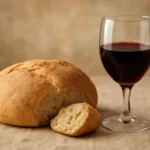
Across the New Testament, the Lord’s Supper appears with language about bread as a symbol of the body and wine as a sign of the blood shed for many. The acts of blessing, breaking, sharing, and giving are not mere routines; they are expressions of faith, repentance, gratitude, and hope. The stories and letters surrounding these acts emphasize examine yourself, discern the body, and participate worthily—not to earn favor, but to approach the table with reverence and humility.
Key Passages about Communion
1 Corinthians 11:23-26 (KJV)
For I have received of the Lord that which also I delivered unto you, That the Lord Jesus the same night in which he was betrayed took bread; And when he had given thanks, he brake it, and said, Take, eat; this is my body, which is broken for you: this do in remembrance of me. After the same manner also he took the cup, when he had supped, saying, This cup is the new testament in my blood: this do ye, as oft as ye drink it, in remembrance of me. For as often as ye eat this bread, and drink this cup, ye do shew the Lord’s death till he come. Wherefore whosoever shall eat this bread, and drink this cup of the Lord, unworthily shall be guilty of the body and blood of the Lord. But let a man examine himself, and so let him eat of that bread, and drink of that cup.
Reflection: This passage anchors the practice in an apostolic eyewitness to Jesus’ words and actions. It emphasizes remembrance, proclamation, and the call to examine oneself before partaking. When you reflect on this text, consider how the elements point beyond the physical to the spiritual reality of Christ’s presence and sacrifice. In a devotional setting, you might journal about what it means to “proclaim the Lord’s death” in your current life—how the gospel continues to shape your choices, relationships, and hopes.
Luke 22:19-20 (KJV)
And he took bread, and gave thanks, and brake it, and gave unto them, saying, This is my body which is given for you: this do in remembrance of me. Likewise also the cup after supper, saying, This cup is the new testament in my blood, which is shed for you.
Reflection: Luke’s account emphasizes the continuity of the new covenant established through Jesus’ death. The phrasing invites believers to enter into the memory of Jesus’ sacrifice with gratitude and humility. In personal devotion, you can use this passage to help orient your prayers around gratitude for Christ’s atoning work and a renewed commitment to live in light of the new covenant—often expressed through confession, repentance, and renewed trust in God’s promises.
Matthew 26:26-29 (KJV)
And as they were eating, Jesus took bread, and blessed it, and brake it, and gave it to the disciples, and said, Take, eat; this is my body, which is broken for you: this do in remembrance of me. And he took the cup, and gave thanks, and gave it to them, saying, Drink ye all of it; For this is my blood of the covenant, which is shed for many for the remission of sins: But I say unto you, I will not drink henceforth of this fruit of the vine, until that day when I drink it new with you in my Father’s kingdom.
Reflection: Matthew’s version foregrounds both the body broken for you and the blood of the covenant. The anticipation of a future meal in the Father’s kingdom points to eschatological hope—the fulfillment of God’s redemptive plan. In reflection, you might ask: How does the sacrifice of Jesus redefine my daily routines, my relationships, and my priorities as I await the coming kingdom?
The cup of blessing which we bless, is it not the communion of the blood of Christ? The bread which we break, is it not the communion of the body of Christ? For we being many are one bread, and one body: for we are all partakers of that one bread.
Reflection: Paul highlights the communion of the body and blood and the unity of believers as one body. This passage invites believers to consider the relational dimension of communion: it binds us to Christ and to one another. In practice, you might reflect on ways to express Christian love, hospitality, and solidarity within your local congregation as a tangible sign of being one body in Christ.
1 Corinthians 11:27-29 (KJV)
Wherefore whosoever shall eat this bread, or drink this cup of the Lord, unworthily, shall be guilty of the body and blood of the Lord. But let a man examine himself, and so let him eat of that bread, and drink of that cup. For, he that eateth and drinketh unworthily, eateth and drinketh damnation to himself, not discerning the Lord’s body.
Reflection: The strong warning in this passage underscores the seriousness with which the Lord’s Table should be approached. The call to examine yourself is not a legalistic hurdle but a posture of repentance, humility, and reconciliation. In your devotional life, you might engage in a quiet inventory of relationships that need healing, areas of sin to confess, and ways you can pursue reconciliation—so that partaking becomes a measure of spiritual clarity rather than ritual rote.
John 6:53-58 (KJV)
Then Jesus said unto them, Verily, verily, I say unto you, Except ye eat the flesh of the Son of man, and drink his blood, ye have no life in you. Whoso eateth my flesh, and drinketh my blood, hath eternal life; and I will raise him up at the last day. For my flesh is meat indeed, and my blood is drink indeed. He that eateth my flesh, and drinketh my blood, dwelleth in me, and I in him.
Reflection: This passage is frequently interpreted as a spiritual exhortation to participate in Christ through faith, with imagery that points forward to the New Covenant celebration of communion. The language is stark and vivid, inviting believers to consider the sufficiency and the sustaining power of Christ. In personal meditation, you might focus on what it means for Christ to be the source of life and for you to be united with him through faith, perhaps journaling around areas where you’re relying on anything less than Christ for nourishment.
Acts 2:42 (KJV)
And they continued steadfastly in the apostles’ doctrine and fellowship, and in breaking of bread, and in prayers.
Reflection: While not a direct command about the Lord’s Supper, this verse situates the breaking of bread within the early church’s life together. It signals that communion was part of a broader pattern of worship, teaching, fellowship, and prayer. In practice, you can view communion as an integrated act of worship: not isolated from scripture, prayer, and community life, but braided into the daily rhythms of faith communities.
Historical and Theological Context of Communion
To truly appreciate the biblical verses on communion, it helps to situate them within both the historical and theological arcs of early Christianity. The earliest Christians often gathered in homes, sharing meals that included bread and wine as symbols of the body and blood of Christ. Over time, the practice evolved in liturgical settings and became a central sacrament in many churches. Theologically, communion is tied to the concepts of covenant, remembrance, participation, and eschatological hope.
From patristic writings to the Reformation and beyond, Christians have wrestled with questions like: How do we rightly approach the table? Who should participate? What does it mean to proclaim Christ’s death when we partake? The biblical verses above provide anchors for these questions: they emphasize reverence, self-examination, communal unity, and a forward-looking expectation of Christ’s return. The diversity of Christian traditions is reflected in how these verses are read and applied—yet the core invitation remains the same: to meet Christ at the table with faith, humility, and love.
Variations on Wording and Translation: Understanding the Bread and the Cup Across Translations
Because the Bible is translated into many languages and styles, the exact wording of communion verses can vary. The core ideas endure, but readers will notice differences in how terms are rendered, what is emphasized, and how direct or poetic the language appears. Here are some guiding observations about variations you might encounter:
Bread and cup vs bread of life or cup of blessing: Some translations emphasize the elements as bread and cup, while others highlight the symbolism of the body and blood.
Verses about remembrance vs proclamation: Some renderings foreground “in remembrance of me,” while others speak about “proclaiming the Lord’s death.”
Self-examination and discerning the body: Phrases about examining one’s self and discerning the body appear with slightly different nuances across translations, affecting how congregations approach confession and reconciliation.
New covenant language: Some translations underscore the “new covenant in my blood,” which carries heavy theological weight about the replacement of the old covenant and the gift of grace.
Eschatological hope: The idea of “until he comes” or “until that day” is sometimes framed with different degrees of emphasis, shaping the sense of expectancy in worship settings.
For readers seeking to explore these variations, you can compare public domain translations like the King James Version (KJV) with modern translations that aim for clarity in contemporary language. When engaging in study or sermon preparation, you might note how each rendering invites different devotional responses—some focusing on memory, others on covenant faithfulness, still others on the unity of the church.
Devotional Practices: How to Use Communion Verses in Personal Worship
Verses about communion can form the backbone of a structured devotion, a short meditation, or a longer time of prayer with friends or family. Here are several practical approaches you can adopt, with suggested steps and prompts.
Approach A: Personal Devotional Plan
Set aside time for a quiet hour or a focused 15–20 minutes in the morning or evening.
Begin with gratitude for Christ’s sacrifice, using a verse such as Luke 22:19-20 as a focus for gratitude and wonder.
Read a passage slowly (one of the verses above), paying attention to terms like remembrance, new covenant, and fellowship.
Reflect and journal on what the bread and cup symbolize in your life right now—where you’ve seen Christ’s body broken for you, and where you’ve seen the Holy Spirit knit you to other believers.
Pray through a short confession and commit to acts of love and reconciliation in your circle of influence.
Close with a petition for future grace—for a deeper sense of communion with Christ and with the body of Christ until he returns.
Approach B: Guided Scripture Reading for Small Groups
Begin with a brief opening prayer asking for humility and receptivity to God’s word.
Read one of the key passages aloud in a measured pace (for example, 1 Corinthians 11:23-26).
Provide a couple of minutes of silence for personal reflection, followed by sharing of insights or questions.
Discuss practical applications: How can your group live out the unity implied in the one loaf and the one cup in daily life?
Close with a short time of prayer, focusing on gratitude for Christ’s sacrifice and for one another in the group.
Approach C: Liturgical Framing for Worship Services
Incorporate a brief corporate confession, tying it to 1 Corinthians 11:27 and the call to examine oneself.
Read a selection of verses focusing on remembrance and community.
Provide a time for the congregation to meditate, followed by the institution of the elements with a prayer of thanks.
Offer invitations to partake, with guidance for those who may be hesitant or in need of personal prayer.
Conclude with a benediction that looks toward Christ’s return and the fulfillment of God’s kingdom.
Guidelines for Approaching Communion: Clarity, Reverence, and Community
Many Christian traditions hold specific practices around who may partake and how often. While the biblical verses themselves do not prescribe a universal rule for every denomination, there are shared principles that help guide healthy practice:
Self-examination and repentance before participating, to approach the table with humility rather than judgment or indifference.
Unity with the body of Christ, acknowledging that all who partake are one body in him—despite human differences.
Scriptural grounding for every action—reading, praying, and partaking in light of the gospel message.
Pastoral care for those who are not yet able to partake due to conscience, health, or maturity, offering a time of blessing or alternative forms of devotion.
Hospitality and inclusion—creating space for all believers to engage with the symbol and its meaning in a way that is respectful and meaningful.
As you study or participate in communion, you may encounter questions about the purpose and interpretation of the verses. Here are some frequent inquiries, along with concise clarifications that harmonize scripture with practice:
What does it mean to “do this in remembrance of me”? It means that the memorial action is a living, active remembrance—seeing the gospel as present and personal, not merely recalling a distant event.
Why examine myself before partaking? Self-examination invites honest repentance, reconciliation, and a return to faithfulness, ensuring the act of communion is offered with reverence and sincerity.
Is communion just a reminder, or does it confer grace? The biblical notes point to a symbolic act that commemorates grace already given in Christ; many traditions also view it as a means of grace, a visible sign of spiritual reality. The balance of these views varies by tradition.
Who should participate? The common pastoral view emphasizes participation by those who have faith in Christ and who partake with a clear conscience, while acknowledging the diverse consciences of believers. Some churches practice closed or open communion based on their denominational norms.
How often should communion be practiced? Practices vary widely: some communities observe weekly, others monthly, and some quarterly. The important point is the intention behind the practice—devotion, unity, and remembrance.
Prayers and Meditations Based on Communion Verses
Incorporating these verses into prayers can help you articulate faith, repentance, gratitude, and hope. Here are a few sample prayers drawn from the themes in the passages discussed above. You can adapt these for personal use or to lead a small group in prayer before or after communion.
Prayer of Remembrance and Gratitude
Lord Jesus, we thank you for your body broken for us and your blood shed for our sins. As we remember you, may our hearts be filled with gratitude for your atoning sacrifice and your unfailing love. Amen.
Prayer for Unity and Discipline
Father, knit us together as one body, though we are many. May we walk in humility, examine our ways, and reconcile where there is division. Let this meal strengthen our bond in Christ and our witness to the world. Through Jesus Christ our Lord. Amen.
Heavenly Father, we partake knowing that you have established a new covenant in the blood of your Son. Until that day when we drink anew with you in your kingdom, grant us steadfast faith, hopeful hearts, and a longing for your return. In the name of Jesus, Amen.
Prayer for Personal Renewal
Lord, as we eat this bread and drink this cup, search our hearts and renew our minds. Help us to turn from sin, to pursue righteousness, and to live in a way that honors Christ’s body, the church. Strengthen us to love one another as you love us. Amen.
Communion is more than a ritual; it is a living rhythm in the life of faith. The verses discussed here invite believers to remember, proclaim, participate, and hope—to connect the past with the present, and to look forward to the future in which God’s promises are fully realized. As you study and reflect on these passages, you will uncover a deeper sense of the gospel’s reach into every area of life: personal confession and growth, family and church unity, and the cosmic expectation of Christ’s return. May these verses be a wellspring for your reflections, a guide for prayer, and a source of encouragement as you partake in the sacred meal with faith, reverence, and joy.
If you found this collection helpful, consider sharing it with others who are seeking a thoughtful, Bible-centered approach to communion. You can also create your own devotional toolkit by selecting a few of the verses above, printing them in a small card for your Bible or prayer space, and pairing each with a reflection question and a simple prayer. The practice of communion is, at its heart, a gift: a practical way to commune with Christ and with the community of believers—until the day when we break bread anew with him in the Father’s kingdom.