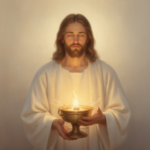
Then the kingdom of heaven will be like ten virgins who took their lamps and went to meet the bridegroom. Five of them were foolish, and five wise. For when the foolish took their lamps, they took no oil with them, but the wise took flasks of oil with their lamps. As the bridegroom was delayed, they all became drowsy and slept. But at midnight there was a cry: ‘Here is the bridegroom! Come out to meet him.’ Then all those virgins rose and trimmed their lamps. And the foolish said to the wise, ‘Give us some of your oil, for our lamps are going out.’ But the wise answered, saying, ‘Since there will not be enough for us and for you, go rather to the dealers and buy for yourselves.’ And while they were going to buy, the bridegroom came, and those who were ready went in with him to the marriage feast, and the door was shut. Afterward, the other virgins came also, saying, ‘Lord, Lord, open to us.’ But he answered, ‘Truly, I say to you, I do not know you.’ Watch therefore, for you know neither the day nor the hour.— Matthew 25:1-13
🎯 The Occasion
Audience: This parable was delivered primarily to first-century Jewish followers of Jesus, familiar with wedding customs, emphasizing the importance of spiritual preparedness and watchfulness for the coming of God's kingdom.
Jesus told this parable in the context of His Olivet Discourse (Matthew 24-25), to warn His disciples about being watchful for His return, which was imminent but not precisely timed, to evoke a sense of urgency and readiness.
🏺 Cultural Context: What You Need to Know
🏺 Jewish wedding customs
Jewish weddings in the first century involved a formal betrothal followed by a celebration that could last several days. The bridegroom’s arrival was marked by a procession, often late at night or after dark, requiring attendees, especially virgins or bridesmaids, to be prepared with lamps to welcome him. The lamps served both practical and symbolic purposes—lighting the path and signifying readiness and alertness for the arrival of the bridegroom.
🏺 Oil and lamps
Oils used in lamps were usually olive oil, a precious commodity in Middle Eastern culture. Having sufficient oil was a sign of preparedness and social responsibility. A lack of oil implied negligence or unfaithfulness, which could lead to exclusion from the celebration or wedding feast, reflecting social and spiritual neglect.
🏺 Greco-Roman cultural influences
In Greco-Roman culture, the concept of waiting and watching was common, especially in religious and social contexts. Weddings were major public events emphasizing honor, hospitality, and social duty. The parable’s imagery of late-night waiting and vigilance mirrors Greco-Roman ideals of loyalty and readiness, making this a familiar motif that Jesus used to convey spiritual alertness.
👂 What the Original Hearers Understood
First-century Jewish listeners would have understood the wedding process as a communal celebration requiring punctuality and preparedness. The lamps and oil symbolized vigilance and faithfulness, while the delay of the bridegroom reflected the messianic anticipation. They would grasp that missing oil meant not being ready for God's kingdom, emphasizing spiritual watchfulness and moral integrity as central to salvation and community honor.
Virgins or bridesmaids in Jewish wedding customs acted as attendants to prepare and welcome the bridegroom, symbolizing faithfulness and readiness.
Lamps
Spiritual alertness and readiness
Lamps were essential tools for night-time events, symbolizing light, guidance, and preparedness in Jewish and Middle Eastern culture.
Oil
Spiritual preparedness and faithfulness
Oil was a limited resource, indicating personal responsibility in readiness; in spiritual terms, it signifies faith, virtue, and ongoing devotion.
Bridegroom
Jesus Christ or God’s kingdom
The bridegroom’s delayed arrival reflected Jewish messianic expectations, where anticipation and readiness were vital.
💡 The Main Teaching
The parable emphasizes the importance of spiritual vigilance and preparedness for Christ’s return. Being ready involves ongoing faithfulness, moral alertness, and maintaining one’s spiritual 'oil.' The delay of the bridegroom teaches believers to stay watchful at all times, as the exact moment of God's kingdom’s fulfillment is unknown. The core message is that true discipleship requires constant readiness and active faith, not complacency or delay in spiritual discipline.
Secondary Teachings
Preparation and vigilance are essential virtues for followers of Jesus.
Self-responsibility in faith is crucial; relying on others’ readiness is insufficient.
Spiritual complacency can lead to exclusion from God’s kingdom message.
⚠️ Common Misinterpretations
⚠️ Common Misinterpretation
That the parable refers solely to marriage customs; it actually symbolizes spiritual readiness, not just wedding traditions.
⚠️ Common Misinterpretation
That lamps and oil are literal; instead, they are metaphorical for faith and spiritual vigilance.
📚 Parallel Passages
{‘reference’: ‘Luke 12:35-40’, ‘note’: ‘Similar emphasis on watchfulness and readiness for the coming of the Son of Man.’}
{‘reference’: ‘Revelation 16:15’, ‘note’: ‘The call to be watchful and prepared for Christ’s return echoes the urgency of this parable.’}
{‘reference’: ‘Isaiah 21:12’, ‘note’: ‘The theme of waiting and watchfulness aligns with Old Testament prophecies about vigilance.’}
This parable urges modern believers to maintain spiritual vigilance amidst life's busyness and distractions. Just as lamps require oil, our faith requires ongoing nurturing through prayer, service, and scripture. Relying on temporary faith or complacency is dangerous; readiness involves continual devotion. Practical examples include regularly examining one’s spiritual life, being active in community and service, and cultivating disciplines that keep faith vibrant. The parable reminds us that we do not know the exact timing of Jesus' return, so living consistently prepared is vital for living with purpose and assurance.
❓ Frequently Asked Questions
What does the oil symbolize in the parable?
The oil represents spiritual readiness, faithfulness, and ongoing devotion, which are essential for being prepared for Christ’s return (Matthew 25:1-13).
Why is the door shut in the parable?
The door signifies the final judgment or the moment when opportunities for salvation are past; it stresses the importance of urgent preparedness (Matthew 25:10).
Does this parable suggest salvation is earned by works?
No, it emphasizes active faith and vigilance; true salvation involves ongoing faithfulness enabled by grace, not just works (Ephesians 2:8-9).
How can we remain watchful today?
By staying committed to prayer, studying Scripture, practicing righteousness, and living intentionally with a focus on Christ’s return, recognizing the unpredictable timing (1 Thessalonians 5:6).
✨ Did You Know?
Archaeological findings in Middle Eastern sites reveal oil lamps similar to those described in the parable, underscoring the cultural and practical relevance of the imagery. Linguistic studies show the word for 'oil' in Hebrew and Greek often symbolizes the Holy Spirit, enriching the parable’s spiritual depth.